




Otters rebound to thrive in Illinois’ Will County
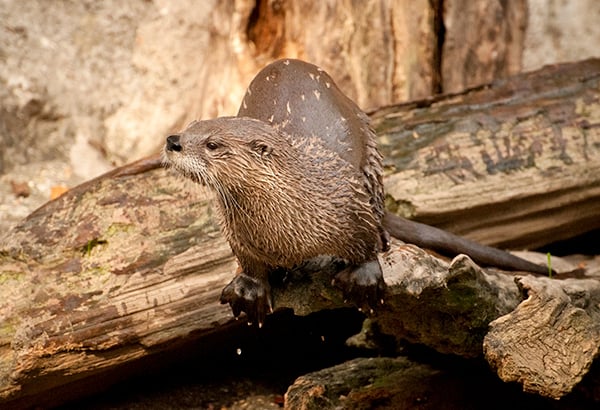
Editor’s note: This is another installment in a Q&A series by the Forest Preserve District of Will County that highlights scientists and conservation efforts in the preserves. This feature spotlights river otter research that grew out of studies into the survival of other urban mammals.
Joliet, Ill. — From a low of just 100 in the 1980s to more than 11,000 today, the river otter has made a remarkable comeback in Illinois. Will County has become a hot spot for these apex predators, which feed on fish and frogs along the Des Plaines River from the Rock Run Rookery Preserve north to Keepataw Preserve in DuPage Township.
A coalition including the Max McGraw Wildlife Foundation, The Ohio State University and the Forest Preserves of Cook County is working to track otters and learn how they survive in urban environments.
On a recent fall morning, Shane McKenzie, a research associate for the foundation, and Nicholas Lusson, a senior field technician for Ohio State University, trudged through tall grass to reach known otter “latrine” sites at Keepataw.
MORE COVERAGE FROM ILLINOIS OUTDOOR NEWS:
Ralph Loos: Director’s Hunt a reminder of awareness former Illinois DNR director Brent Manning had
Chicago study shows coyotes prefer golf courses – just like humans
Former MLB pitcher among those still fighting alleged hunting violations from 2022 in Illinois
River otter research began in 2017, building on the 25-year-old Urban Coyote Research Project in Cook County. In Will County, the project is just a year old.
In addition to McKenzie and OSU graduate student Cami Vanderwolf, who is analyzing the data, the project is overseen by Stanley Gehrt of OSU and Chris Anchor of the Cook County Forest Preserves.
Here, in their own words, McKenzie and Vanderwolf answer questions about their work:
Q: What is the goal of your research project?
A: Our main goal of this project is to address gaps in urban river otter ecology information and management in an unbiased manner. River otters are historically known to be avoidant of humans and developed areas, so we want to better understand how river otters are now adapting to living in urban areas. While more urban river otter populations are currently being discovered around the country, there is still little research on urban river otter ecology. We are studying this population to document shifts in river otter behavior in urban areas, such as in their habitat use, movement and diet. Using trail cameras and radio-telemetry tracking, along with hair snaring and latrine sampling, we aim to better understand river otter populations.
Q: Why are you surveying river otters in Will County specifically?
A: The Urban River Otter Project focuses on studying urban otters within Cook County. However, like other species, these animals have the propensity to travel great distances. Using trail cameras, the project identified the presence of river otters in the Cook County Black Partridge Forest Preserve. This preserve shares a border with Will County, so otters freely move throughout this area and Keepataw Preserve. Using a combination of hair snare and latrine sampling methods, we will use the data to determine river otter diet makeup and population size. Hair snares are devices that snag small samples of hair from an animal when they rub against it. We are also analyzing the best non-invasive ways to study river otters. Non-invasive sampling methods, which minimize human interaction and stress on animals, are becoming more important tools for biologists to study wildlife. River otters also have been successfully live-captured and implanted with radio telemetry tracking transmitters in the Black Partridge/Keepataw area. We regularly monitor these otters and collect location points using telemetry equipment.
Q: What is the farthest you have tracked otter movements?
A: We have found that the river otters we tagged here have ended up north of us, all the way up to McCook close to the border of Chicago. And we’ve tracked them as far south as the Rock Run Rookery in Will County, which is further south along the Des Plaines River near Joliet. This tracking has allowed us to understand their movements across the landscape.
Q: How long has this study been taking place?
A: Preliminary research began back in 2016 when the first river otter in Chicagoland was discovered at Sand Ridge Forest Preserve in Cook County. We started a more comprehensive study in 2020 that expanded our camera trapping and telemetry efforts. Efforts to conduct latrine searches and hair snaring in Will County began in early 2025.
Q: What are you looking for in the preserves?
A: We are continuously relocating our radio-tagged river otters within the preserves to identify what habitat and waterway types they use the most. This information will help us identify new areas where otter populations could expand and help us protect these areas to ensure healthy urban otter populations. We are also routinely searching known latrine sites to collect scat samples and set up hair snares. Because otters are social animals and repeatedly visit and defecate in communal areas, we can easily obtain samples from multiple individuals at a single location. Hair and scat samples will be analyzed to determine what foods urban otters eat and whether they eat human food sources, such as trash or supplemental food, like other urban animals are known to do.
Q: Have you been successful in finding the information you need?
A: This is an ongoing study. The data collection involving Will County forest preserves will continue until the end of 2025. Since the end of 2024, we have collected more than 150 otter scat samples and 80 hair snare samples from multiple species, including otter.
Q: What is the status of river otters in Illinois?
A: It is estimated there were only about 100 river otters remaining in Illinois by the late 1980s. This decline in otter populations was mainly due to overharvest and habitat loss/degradation. In the 1990s, the Illinois DNR initiated a recovery plan and relocated otters from states with strong populations, like Louisiana, throughout central and southern Illinois, including the Illinois River. In 2004, Illinois removed river otters from their endangered species list. By 2009 the Illinois otter population was estimated to be over 11,000. Otters were never reintroduced into the northeast part of the state, so their recolonization into Will County is a testament to the growth and recovery.
SUBSCRIBER CONTENT
Read this article now.
Create a free Outdoor News account.
Create a free account below to get instant access to this article, thousands of Outdoor News stories, and our digital editions. Your 1-month trial starts the moment you sign up.
No credit card required
No credit card required
Subscriber? Login Here.
Share on Social
Hand-Picked For You
Way less land for hunting spurs action from Pennsylvania Game Commission
Pennsylvania’s hunting license sales down so far this year
Origin of road-killed armadillo in southwest Ohio a mystery
Sportfishing group sounds alarm on tariffs
South Dakota Fishing Report – September 16, 2026 – video
Bowhunt gets started in Ohio with additional opportunity in CWD surveillance area
Related Articles
Way less land for hunting spurs action from Pennsylvania Game Commission
The Pennsylvania Game Commission has overhauled its Hunter Access Program this year in an effort to boost declining landowner participation
Where do big bucks go when they vanish?
Over the course of our three-months-plus bowhunting season, seeing just one wall-hanger buck can be cause for celebration. Trophy proportioned
WI Daily Update: Tips for catching cohos on river mouths of Superior
This is a great time of year to chase coho salmon on the river mouths on Lake Superior. Tim Lesmeister
