




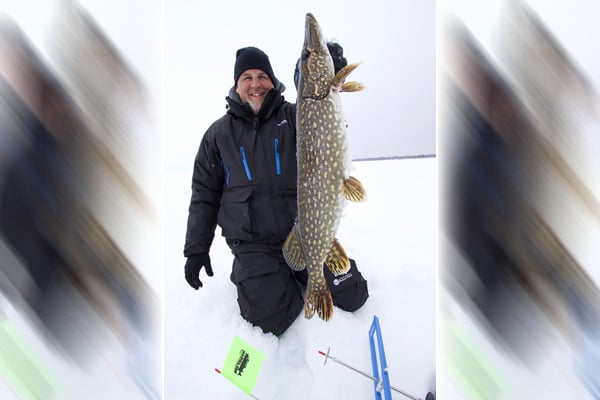
St. Paul — The Minnesota DNR has changed the rule regulating ice anglers’ use of automatic hook-setting devices and has clarified rules about multiple hook configurations and length. These fishing rule changes will be in effect for the upcoming ice-fishing season.
“We want to make sure anglers are aware of these recent rule changes as they enjoy the last days of open water and prepare for ice-fishing season,” said John Dunn, the DNR’s fisheries rules and regulations coordinator. “Robust public input helped guide our development of these rules, and we are excited to implement them beginning this winter season.”
Automatic hook-setting devices
Non-motorized devices that set the hook using the force of a spring device or the force of a bent fishing pole are now legal for use in Minnesota while ice fishing.
The hook-setting component of any device must be non-motorized. Motorized jigging devices that are not designed to set the hook are considered legal. The device must not be capable of automatically reeling the fishing line or retrieving fish.
MORE COVERAGE FROM MINNESOTA OUTDOOR NEWS:
Remote border crossing from U.S. to Canada still in limbo
Minnesota man dies in North Dakota waterfowl hunting incident
Minnesota’s 2025 firearms deer harvest higher than a year ago
These devices are triggered automatically when a set bait is hit by a fish. They are typically used with a “tip-up” type of angling device and may reduce the number of swallowed hooks, reducing hooking mortality.
All other fishing regulations still apply while using automatic hook-setting devices and automatic jigging devices. Importantly, as is required with all tip-up use, the angler must be within 200 feet of the tip-up and may not leave them unattended.

Multiple hook configuration and length
The new rule clarifies a single configuration for a line cannot have more than three hooks, and the total distance between hooks may not exceed 18 inches measured along the line.
Previously, the length could not exceed 9 inches.
The increase to an 18-inch maximum length is better suited for larger game fish and is anticipated to reduce the number of swallowed hooks and hooks that are otherwise deeply set into the fish, thereby decreasing hooking mortality.
This configuration is not specific to ice fishing and could be used either by ice or open-water anglers.
Once rule changes are made, the DNR enacts them through regulations. Because these rule changes were made following the release of the current fishing regulations booklet, they will be listed in the 2026 Minnesota fishing regulations, which will be available in March.
Other fishing regulations are available on the DNR website and in print wherever DNR licenses are sold.
Minnesota’s black bear kill rises to largest total in over two decades
Minnesota’s 2026 bear season now ranks among the tops in state history, with the highest harvest totals in two decades.<br

South Lake balances panfish, pike, and big bass in Michigan’s Washtenaw County
Ten-inch redear sunfish aren’t what most anglers expect to find at the end of their line, but South Lake has
Michigan’s Outdoor Calendar
A look at upcoming outdoor-related events from across Michigan published in the Oct. 23, 2026 edition of Outdoor News.
