




State College, Pa. — Geese appear to understand when and where hunting takes place but are willing to risk the danger to stay close to resources and their primary habitats, according to a new study led by researchers at Penn State.
In findings recently published in Landscape Ecology, the researchers reported that when managing a mixed landscape wildlife management area (WMA) comprising cropland, forest, lake and wetlands for both waterfowl and human use, providing sufficient spatial refuge for geese may help buffer the effects of hunting.
“Canada geese – many of which are non-migratory – account for about half of the total harvest of waterfowl in the state of Pennsylvania, however, we know very little about how resident geese respond to hunting pressure on Middle Creek and Pymatuning WMAs and similar areas across the country,” said team leader Frances Buderman, assistant professor of quantitative wildlife ecology.
“We looked at whether hunting pressure on these sites is causing geese to leave the WMAs.”
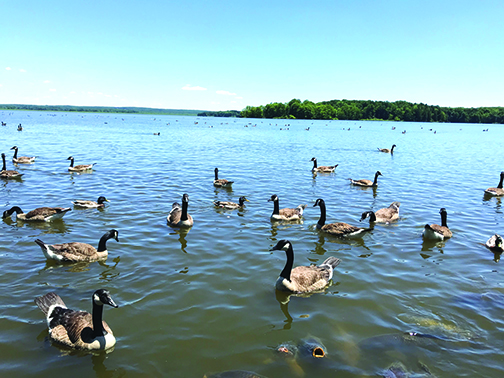
The Pennsylvania Game Commission maintains two WMAs specifically managed for waterfowl: Pymatuning WMA in the northwest corner of the state and Middle Creek WMA in the southeast.
One of the primary beneficiaries of the habitat management conducted on the WMAs are the resident Canada geese that spend the entire year in Pennsylvania. At both properties the agency maintains stationary waterfowl-hunting blinds, which are allocated to duck and goose hunters via a lottery system.
Because the properties are intended to provide seemingly opposite services – maintain wildlife habitat, including attracting and holding waterfowl, and offer recreation, including providing hunting opportunities that may drive the birds away – it has been uncertain how resident geese perceive the available habitat.
To inform management, a Penn State research team studied how hunting affects waterfowl behavior and habitat selection on WMAs.
During periods of active hunting, the researchers found, the geese didn’t fly far. They explained that geese are likely relying on both a cognitive map of risks – a “landscape of fear,” the researchers called it – and an awareness of the timing of danger – a “schedule of fear,” according to the researchers – to navigate their environment and make decisions about the trade-offs among refuges, resources and habitats.
MORE COVERAGE FROM PENNSYLVANIA OUTDOOR NEWS:
Pennsylvania Game Commission euthanizes 600 geese in HPAI action
Pennsylvania case against drone operator dismissed
Will Pennsylvania’s deer opener debate be resolved this legislative session? Hearing set for Feb. 3
The finding that the resident geese employed short-term abandonment of hunted locations to avoid predation, but maintained long-term fidelity to the WMAs, surprised the researchers and ran counter to findings from similar waterfowl studies, Buderman said.
Study details
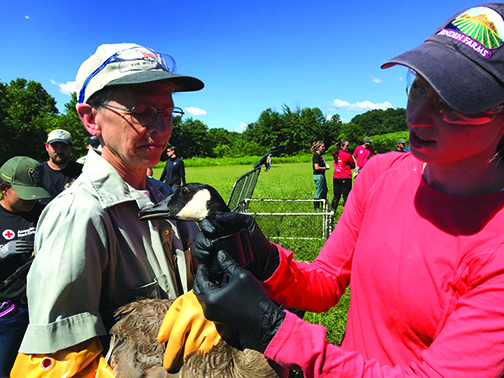
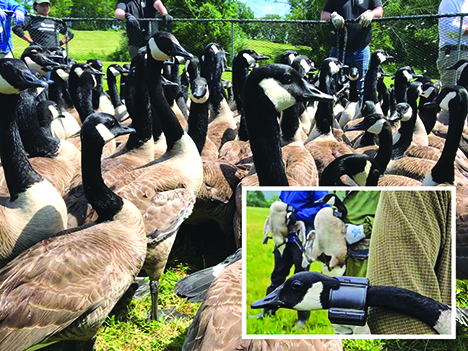
To monitor the behavior of geese, the researchers trapped a total of 134 females on 9,661-acre Pymatuning and 6,207-acre Middle Creek WMAs and fitted them with GPS collars to track the birds’ movements over two hunting seasons. During that time, they collected 7.4 million observed locations from the 134 geese.
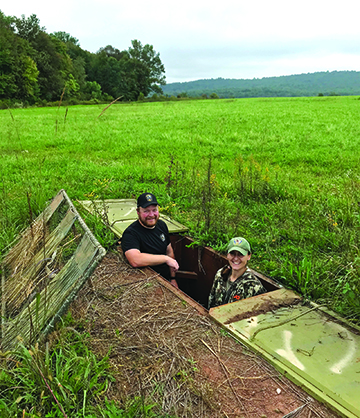
The study found that most Canada geese did not abandon the WMAs during the hunting season and were at least 165 times more likely to choose to be on the WMAs than off the WMAs, regardless of goose hunter presence on the WMAs.
During hunting, they reported, the birds retreated to water, away from the occupied hunting blinds. Geese also used areas further from hunting blinds, which are areas of perceived risk, as the number of goose hunters on the WMA increased.
Buderman added that the results indicate that if geese find sufficient refuge – pockets of habitat where they can shield themselves from exposure – within a hunted area, they are not likely to abandon a WMA, even temporarily.
“It turns out the WMAs, which are being managed by the Game Commission for hunted species, including Canada geese, really are serving their twofold purpose – to provide habitat for the species throughout its life-cycle and to provide opportunities for hunters,” Buderman said.
Hunter satisfaction is important to agencies like the Game Commission, Buderman noted, saying that satisfied hunters support wildlife and habitat programs, which ultimately support the conservation of hunted and non-hunted species.
“In terms of waterfowl hunters nationwide, they’re some of the biggest contributors through their purchase of a federal duck stamp,” she said.
Karen Beatty, who recently graduated from Penn State with a master’s degree in ecology, spearheaded this study. Nathaniel Huck, former waterfowl biologist for the Pennsylvania Game Commission, contributed to the research.
Funding for the study was provided by the Pennsylvania Game Commission.

Minnesota Mixed Bag: New state parks license plate contest accepting entries through Oct. 31
The Minnesota DNR reminds Minnesotans that they may submit designs for the next state parks and trails license plate through

Minnesota Letters to the Editor: The circle of life doesn’t bode well for young waterfowl
Reader-submitted letters to the editor published in the Sept. 25, 2026 edition of Minnesota Outdoor News.
Another View: Time to reimagine firearms safety programs
I grew up in Brainerd, Minn., in the 1980s, counting down the days until I earned my firearms safety certification,
