




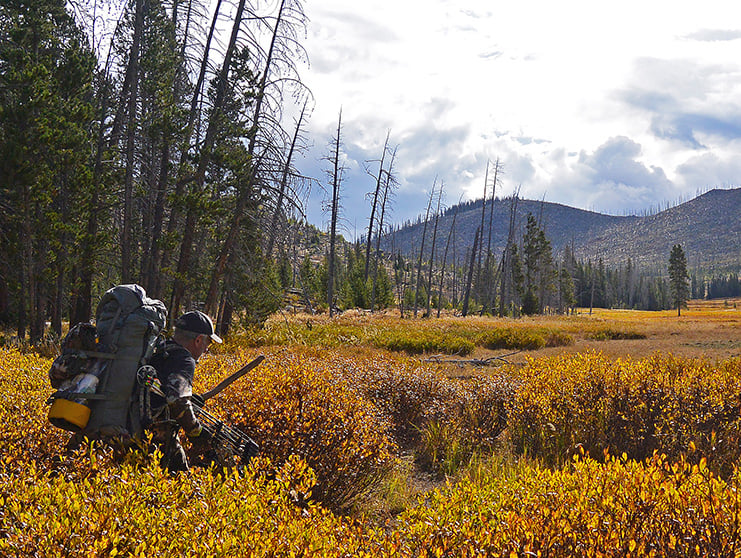
When prospective clients called a now-retired Colorado outfitter to discuss horseback elk hunts into the San Juan Mountains, they often asked if he could guarantee at least one shooting opportunity.
His response seldom varied:
“If you don’t arrive in good shape, I can’t even guarantee a good time.”
Every Western guide has at least one head-shaking story about clients who show up poorly equipped. Maybe their arrows are an inch too short for their bow, or they’re wearing boots fresh from the box or carrying a riflescope still in the box.
Those same guides, however, usually have far more stories about clients headed for the PUP (physically unable to perform) List.
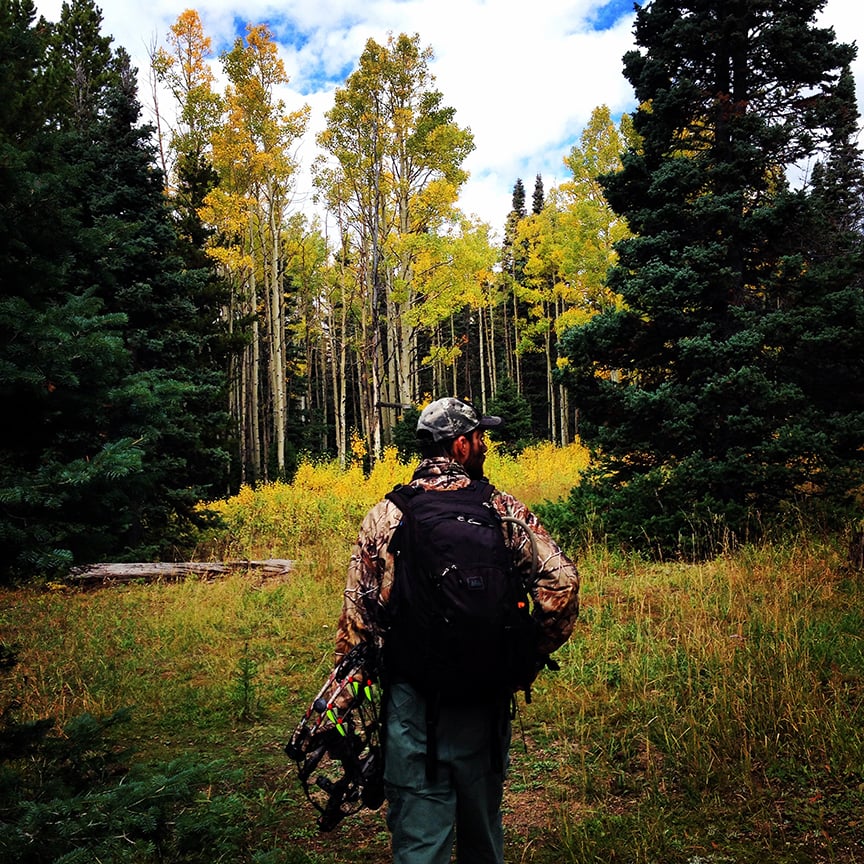
Altitude sickness confines some hunters to camp the first day or three. You shouldn’t expect to be immune to altitude sickness if your only high-altitude experience is the inside of a commercial airliner.
If you’ve never hunted Western mountains, visit your doctor weeks in advance of your trip and ask about medications like acetazolamide, Nifedipine and dexamethasone. All flatlanders respond differently to reduced oxygen levels, especially above 9,000 feet. Altitude sickness afflicts even some who are young, strong and physically fit.
Guides also tell many tales about out-of-shape clients who struggle to follow them more than 200 yards from the camp or horse saddle, and spend every other day or two recuperating in camp.
Yes, rugged boots and a high-end backpack are essential when hunting high-country elk or mule deer, but they aren’t much help when you’re stuck in camp.
Fitness need not be pricey
You can, however, get into the best shape of your life without spending much money. Fitness also requires no unique talent. All it takes is persistence, commitment and regular workouts. But don’t procrastinate.
 “Start now, not Jan. 1 or next summer,” said Denise Cox, 65, who’s known as “Pack Mule Barbie,” given that she regularly hauls backpacks full of meat to help her husband, Kurt, when he’s bowhunting elk in Colorado’s high country.
“No matter how many steps you’re taking today, add more steps tomorrow and more the next day,” Cox said. “And for every step you take, make it a giant step so you can get over logs and handle steep inclines when you’re in the mountains. Even if you live at sea level, daily walks on the beach are great exercise. Your feet sink into sand, and your ankles get stronger with all that adjusting and compensating. Hunters need to build strength, balance, flexibility and endurance. And if you want to hunt the high country every year, make fitness your year-round goal.”
Cory Calkins, 35, won’t argue that point. Calkins guided hunters 14 straight years after high school. He spent his first year in Colorado, and then hooked on with a Montana outfitter who regularly took horseback hunters over 10 miles into the Bob Marshall Wilderness. If not for COVID 19’s impact on guided hunting operations in 2020, Calkins would likely still be working the high country with horses. Instead, he took a “regular” job in Bozeman three years ago as MeatEater’s content coordinator.
RELATED COVERAGE FROM OUTDOOR NEWS:
Looking at an out-of-state big-game hunt in 2024? The time to plan is now
Your first western deer hunt? Here are critical rules for success
What are the top characteristics of consistent deer hunters? Be adaptable for pressured deer
Calkins advises hunters to know what they’re getting into long before they arrive. Never assume outfitters will tell you everything you should know.
“A group of guys from Los Angeles arrived one year, and didn’t realize they’d be riding in by horse,” Calkins said. “They just assumed they’d go in by car or truck, and the outfitter assumed everyone knew there’s no driving around in the Bob Marshall.”
Expect a challenge
Calkins said only one assumption is certain: “Every mountain hunt will be physically demanding, even grueling, so be in the best physical condition you can be,” he said.
Stu Osthoff, 67, of Ely, Minn., has guided elk hunters in Colorado’s Comanche Wilderness since 1999, often at elevations of 10,000 to 12,000 feet. He said his clientele varied from gym rats to marathon runners to guys who could barely walk the length of a wall tent.
“We do our best to put everyone on elk, no matter what condition they’re in,” Osthoff said. “One guy who was huffing and puffing in the tent ended up getting an elk not far from camp. Other guys have gotten elk a short walk from the horse. Those things can happen, but I wouldn’t count on it. The better shape you’re in, the more hours you’ll hunt, and the more options you’ll have.”
Calkins said fit hunters are more likely to get their money’s worth from the hunt.
“I typically saw two types of clients,” Calkins said. “One group had worked out for months. They hiked for exercise in their boots and often with a loaded backpack. They could handle 90% of what the hunt threw at them. Other guys showed up after taking a hike or two the week before their trip. A few of them got lucky and shot something from an easy-to-reach spot, but most just wished they were in better shape. Some mornings I’d walk into the cook tent, and my clients never showed up. They slept in and hung around camp all day. Guys who don’t prepare themselves seldom come back.”
Eight hunting tips
Here are eight other tips from Cox, Calkins and Osthoff:
• Buy the best boots and backpacks you can afford. If you’re hunting high, steep country, choose boots with 10- to 11-inch shafts to keep your ankles from rolling. Visit a store with trained staff who can help you choose the right boots and backpack. Once you own them, live in your boots and wear your pack regularly when hiking around town.
• If you hire a guide or an outfitter assigns you one, be prepared with a cash tip, especially if you bag an animal.
Minimum tips for a guide are 10% of the hunt’s cost, or $100 to $200 per day. And don’t forget about the camp cook and the packer. Tip the cook about 5% of the hunt’s price, and bring at least a $50 bill for each packer.
• Avoid foot blisters by making sure new boots are well broken-in by midsummer. If you get a blister, don’t ignore it. Treat it and clean it, and cover it with a band-aid or bigger dressing.
• Driving to your hunt helps you gradually acclimate to higher elevations. Try to spend at least one full day at 5,000 to 6,000 feet before going up to camp. Most people need about three days to physically adjust to high altitudes.

• Buy quality binoculars and be prepared to glass for hours.
“A lot of guys practice forever with their cow calls and bugles, but I kill more elk with binoculars than with calls and bugles. I hunt fairly open terrain and glass from high points, especially in the morning,” Osthoff said. “Most guys struggle finding elk because they don’t spend enough time glassing when elk aren’t talking. They move before they’ve really scrutinized the area.”
• If you’re planning a do-it-yourself hunt, try to stay two weeks or more. A week is seldom enough, even if you’ve been there before.
“It can take days just to locate elk,” Osthoff said. “Elk aren’t predictable day to day, or year to year. You usually have to cover ground with your eyes and feet.”
• Wear sunscreen on your ears, face and neck; and be prepared for emergencies. Carry a whistle, first-aid kit, space blanket, fire-starters, 50 feet of cord or rope, and a personal locator beacon or similar device.
• If you’re single and want to find a lifelong partner, focus on elk bowhunters.
“The qualities I most admire in people—goodness, sincerity, strategic thinking and strong work ethic—are common among elk bowhunters,” Cox said. “They aren’t lazy people. By nature, they make plans and execute them. They finish what they start.”
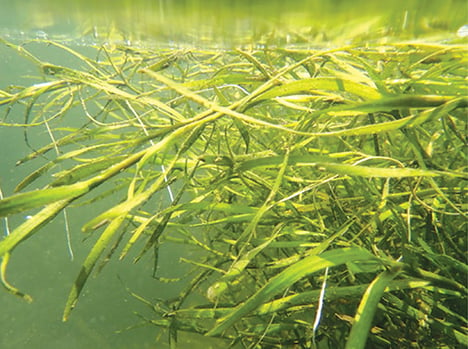
Chesapeake Bay underwater grasses up 7% last year
In Maryland’s portion of the bay, underwater grass coverage expanded from 36,799 acres in 2024 to 41,419 acres in 2025,
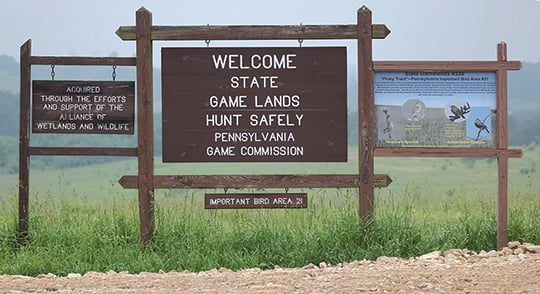
Pennsylvania Game Commission to host driving tours of six state game lands
Four-wheel-drive vehicles with high clearance are required for this 30-mile, self-guided driving tour, and it will take about three hours

Pennsylvania Letters to the Editor: Use drones over private property
Reader-submitted letters to the editor published in the Sept. 25, 2026 edition of Pennsylvania Outdoor News.
