





Among the many benefits of being a hunter in the United States is the ability to find public land relatively close to home on which to target deer, ducks, grouse, pheasants, and other game and non-game species.
Such land belongs to everyone, is available for anyone and generally is managed for forestry and wildlife.
Every year, millions of people stake their hunt on public land. Some, though, want to own their own property, manage it in the way they see best fit, maybe build on it, and know when they head out for a hunt there won’t be anyone else standing (or sitting or walking) in the way of their grand plan. Indeed, for some people, owning their own piece of hunting property is the dream.
It may not be a simple proposition – simplicity, of course, is relative when it comes to buying any type of property – but people who plan ahead and know exactly what they’re looking for stand the best chance for success.

What’s the current market?
First, the big picture.
“The market is still competitive, especially on turnkey, proven hunting properties,” said Travis Hamele, of UC Hunting Properties in Wisconsin. “The properties I call ‘untouched’ – maybe they have trails or things like that, but the owners didn’t improve them with things like food plots and warm-season grasses, those are not as competitive because there is work involved. Work is cost and time, but if that’s what you enjoy you can find some properties out there and just let your imagination kind of be your guide.”
Don’t overlook agriculture land
As hunters begin their search, Kevin Mahoney, of Coldwell Banker Crown Realtors in west-central Minnesota, advises them to contact two to three real estate agents in the area they’re looking. Specifically, he says, those agents should have experience in helping customers buy and sell agricultural land.
MORE COVERAGE FROM OUTDOOR NEWS:
Frost-seeding clover food plots in spring can lead to fall whitetail success
Compact tractors: The perfect tool for the outdoor steward
While it may not be listed as recreational property, agricultural land often includes a variety of land types such as lowland, woods, pastures, and tillable land.
“Don’t overlook farm land for hunting land,” Mahoney said. “Some of that farm land, even though it’s listed and marketed as agricultural land, makes for awfully good hunting land.”
Hamele offers similar advice.
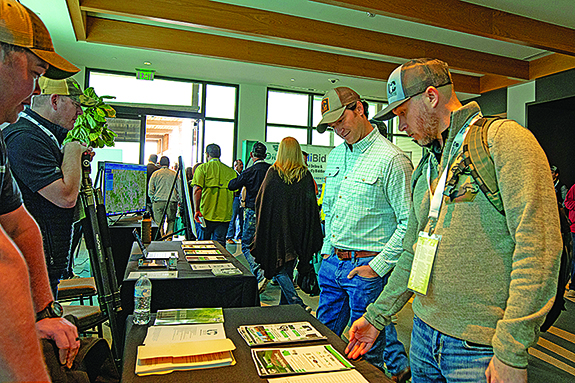
“Look at all the avenues out there that have properties listed, because there are some that are listed by someone who might not be marketing them to the hunting and recreational community. They’re more of an opening listing,” he said. “Sometimes, those get overlooked, but they can be a really good opportunity to find good properties at a reasonable price.”
Sticking close to home
Hamele also recommends would-be buyers stick relatively close to home, unless they have an option for staying close to, or on, the property they buy.
“Anytime you get more than about two hours away, people simply don’t use their properties as much,” he said. “So be conscious of the distance from your home so you can actually use it more.
“Know what you want in a property, know the distance you’re willing to travel, and of course, look at what you can afford.”
Work with experienced real estate agents
Like Mahoney, Hamele also recommends people work with real estate agents who have experience in dealing with would-be hunting land.
“Wherever you’re looking, find an agent and a company that specializes in recreational and hunting land,” he said. “I wouldn’t recommend using a home agent to find a property where your goal is to shoot big bucks. They likely won’t know how the land lays out, whether there are things like funnels and pinch points and saddles. Those are all things that can help you find that perfect little piece, and find success immediately out of the gate.”
Know what you want ahead of time
Hamele also recommends people know in advance what type of improvements they might want now or in the future. Is Internet available? Are there utilities located nearby? If not, are you willing to consider secondary utilities, such as solar power?
Do your research, too.
What is the land around the property like? If your goal is big bucks, for example, a property surrounded by a bunch of 10-acre parcels may not be what you want. The same property surrounded by a large land holdings, or big chunks of public land, may be, however.
Above all, Hamele recommends would-be buyers understand exactly what they’re looking for and what they can afford, and be ready to pull the trigger when the right opportunity presents itself.
“When you finally see the property you’ve envisioned, and you’ve already thought about all these things, you can make a quick decision whether it will fit the plan for what you want in a property,” he said. “If you do all your research on the front end, and are ready to go, in a competitive market then you don’t have to do all your due diligence under the gun, so-to-speak.”
A quick chat with Jim and Will Pattiz, brothers behind morethanjustparks.com
Outdoor News has monitored the website Morethanjustparks.com with increasing frequency for its one-stop shopping content on America’s most important public
Minn Kota introduces one seamless fishing system powered with Humminbird Imaging
On Oct. 6, Minn Kota introduced the most significant expansion in its history with a new, seamless fishing system, powered

French tip: muskies in summer, slabs during winter on this southeast Minnesota water
Muskie anglers have a limited number of options in the southern part of the state; French Lake near Faribault is
