





St. Paul — The Minnesota House and Senate approved Legacy omnibus bills this past week. The bills will head to conference committee at the end of April. The House also passed its environment, climate and energy omnibus bill on Monday, April 17, with the Senate bill still going through committee hearings on its version.
House File 1999, the Legacy bill, is authored by Rep. Leon Lillie, DFL-North St. Paul. It was passed 69-59 by the House on April 12. The Senate version, authored by Sen. Foung Hawj, DFL-St. Paul, used the House version, HF 1999, on April 17 to have the Senate pass the bill, 40-27.
House File 2310, the omnibus environmental bill authored by Rep. Rick Hansen, DFL-South St. Paul, went through hours of amendments and discussion on April 17, but the House voted 69-59 in favor of the bill. The bill also includes House File 2754 (authored by Rep. Patty Acomb, DFL-Minnetonka), which is the climate and energy omnibus bill as the House Ways and Means Committee merged the two bills last week to present it on the House floor.
“Legacy funds are instrumental in saving our pollinators, providing habitat vegetation and even sequestering carbon,” Lillie said. “They’re just doing amazing things with restoring the habitat of prairies and wetlands and planting thousands of trees greatly enhancing our great outdoors in Minnesota.”
The Legacy omnibus bill will provide $821.8 million in four areas supported by Legacy Amendment tax dollars: $171.8 million from the Outdoor Heritage Fund, $318.4 million from the Clean Water Fund, $136.6 million for parks and trails, and $195 million for the Arts and Cultural Heritage Fund.
The Lessard-Sams Outdoor Heritage Council made the appropriations for the Outdoor Heritage Fund, which is split into five categories: prairies, forests, wetlands, habitats, and administration.
The Outdoor Heritage Fund will provide funds to wildlife management area programs, easement programs, wetland protection programs, wetland restorations, watershed habitat protection, and the Legacy grant program.
The bill didn’t receive bipartisan support on the House floor because some Republicans had concerns about where the money is going.
“Overall, the Legacy bill was good,” said Rep. Josh Heintzeman, R-Nisswa. “It contained the recommendations from the Lessard-Sams Outdoor Heritage Council, Clean Water Council, and money for parks and trails and Arts and Cultural Heritage Fund. Unfortunately, there were some last-minute additions altering the recommendations, spending millions on unproven grant programs.
“It’s our hope that the Legacy bill will come back from conference committee better than it left the House and once again pass with bipartisan support as it usually does,” he said.
The DNR receives its full $25.6 million over fiscal year 2024-25 with the Legacy bill. The big funding topics include stream flow monitoring ($5.1 million), watershed restoration and protection strategies ($4.3 million) and aquifer monitoring for water supply planning ($4 million). The DNR also will receive $82.5 million in the parks and trails fund.
The Board of Water and Soil Resources also will receive its full $156.1 million request for fiscal year 2024-25. The board’s biggest appropriations came from grants to watersheds at $79 million. The other top distributions include surface and drinking water protection/restoration grants ($17 million) and enhancing landowner adoption of cover crops ($12.1 million).
With the two bills passed, the House and Senate will meet in conference committee.
“Thanks to the legislators who served many years before us for making the Legacy amendment possible for people to vote and pass into law in 2008,” Hawj said. “So that we can have the resources to protect and restore our wetlands like lakes and rivers, our forests, our wildlife habitat, as well as preserve our arts and cultural heritage.”
The environment and climate omnibus bill is halfway to conference committee after a handful of amendments were added to the House bill and passed around 11:30 p.m. on Monday, April 17.
Hansen said it’s the largest environment omnibus bill in state history with a target of $670 million. Some of the biggest discussion points in this bill include $37 million to emerald ash borer response and $15 million to enhance and restore wetlands on WMAs.
There were subtractions from the bill, including $35 million for modernizing boat accesses and $10 million for modernizing fish hatcheries. There also are fee increases for fishing licenses, watercraft registration, and AIS surcharges.
There were a couple of amendments that related to the hunting community. Rep. Jamie Becker-Finn’s amendment passed, which will double restitution values for wild game when a person takes, harasses, or destroys the wild game with malicious intent.
Rep. Peter Fischer, DFL-Maplewood, also saw his amendment pass to prohibit an open season for taking wolves.
Senate File 2438, authored by Hawj, is the companion omnibus bill and was scheduled to be reviewed by the Senate Finance Committee earlier this week. Hawj said the Senate planned to have the bill on the floor April 20.
No wolf season?
Fischer’s amendment was passed and added to HF 2310 on Monday, April 17, which prohibits an open season for wolves. The topic was also brought up in the Senate Environment, Climate and Legacy Committee on Thursday, April 13.
Dr. Kelly Straka, DNR Wildlife Section manager, presented the DNR’s wolf management plan to the committee and answered questions. After her presentation, there was an opportunity for citizens to testify for or against the bill, authored by Sen. Mary Kunesh, DFL-New Brighton.
RELATED STORY: Groups send letter to state senators opposing wolf hunt ban in Minnesota
There was ample opposition on both the House floor and in the Senate environment committee.
“A wolf management plan is in place and in law that was adopted on a bipartisan basis 20 years ago,” said Rep. Isaac Schultz, R-Elmdale Township. “Further, there is a wolf management working group that is engaging with all of the stakeholders and somehow right now this body is debating a measure to take that away and take away a bipartisan nature of engaging Minnesotans on an issue that impacts many. This is the wrong tactic for us to take.”
Straka said the vision for wolves in Minnesota revolves around a healthy population in a suitable range. She mentioned that the DNR wants to minimize human wolf conflicts.
The DNR had regulated hunting and trapping seasons for wolves from 2012-14. Straka said wolves have been federal delisted and relisted as endangered species many times since 2007, but are currently protected on the endangered species list as threatened.
Straka said Minnesota has a wolf population around 2,700 and there’s a federal recovery goal of 1,600. Several people testified at the Senate environment committee on the bill.
 “Our wolves could actually be in more trouble than we realize,” said Dr. Maureen Hackett, founder and president of Howling for Wolves. “Wolves need to be left alone. They need to function socially and biologically as intact packs to control their own numbers and territories and even grow old.”
There was no action taken in the Senate environment committee, but the bill on banning a wolf season was put in the House environment, climate and energy omnibus bill.
New carp deterrent bill
Earlier in the legislative session, there was a bill focused on building an Asian carp deterrent at Lock and Dam 5 to prevent the spread of carp upstream on the Mississippi River. The previous bill used general fund dollars to pay for the deterrent lease.
On Thursday, April 13, new bills in the House and Senate were introduced with the same language, but now the money would come from cash bonds in the capital investment omnibus bill. House File 3223, authored by Fischer, and Senate File 3258, authored by Hawj, would use bonds and the deterrent would no longer be leased but owned by the state.
“We were forced to take the capital investment pathway,” said Whitney Clark, executive director of Friends of the Mississippi River. “Right at this moment, I am optimistic that we can to get some funding to keep this moving forward this year.”
The capital investment omnibus bills in both the House and Senate haven’t been released yet, so it’s unknown if this carp bill will be added. The omnibus bills should be released in the next week or two.
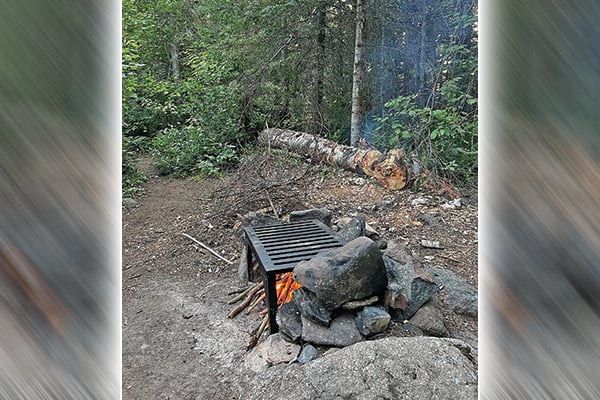
Ever wonder about fire grates at campsites in the Boundary Waters? Here’s what to know
While most campsites escaped the worst of the current fires, some fire grates in the Boundary Waters Canoe Area Wilderness
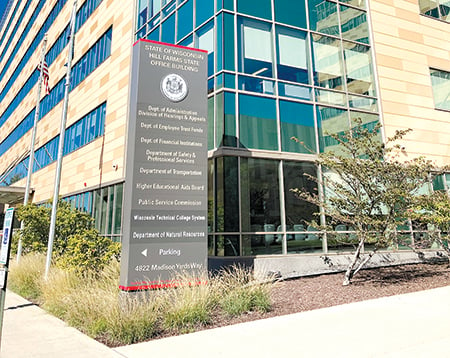
Wisconsin DNR moves Madison office to Hill Farms
The Wisconsin Department of Natural Resources (DNR) is on the move, literally.
The DNR closed its main headquarters building
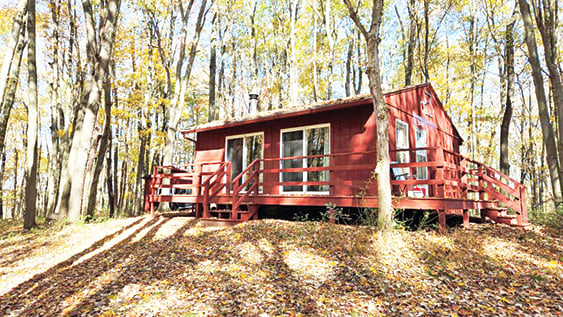
Ohio Reader Stories: Relishing the approaching winter in three acts
Each fall, I hear of outdoorsmen closing up their retreats in the wilds as the season changes from fall to
