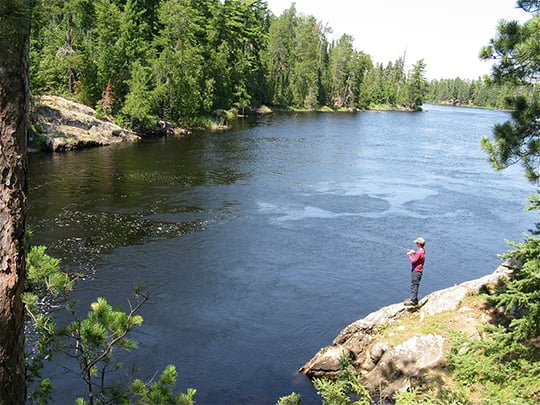
Hall of Fame angler and guide, Tom Neustrom dies at 77
A fierce volunteer and angling advocate, Neustrom improved Minnesota fishing for everyone
Hall of Fame angler and guide, Tom Neustrom dies at 77 Read More »
A fierce volunteer and angling advocate, Neustrom improved Minnesota fishing for everyone
Hall of Fame angler and guide, Tom Neustrom dies at 77 Read More »
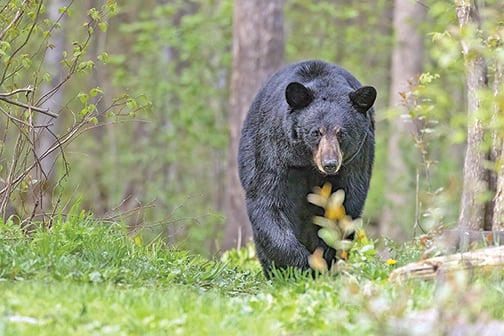
Concerns about recent population declines in fishers are driving researchers to determine the causes and develop better management practices for the species.
Researchers have studied the furbearer for years through multiple projects examining different aspects of fisher ecology. The research was prompted by a population decline observed in northern Minnesota in the late 1990s and early 2000s.
A decade of research offers insight into Minnesota’s fisher populations Read More »
A Minnesota fishing record is staying in the family after 12-year-old Sadie Spatafore caught and released a larger steelhead than her sister caught the previous year.
Dave, Lucy, and Sadie Spatafore fish together as often as they can, continuing a family tradition passed down through generations. While the Maple Grove trio regularly gets out on the water, Dave said his wife, Susie, sometimes joins but isn’t as obsessed about angling as he and their daughters.
Two sisters, two Minnesota records, one shared passion for steelhead Read More »
A new wildlife management area is now open for recreation near Park Rapids, with Mantrap WMA officially opening June 25.
The 449-acre property was purchased in March 2025. Undeveloped for decades, the land had been accessible only to 3M employees for nearly 70 years.
Partners dedicate former 3M parcel as new public property in Minnesota Read More »
Researchers are harnessing the help of Minnesota anglers to gather data on native rough fish populations while educating the public about these species.
During the past several years, there has been a collective effort politically and with the help of nonprofits to support native fish conservation and management. Solomon David, an aquatic ecologist and assistant professor at the University of Minnesota, said the state is leading the way nationally in this regard.
Native rough fish research enlists Minnesota anglers Read More »
While developing biocontrol measures can take decades, Minnesota has employed several programs to reduce invasive plant species.
Invasive species are plants and animals introduced to North America without the predators, insects or diseases that keep them in check in their native range. When a nonnative plant or animal enters a new habitat, it often spreads rapidly, displacing native wildlife and disrupting their forage sources. In typical biocontrol, researchers introduce a target pest’s natural enemy.
Research harnesses nature to battle invasive plants in Minnesota Read More »
The Legislative Citizen-Commission on Minnesota Resources has begun the process of funding future projects that will affect the state’s natural habitats.
After sending out requests for project proposals, the LCCMR received 434 submissions. Members discussed this year’s proposals during their June 17 meeting. The proposals requested approximately $375 million in funding, while the projected amount available for appropriation from the Environment and Natural Resources Trust Fund is about $121 million.
Minnesota’s LCCMR reviews, advances 116 projects totaling $152M for ’27 Read More »
Two orphaned fawns found near a dead doe whitetail in a Red Wing neighborhood were rescued and transported to a wildlife rehabilitation center after conservation officers determined they could not survive on their own.
Conservation Officer Brittany Hauser received multiple calls about two fawns near their mother, a doe that was found dead on a walking path in a residential area. The fawns remained in the area.
Orphaned fawns rescued from Minnesota’s Red Wing neighborhood Read More »
Fish mortality reports in Minnesota this spring are on pace for an average year, with 94 die-offs reported so far, including two major events.
Fish die-offs can result from a variety of factors, including disease, fish becoming stranded, and low dissolved oxygen levels. They can also be caused by non-point source pollution, such as urban runoff.
Minnesota’s fish mortality reports increase with summer conditions Read More »