




Home » Nature Page & Night Sky » Ohio Mixed Bag: Take precautions with fall burning
Ohio Mixed Bag: Take precautions with fall burning

Columbus — The Ohio DNR (ODNR) Division of Forestry urges Ohioans to take precautions and follow the state’s outdoor burning regulations if they plan to burn debris.
Ohio law dictates that outdoor burning is prohibited in unincorporated areas from 6 a.m. to 6 p.m. during October and November. ODNR encourages anyone burning to take protective actions and be safe, even outside of the restricted hours.
“It doesn’t take much for a debris fire to escape and become a wildfire, especially when conditions are dry,” said ODNR Division of Forestry Chief Dan Balser. “Following Ohio’s burning regulations and taking a few basic safety precautions can help protect your property, your neighbors, and Ohio’s forests.”
Burning is restricted in the fall due to the abundance of dry grass, weeds, and leaves on the ground. Gusty winds and low humidity can make a seemingly safe fire burn more intensely and escape control. If a fire escapes control, contact the local fire department immediately. An escaped wildfire, even one burning in grass or weeds, is dangerous.
Residents can take measures to prevent accidental wildfires, including avoiding burning trash and debris, keeping grass trimmed, not discarding cigarettes and other smoking materials outside, postponing fireworks, and avoiding open cooking fires or campfires. Additionally, farmers should regularly check their equipment for any irregularities that can lead to a brush or crop field fire.
MORE COVERAGE FROM OHIO OUTDOOR NEWS:
Ohio fisheries biologists seeing success with sturgeon stocking efforts
K-9s become ambassadors for Ohio Division of Wildlife after program’s inception in 2018
Nearly 3,000 acres of Ohio’s Wayne National Forest auctioned for drilling
Shawnee Trail Named For Dr. Lucy Braun
Portsmouth, Ohio — The Ohio DNR (ODNR) welcomed visitors, community members, and nature enthusiasts to Shawnee State Park recently for a ceremony to officially open the newly named Dr. E. Lucy Braun Lookout Trail. The celebration honored both the park’s rich natural heritage and the extraordinary legacy of Dr. E. Lucy Braun, one of the most influential botanists and ecologists in American history.
The event celebrated Dr. Braun’s historic connection to Shawnee State Forest and her extraordinary legacy as one of the most influential botanists and ecologists in American history.
Guests gathered at the shelter house on Mackletree Road for opening remarks before embarking on a guided walk along the two mile loop trail that features interpretive signs showcasing Dr. Braun and her remarkable efforts in the region. The upgraded route also features new interpretive signs highlighting the work of Civilian Conservation Corps (CCC) Company 1545, whose efforts in the 1930s helped open the region to visitors and laid the foundation for future scientific exploration.
“Dr. Braun helped reveal the story written in these forests,” said Jenny Richards, Shawnee State Park naturalist. “Her research shaped our understanding of Ohio’s ecosystems, and this trail gives visitors a chance to walk in her footsteps and discover the diversity she worked so hard to document.”
Additionally, the event celebrated Dr. Braun’s historic connection to Shawnee State Forest. As a pioneering scientist known for her groundbreaking studies of deciduous forests, Dr. Braun frequently brought her students to Shawnee to examine its remarkable biodiversity. Her work analyzing forest composition and plant communities remains foundational in modern conservation science.
Trump Signs Executive Order To Protect, Expand Hunting Opportunities
Washington, D.C. — President Donald Trump recently signed the “Reinvigorating America’s Hunting Heritage” executive order for protecting and opening access for America’s original conservationists – sportsmen and women who hunt.
The White House “Reinvigorating America’s Hunting Heritage” executive order protects the use of traditional ammunition and fishing tackle. The 10% and 11% Pittman-Robertson excise tax, paid by firearm and ammunition manufacturers, is the primary source of wildlife conservation funding in America. To date, more than $29 billion has been invested in wildlife conservation by firearm and ammunition manufacturers since 1937, when adjusted for inflation. NSSF announced earlier this year that over $804 million of the $1.3 billion apportioned to the states in February 2026 for wildlife conservation efforts were directly sourced to excise taxes paid by firearm and ammunition manufacturers.
The executive order also includes provisions to expand hunting opportunities across America. That includes an “open until closed” provision, that assumes public lands are open and accessible to hunting unless a specific reason is cited requiring that they must remain closed. The order also opens inaccessible public land through cooperative agreements with private property landowners. The executive order prioritizes public access and conservation goals over anti-hunting and preservationist special interests. The Trump administration is empowering conservationists who are most invested in the perpetuation of wildlife and public access to public lands.
SUBSCRIBER CONTENT
Read this article now.
Create a free Outdoor News account.
Create a free account below to get instant access to this article, thousands of Outdoor News stories, and our digital editions. Your 1-month trial starts the moment you sign up.
No credit card required
No credit card required
Subscriber? Login Here.
Share on Social
Hand-Picked For You
Ohio Letters to the Editor: Squirrel feature could help the outdoorsmen in general
Ohio Division of Wildlife invests in deer donation program
Don’t overlook Pennsylvania State Game Land 128 this fall
Star Watch: How many stars can you see?
Pennsylvania’s Outdoor Calendar
Taste of the Wild: Ground venison sloppy joe casserole
Related Articles

Ohio Letters to the Editor: Squirrel feature could help the outdoorsmen in general
Reader-submitted letters to the editor published in the Oct. 9, 2026 edition of Ohio Outdoor News.
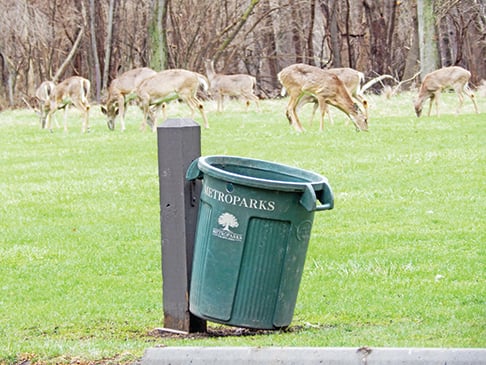
Ohio Division of Wildlife invests in deer donation program
With Ohio’s deer herd growing faster than hunters, coyotes, and automobiles are removing them, more nuisance complaints are being submitted

Don’t overlook Pennsylvania State Game Land 128 this fall
Sometimes you find a gem in an area where you never expect it. That is the case with a smaller
