




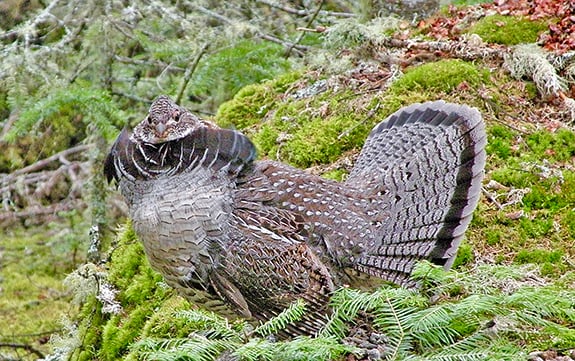
What’s going on with ruffed grouse in Michigan?
I had a poor season, which is not especially unusual for me, but the majority of the guys with whom I kibitz about grouse hunting did, too.
I asked Adam Bump, upland bird specialist with the Michigan Department of Natural Resources, what he heard, and he said, “fewer people are saying it was a great season. More people commented that grouse were down. I think that’s common for an agency – people are more likely to comment when something is negative instead of positive.”
 But he did have a few observations.
The cooperators, who voluntarily report their flush rates and where they hunt, said they averaged a relatively slow season; those hunting with dogs had 1.2 flushes per hours, while those hunting without dogs reported one per hour.
But he added that fewer hunters are participating than used to, and it’s a pretty small sample size.
Still, 30 years ago, we expected to move two or three grouse an hour. Sometimes more.
Bump started an on-line reporting system this year, where volunteers can immediately report the results of a hunt, but with no history for comparison, he can’t draw many conclusions.
But he’s optimistic it’ll bear fruit in the future. There were 1,182 reports on the “dashboard” this season.
“I’m hoping it gains momentum over time,” Bump said. “The quality of the data will only increase with more submissions.”
Another consideration was the weather. It was hot and dry in early fall – which makes it tougher on both hunters and dogs – and leaf drop was late, making for difficult shooting.
MORE UPLAND BIRD COVERAGE FROM OUTDOOR NEWS:
Bob Gwizdz: Michigan’s pheasant release program continues because of ‘those who show up’
How was bird hunting in Minnesota in 2025? Some hits, and a few misses
Late-season bird hunting creates enduring memories
Then there was the northern Lower Peninsula ice storm; Bump said it was probably late enough in the spring that the chicks were not as vulnerable as they might have been earlier, but it certainly affected hunters’ ability to access habitat. (Several guys I talked with mentioned this.)
As usual, flush rates were best in the northern Lower and lowest in southern Michigan. This has long been the case, though I remember flushing grouse in southern Michigan 50 years ago, often on field/forest edges when I was actually pheasant hunting (without a dog).
My buddy, retired wildlife biologist Jeff Greene, says that in the late ’70s and early ’80s, he was involved in a grouse trapping project – the DNR was sending grouse to Iowa to trade for turkeys – in southern Michigan. The crew trapped 300 grouse a year from two state game areas in southern Michigan.
“I think you’d have a hard time getting 300 grouse a year from those areas now,” he said. (On that note, it’s a popular opinion among some hunters that the turkeys displaced the grouse in southern Michigan, though biologists have never given that theory much credence.)
As for habitat, I spent early grouse season in what I thought was fine grouse cover, though I shifted to pheasant hunting once that season opened.
I only chased grouse one day in December this year. I didn’t move any that day.
There are variations in fruit production every year (though, as I recall, it wasn’t bountiful where I hunted this year), but most of the guys with whom I talked said they’ve had poor grouse hunting for several years. Greene, for instance, said that when he got out of the service in the early ’70s, he used to kill 20 to 25 grouse a year.
“Now I’m happy if I get one,” he said.
Fritz Heller, who may be the most successful grouse hunter I know, said his numbers were down 50% this year. He attributed it to weather – heat, drought, and the snow/freeze issue, which several guys mentioned. And if you think about it, with these warm winters we’ve had more crusty snow, which eliminates the opportunity for snow roosting.
Said Bump: “They’re a snow-loving bird and they do better when you get good snow.”
Bump also noted that we are in a trough in the grouse population cycle, something some guys say doesn’t seem to apply any more. Bump said: “Michigan’s cycle is present, but it’s not really a giant swing that’s always the same. In Zone 3 (southern Michigan) where we don’t see that many grouse, you can’t even see it.”
Drumming counts? The DNR suspended drumming counts for a number of years after someone filed a Freedom of Information Act request for the routes and the counts. The DNR is back to conducting drumming counts, but there’s a big hole in the data now.
Is it West Nile virus? “Pennsylvania was pretty sure West Nile Virus suppressed grouse numbers,” Bump said. “We haven’t seen that in the Great Lakes states, but it’s possible.”
Is the burgeoning deer population affecting habitat regeneration? DNR drumming survey data is collected on routes that were set up in the 1990s. “It’s possible those areas aren’t being managed as they were in the ’90s,” Bump said.
Retired DNR biologist Mark Sargent said: “It was another tough year. I haven’t had the best grouse season in a couple of years.”
So, was this just a bad year or are grouse in long-term decline?
“I don’t think we have a good way to assess all the factors,” Bump said.
All of which reminds me of something long-time DNR bird specialist Al Stewart told me many years ago:
“Grouse are where you find them.
And sometimes they’re not there, either.”
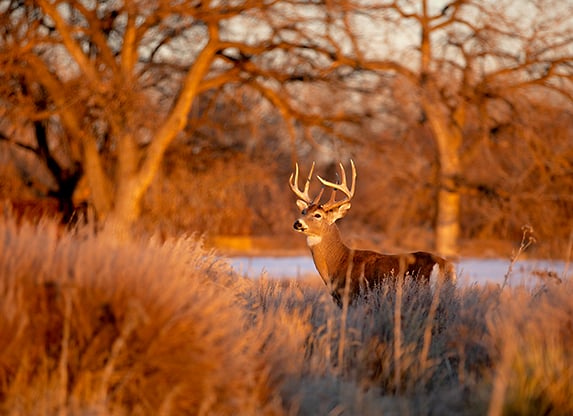
Pennsylvania’s hunting license sales down so far this year
Hunting license sales are down nearly 4.5% at the end of August, although Pennsylvania Game Commission officials believe there is
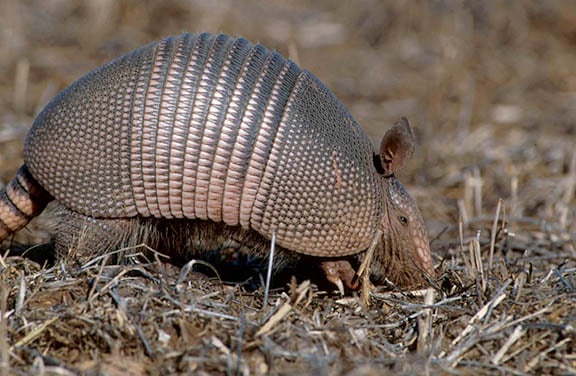
Origin of road-killed armadillo in southwest Ohio a mystery
An armadillo found as roadkill in southwest Ohio has researchers scratching their collective heads wondering from where the non-native mammal
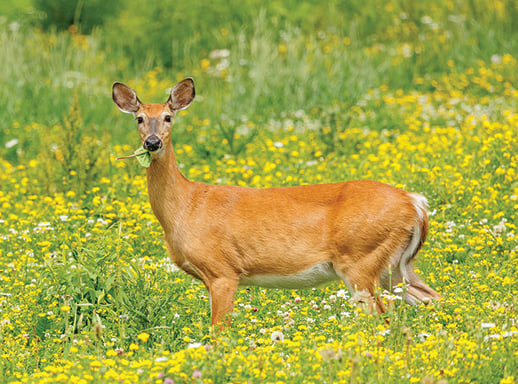
Bowhunt gets started in Ohio with additional opportunity in CWD surveillance area
Hunters in Ohio’s chronic wasting disease (CWD) surveillance area have additional dates this season to pursue white-tailed deer. The Ohio
