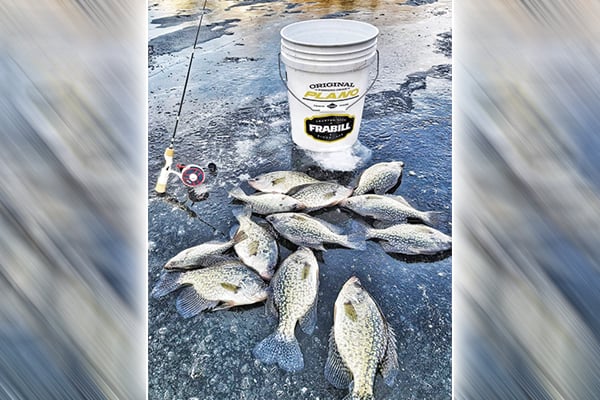
This winter has been quite generous in Ohio with colder temps and the availability of ice for those who enjoy my favorite winter activity. Ice fishing is in full-swing, and with that, comes the fun, bounties, and dangers that accompany it.
But it doesn’t have to be dangerous. Taking precautions and using common sense can go a long way toward making this your best season on the ice yet.
Ice fishing is an enjoyable way to combat cabin fever for lots of Buckeyes this time of year. Sadly, however, each year we hear of tragedies where people have fallen through the ice. Despite the dangers, ice fishing remains a safe activity as long as you know how to recognize hazards and practice safety.
There is no reason to shun the opportunity to pursue your favorite gamefish during the winter months. After all, fish taste better when they are caught through the ice. Just exercise caution and follow these simple safety procedures to help keep you from becoming a statistic.
As a rule, three to four inches of ice is safe. Always drill or spud several test holes when venturing onto any frozen body of water to ensure safe ice. Start near the shore, drilling a hole every 10 to 20 feet as you make your way out to your desired location. (See a full list of ice safety tips here.)
MORE ICE FISHING COVERAGE FROM OUTDOOR NEWS:
Patrick Durkin: Homely, but tasty, burbot gaining respect
Jeremy Smith: Perch action thriving again this winter on Minnesota’s Lake Mille Lacs
How to crack January’s mid-season walleye code
Underwater springs, currents, schools of fish, flocks of waterfowl, and even wind can create varying ice thickness on a lake. One area of the lake may have a foot of ice while an area just a few yards away may only have a couple of inches.
Beware of snow-covered ice.
Besides hiding possible cracks or weaknesses in the ice, snow acts an insulator and can therefore impede ice development.
Clear ice is the safest ice.
Cloudy or milky-colored ice is not as strong. Also, slushy or honeycombed ice is usually weak and unsafe. Even thick ice may become rotten after an extended rain.
Likewise, dark ice is thin and not safe as a general rule. For ice to be safe, it should appear white or blue in color.
If possible, fish with a partner and carry a cell phone. In the event that you do fall through, your partner can aid in getting you out of the water and call for help.
To that end, keep a safe distance from others. Congregating in a small area can stress the ice.
Bring a length of rope. It can be invaluable for pulling someone out of icy water.
Carry a pair of wooden-handled floating picks or screw drivers attached to a few feet of rope. These will help you to get out of icy water should you fall in.
Nearly 70% of ice fishing fatalities occur when the angler is in a vehicle of some type, whether it be an ATV or snowmobile. Always travel on foot on a lake when possible.
Consider wearing a life jacket.
Should you happen to fall through the ice, at least you will stay afloat. The risk of hypothermia will still exist, however.
Avoid alcoholic beverages.
Not only do they reduce your reaction time, they also lower the body’s internal temperature, increasing the odds of hypothermia.
If you fall through the ice and manage to make it out, you are not out of the woods as hypothermia can set in quickly. Bring along a blanket or extra clothing to wear while getting back to your vehicle.
With a dose of common sense and by putting these tips to use, there is no reason why you cannot go out and have an enjoyable and safe day of hardwater angling.
Before you go
Be sure to check with local bait and tackle shops for current ice conditions and fishing reports, and Ohio Outdoor News updates its comprehensive fishing report every two weeks.