





St. Paul — This September, the Minnesota DNR, Minnesota Department of Agriculture, and the U.S. Forest Service will complete a joint biological control effort to slow the spread of emerald ash borer (an invasive beetle from Asia) in the Chippewa National Forest. The effort, known as the parasitoid wasp program, involves the release of three species of non-stinging wasps to target EAB at different life stages, helping slow EAB without harming other species.
The three wasp species – oobiu agriliis (native to northeast Asia), tetrastichus planipennisi (China), and spathius galinae (Russian Far East) – are small and do not harm humans. They were selected by the Forest Service and tested to ensure the wasps will not negatively impact other species or the environment.
MDA initiated the parasitoid wasp program in 2010 to slow the spread of EAB in Minnesota. Since 2010, the program has expanded to 55 release sites in EAB-infested areas in the state. The parasitoid wasp program is the only biological control for EAB used at the forest landscape level in the state of Minnesota.
MORE COVERAGE FROM MINNESOTA OUTDOOR NEWS:
Plenty of water means scouting will be key to success for Minnesota waterfowlers on opener
A judge’s first-hand account from the 2025 federal waterfowl stamp contest
Minnesota’s James Hautman wins 2025 Federal Duck Stamp Art Contest for a record seventh time
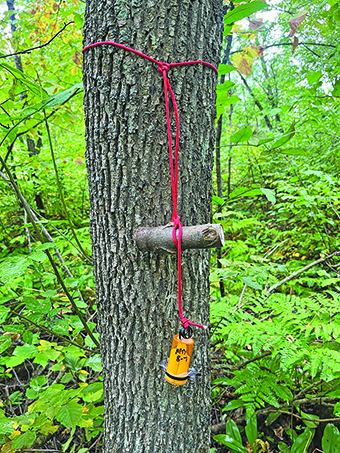
Parasitoid wasps are a targeted biological control strategy that reduces EAB populations and slows their expansion into uninfested forest areas. In 2025, 5,424 wasps were released in 200 acres of infested area of the Chippewa National Forest. A total of 8,480 wasps have been released during the past two summers. Currently, no new infestation areas are within the forest according to MDA’s EAB status map.
While MDA oversees the program statewide, the agency has enlisted the DNR’s assistance in releasing wasps in the Chippewa National Forest.
“Parasitoid wasps are a proven biological control that target EAB without harming other species. By releasing them at the forest landscape level, we’re adding a long-term tool to slow the spread and protect Minnesota’s ash trees,” said Eric Otto, DNR forest health specialist.
EAB was first discovered in Minnesota in 2009. In its larval stage, EAB kills ash trees by tunneling under the bark and feeding on the part of the tree that moves nutrients up and down the trunk. Minnesota forests are home to an estimated 1 billion ash trees. Minnesota cities also have an abundance of ash, making up 60% of the trees in some communities.
The emerald ash borer, an invasive wood-boring beetle from Asia, is responsible for the death and decline of tens of millions of ash trees in North America, according to the USDA’s Animal and Plant Health Inspection Service. EAB lays its eggs in the bark crevices of ash trees. The eggs hatch and the larvae burrow into the tree where they feed. This feeding is what damages the trees. EAB infestations have been detected in 37 states and the District of Columbia.
Find EAB resources on the Minnesota DNR’s website.
To learn more about EAB or the parasitoid wasp program, visit the MDA website.

Way less land for hunting spurs action from Pennsylvania Game Commission
The Pennsylvania Game Commission has overhauled its Hunter Access Program this year in an effort to boost declining landowner participation

Where do big bucks go when they vanish?
Over the course of our three-months-plus bowhunting season, seeing just one wall-hanger buck can be cause for celebration. Trophy proportioned
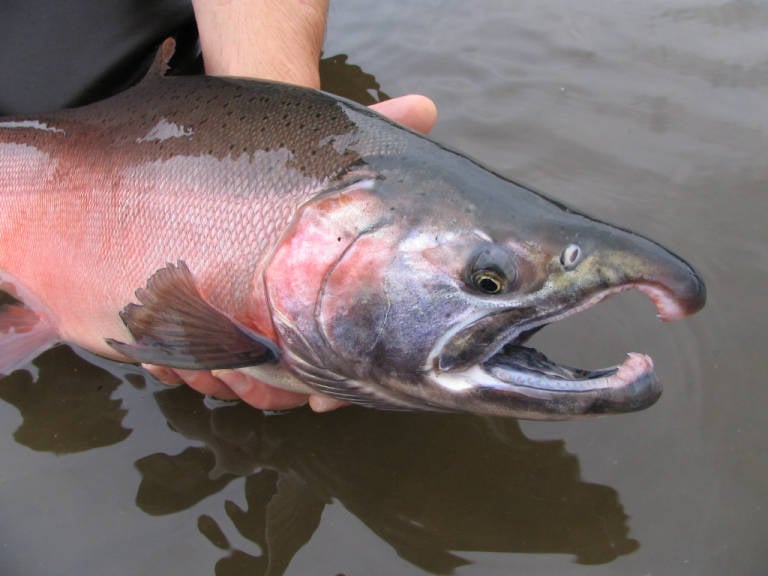
WI Daily Update: Tips for catching cohos on river mouths of Superior
This is a great time of year to chase coho salmon on the river mouths on Lake Superior. Tim Lesmeister
