





The oldest known lake trout in the Great Lakes, 62 years old at the time of capture, recently was documented by researchers at the Michigan Department of Natural Resources Marquette Fisheries Research Station.
This fish was collected from Klondike Reef in Lake Superior in the fall of 2023 by a team of intrepid researchers from the DNR, U.S. Fish and Wildlife Service, University of Wisconsin-Milwaukee and Purdue University.
Age is one of most important variables in tracking population health for fish, and this finding indicates that lake trout indeed live long and prosper in Lake Superior.
In March 2024, Dan Traynor, fisheries technician at the Marquette Fisheries Research Station, was working in the lab, processing samples collected in September 2023 at Klondike Reef, a remote offshore area near the Canadian border, 40 miles north of Grand Marais.
Traynor, one of the few experts on the age assessment of lake trout in North America, assigned the age of a humper lake trout collected during the survey. Humper lake trout are one subspecies of the fish found in offshore lake mounts in Lake Superior. They are slow-growing and don’t get very large because they mostly feed on invertebrates.
MORE COVERAGE FROM OUTDOOR NEWS:
Walleye limit increases from 2 to 3 on Aug. 23 on Minnesota’s Lake Mille Lacs
Invasive hemlock woolly adelgid gaining ground in eastern Adirondacks
Dan Ladd: Will New York’s crossbow bill be signed, and if so, when?
The fish was female, weighed 4.62 pounds and was 24.7 inches in length. These stats aren’t remarkable – the longest collected by the Marquette Fisheries Research Station was 53.1 inches and the heaviest collected was 35.5 pounds. The state record for Michigan is 61.5 pounds.
What was remarkable was the lake trout’s age, estimated to be 62 years old – the oldest documented lake trout in the Great Lakes.
This fish, that DNR staff has named “Mary Catherine,” hatched in 1961 (Mary was one of the most common names for human babies born that year).
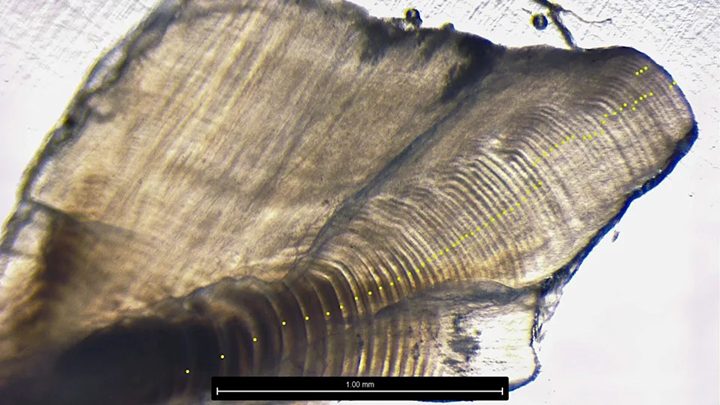
Age can be measured in fish with multiple body structures, such as spines. For lake trout, the otolith, or ear stone, is the most reliable indicator of age. The otolith is in the inner ear – humans have them, too – and as the fish grows, so does the otolith.
This growth leaves rings each winter, similar to tree rings, which can then be counted to estimate the fish’s age.
Lake trout are adapted to live in unproductive ecosystems with limited food resources, which makes them take the tortoise approach in life – high longevity over the long road, in contrast to salmon, which live only about four years.
Animals and plants that live in extremely unproductive environments with little food and extreme temperatures and weather (such as the Arctic, deep-sea trenches or deserts) take a long time to grow.
The upper Great Lakes are considered oligotrophic (low-productivity) ecosystems because of how deep, cold and far north they are. This is especially true for Lake Superior, the deepest of the Great Lakes, with an annual average surface temperature of only 40 degrees Fahrenheit and average depth of 483 feet.
Lake trout evolved and adapted to live in this type of ecosystem, and that is why lake trout can thrive at all depths in Lake Superior, even at Superior Maximus, the deepest location in the Great Lakes – 1,332 feet.
Due to environmental conditions, competition for resources and fishing, the typical life span for a lake trout in Lake Superior is 25 to 30 years.
Prior to this discovery, the oldest known lake trout in Lake Superior, which was reported by the Wisconsin Department of Natural Resources in 1998, was 42 years old.
Scientists look at the age distribution in fish populations to measure mortality, growth and longevity.
Mary Catherine was captured during a special survey to inventory the ecomorphs (sub-species) of lake trout at Klondike Reef (part of the Caribou Island Reef complex), and also to study their reproductive biology.
This study will provide more details on the life history and biology of Klondike-strain lake trout to help fishery managers better understand where to stock these fish.
The survey was conducted by the DNR’s Research Vessel Lake Char, with home port in Marquette.
The RV Lake Char crew is a blend of science and maritime professionals comprising two research technicians, two captains and a research biologist.
This study is important not only for Lake Superior, but also for lake trout recovery programs in the four lower Great Lakes. The Klondike strain of lake trout stocked in these lakes is based on fish collected from this site.
The U.S. Fish and Wildlife Service has Klondike-strain lake trout in their hatchery system to support the ongoing lake trout recovery programs in lakes Michigan, Huron, Erie and Ontario.
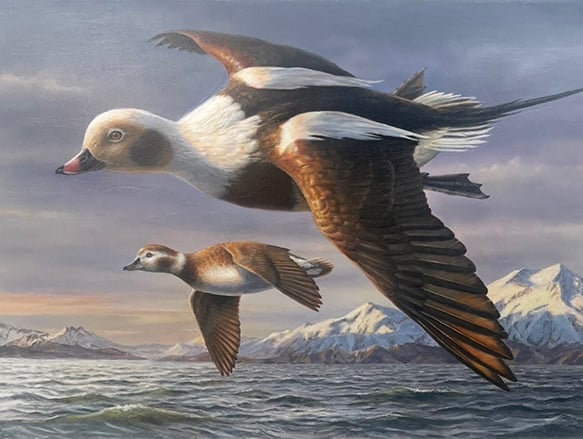
Minnesota artist Bob Hautman wins federal duck stamp contest for fourth time
Minnesota’s own Bob Hautman, from Delano, won the 2026 Federal Duck Stamp Art Contest today with his acrylic painting of
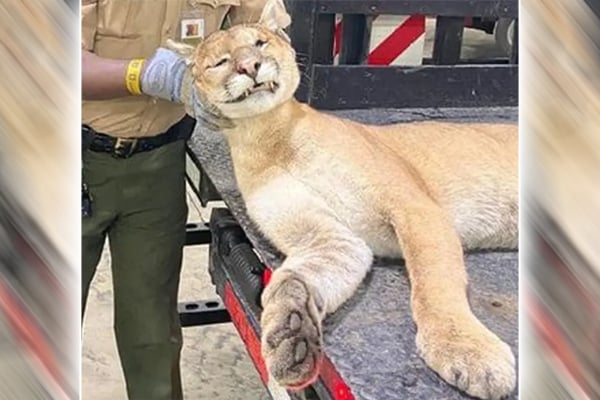
Confirmed cougar makes an even dozen sightings over 25 years
A mountain lion was spotted moving through southern Illinois, and this time wildlife officials believe the big cat crossed west
Illinois bow season opens Oct. 1 with few changes
The DNR has floated the idea of establishing additional Restricted Archery Zones in other parts of the state, but this
