





Outdoor News may earn revenue from products linked on this page by participating in affiliate programs. This comes at no extra cost to you. Click here to learn more.
As the holidays and winter approach, many of us are torn in several directions: a last deer hunt to add meat to the freezer, swapping hunting outfits for ice-fishing gear, and – oh, right – buying gifts for friends and family.
Once we get through that flurry of multi-tasking and transition, we can do ourselves a big favor by setting aside some quiet time to enjoy a new book or two. Here’s a quick look at a handful of new titles I found this year. I hope you’ll find a couple to your liking.
HUNTING
As hunter numbers have declined nationwide over the past several decades, one counter-trend stands out: females are the fastest-growing cohort.
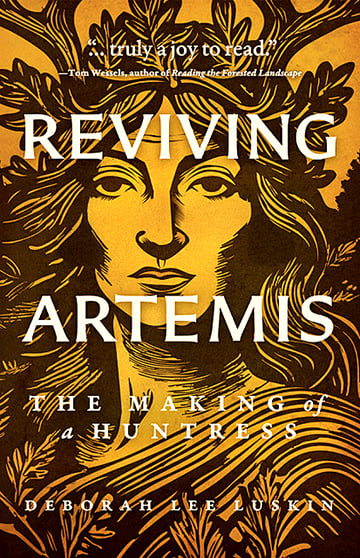
Young girls, single moms, and the wives and girlfriends of male hunters are taking to the blood sports like never before. Reviving Artemis is the memoir of a woman who moved from New York City to rural Vermont to write, garden, and raise a family. Then in her 60s, author Deborah Lee Luskin took the unlikely (some would say natural) leap to become a hunter.
In a light, humorous style, Luskin chronicles her foray into the male-dominated hunting culture and shares the lessons she learned in her first four years of hunting, culminating in shooting and field-dressing her first buck. Along the way, her confidence blossoms. “Deer hunting in November is now an integral part of my rural life,” she writes. “I’ve gained enough woodland literacy not just to find my way in the woods, but also to find the deer.” Her story should inspire anyone who considers taking up hunting for sport, tradition, or food.
Reviving Artemis: The Making of a Huntress, Sibylline Press, 280 pages, paper, $20.
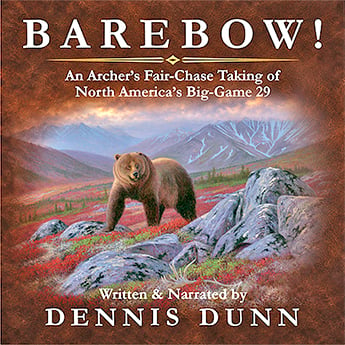
Dennis Dunn is the first to admit he is not a highly skilled archer. His patience and stalking ability, however, have served him well, making him the first archer to complete the North American Super Slam of 29 species of North American big game animals with a longbow without sights or release.
The Washington native’s passion for archery started early. His mother bought him a toy bow when he was five. At the age of seven, he took up archery at summer camp and never looked back. Now in his mid-80s, Dunn is still hunting and writing about his hunts.
This fall, he is releasing an audiobook of his award-winning 2008 book, Barebow, which contained 104 bowhunting adventures and misadventures on his quest to bag Pope & Young-qualifying trophies of all 29 North American big game species from Coues deer to bison.
The audiobook offers 17 new stories and brings the entire collection to life in Dunn’s own voice and in the spirit of the best campfire tales. With this recording as a companion, your long drives or sits will never have been so entertaining.
Barebow: An Archer’s Fair-Chase Taking of North America’s Big-Game 29, barebows.com, audiobook, $21.95.
Joe Knight’s latest book, Mostly Woodcock, is reminiscent of Steinbeck’s Travels with Charley.
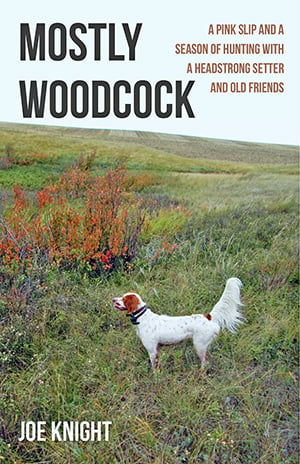
Steinbeck undertook his cross-county adventure in 1960 with his wife’s poodle, Charley, to rediscover the country he thought he had lost touch with. In 2016, having just lost his 34-year job as a reporter for the Eau Claire Leader Telegram, Knight, too, was at a transition point in his life. Mostly Woodcock depicts Knight’s travels with his English setter, Henley.
Knight spends his first fall in “retirement” by hunting his way to Montana and back, then enjoying a glorious autumn chasing woodcock in Wisconsin. Along the way, he and his Montana hosts rescue Henley from a bout with heat stroke, and he spends a couple of days fly-fishing for trout.
Back in Wisconsin, Knight and Henley hit the coverts hard, reveling in the beauty of the season and bagging the occasional grouse or woodcock. Knight’s narrative wanders from covert to covert, side-stepping to offer thoughts on eating woodcock and other game in camp, at home, and at the Ristorante la Beccaccia (woodcock), near his son-in-law’s home in northern Italy. It’s a delightful read that any upland bird hunter will find worthy of a fireside evening.
Mostly Woodcock: A Pink Slip and a Season of Hunting with a Headstrong Setter and Old Friends, Cornerstone Press, 160 pages, paper, $23.95.
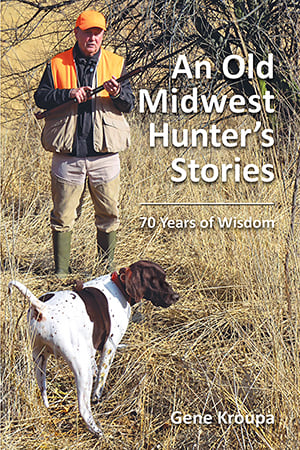
To paraphrase an old Dylan song, Gene Kroupa has forgotten more than most of us will ever know about hunting. He shares what he remembers from 70 years of pursuing whitetails, turkeys, upland birds, waterfowl, and small game in his new book, An Old Midwest Hunter’s Stories.
Kroupa’s fondness for the wild turkey is evident in the 76 stories that overflow the book’s first chapter. Most turkey hunters can relate to Kroupa’s encounters with toms that pitch down at daybreak and strut right to his decoys, those that hang up tantalizing just out of range, and the lone gobbler that was coming on a string until a trespasser intercepted him.
Any hunter will appreciate these honest, uplifting stories.
An Old Midwest Hunter’s Stories: 70 Years of Wisdom, 48 Hour Books, available from the author: kroupagene@gmail.com, 257 pages, paper, $20.
FISHING
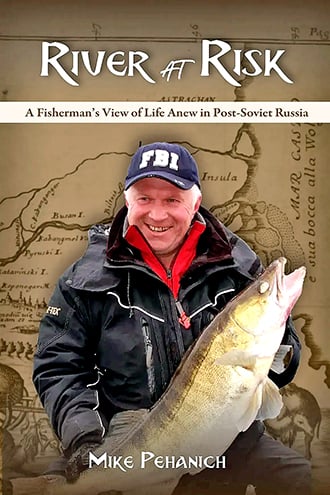
My favorite book in this year’s collection is an unusual one in many respects. Back in 2010, award-winning outdoor journalist Mike Pehanich joined tackle innovator Patrick Sebile to cover Zander Troffee, Russia’s largest and most prestigious sportfishing tournament, considered the “Bassmaster Classic of Russia.”
Along with Russia’s top anglers, Pehanich fished the legendary Volga and Akhtuba rivers for zander, the European cousin to the walleye. He was surprised to observe an angler crusade to instill awareness of a burgeoning conservation crisis and a country trying to shake the shroud of its recent Soviet past.
Pehanich offers a glimpse of a surprising Moscow bursting with neon life, the extravagance of a Stalininspired hotel, and the stark utility of Khrushchev-inspired apartments. Vivid characters brighten the narrative.
For Pehanich, the universal language of fishing opens a door to understanding the culture and people of post-Soviet Russia. The competitors we meet are as focused and dedicated as any American bass or walleye tournament anglers.
Their efforts to win with equipment American anglers might find laughable mirror their country’s struggle to rebuild itself with the material at hand and a hefty dose of determination and ingenuity.
River at Risk: A Fisherman’s View of Life Anew in Post-Soviet Russia, Barnes & Noble Press, mikepehanich.com, 456 pages, paper, $22.99.
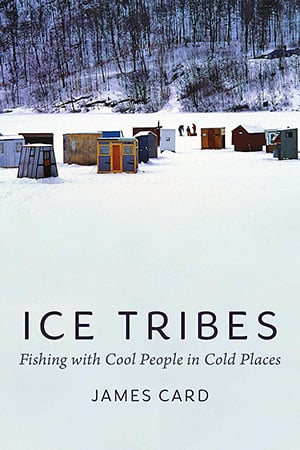
To residents of the Great Lakes states, ice fishing is more than a goofy winter pastime – it’s a way of life for half the year.
If the saying, “The North has six months of good fishing and six months of poor ice conditions” resonates with you, then you’ll be right at home in this book. James Card tells us what we already know: That ice fishing is a sport of strategy, stoicism, and analytical skill. Wherever ice anglers gather, they create a feeling of festivity and community spirit, whether hunkered in darkhouses ready to drop a spear on a pike or sturgeon, or sitting on buckets on a frozen Mississippi River slough jigging for panfish.
Card explores the traditions of ice fishing and the science of ice formation. Why does a lake freeze from the top down, for instance? He also points out that fly fishing might have more coverage in literature, ice fishing dominates in movies.
If you’ve ever dragged a sled out to a lake-bound shanty town, or wondered whether the smooth, white surface will support the weight of you and your snow machine, this book is for you.
Ice Tribes: Fishing with Cool People in Cold Places, Nebraska Press, 232 pages, paper, $24.95.
Most books about fly fishing take the reader to places of beauty: the cheerful mountain streams of the Rockies, the pastoral spring creeks of the Driftless Area, or the crystal waters of Patagonia.
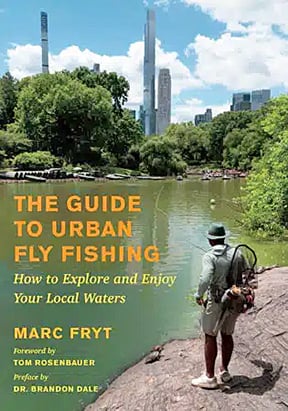
Marc Fryt turns those images on their head in The Guide to Urban Fly Fishing. There is no need to travel to far-off waters, whether you are a rank beginner or a wizened wielder of vintage cane. “Why can’t we cast a line right in the heart of our cities?” he asks.
Indeed, his book shatters the stigmas and preconceptionism — elitism, exclusivity, and notions of purity – that have kept fly fishing from thriving in urban settings, revealing how the sport is accessible to all. More than just a how-to, Urban Fly Fishing provides the tools and resources to help readers discover the joys of fly fishing in the heart of the city.
Fryt offers stories from savvy urban anglers from cities like Los Angeles, Denver, Minneapolis, Boston, New York, and Columbus. His book is also a call to action, encouraging us to advocate for the health of urban waters and ecosystems and providing the resources and inspiration to explore any city’s waters and discover community en route.
The Guide to Urban Fly Fishing: How to Explore and Enjoy Your Local Waters, Chelsea Green Publishing, 256 pages, paper, $29.95.
BOOKS ABOUT PLACE
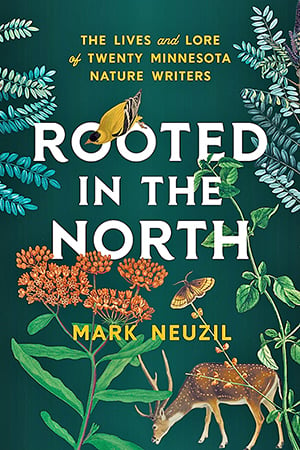
In Rooted in the North, retired University of St. Thomas professor, journalist, and Outdoor News contributor Mark Neuzil revives the voices of 20 writers whose lives and work showed generations how to appreciate Minnesota’s wild places, from the Northwoods, to its tallgrass prairies and the storied landscape of the Boundary Waters.
Readers will meet towering conservation figures like Sigurd Olson, whose spiritual vision of wilderness helped define the modern environmental movement, along with other notables, including Florence Page Jaques and Helen Hoover, indigenous writers Charles Eastman and Maude Kegg, and once-popular authors Charles Hallock and George Leonard Herter.
These essays explore the philosophy, science, adventure, faith, and everyday oddities that enlivened their subjects. The result is the only book of its kind – an illuminating portrait of the voices that helped readers define and fall in love with Minnesota’s natural landscapes.
Rooted in the North: The Lives and Lore of Twenty Minnesota Nature Writers, University of Minnesota Press, 256 pages, paper, $21.95.
Another Outdoor News contributor, Stan Tekiela, has two new books focusing on wildlife of the Midwest.
In Mammals of the Midwest, Minnesota-based naturalist Tekiela introduces readers to 100 mammal species inhabiting the region in a photo-rich field guide. Organized by animal family and size, the book simplifies identification for outdoors enthusiasts of all experience levels. Detailed color photographs, range maps, track patterns, and descriptions of habitat and behavior help readers recognize wildlife and the signs animals leave behind. Tekiela also shares natural history observations and interesting facts about each species. Compact enough for a backpack, the guide makes a handy companion for hunters, hikers, or anyone curious about the region’s mammals.
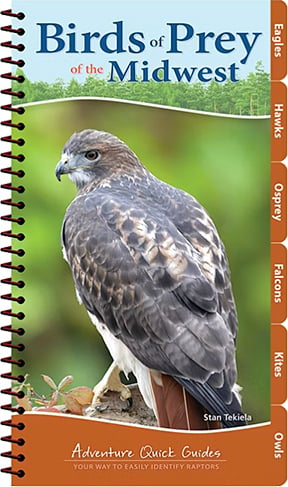
Identifying birds of prey can be challenging, and Tekiela also has authored the Adventure Quick Guide: Birds of Prey of the Midwest.
This compact, spiralbound quick guide is designed for convenient use outdoors by offering a portable reference for distinguishing hawks, eagles, falcons, owls, and other birds of prey. Its straightforward format makes it particularly appealing to beginning birders and casual wildlife observers. It’s a useful companion for exploring the region’s skies, fields, and forests.
Check out all of Tekiela’s titles at http://adventurepublications.net or his own website: naturesmart.com
Cookbook
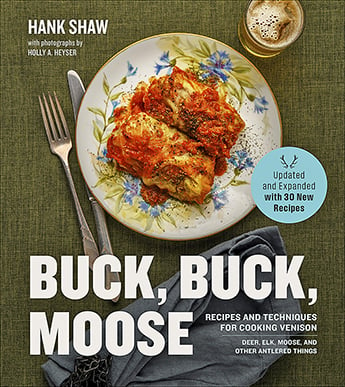
A decade after the release of his groundbreaking Buck, Buck, Moose, James Beard Award-winning chef and author Hank Shaw figured he had learned enough to add 30 recipes and new cooking methods to what has become a modern classic and serve it up, piping hot to a new generation of deer hunters.
Shaw has added guidance throughout for sous vide machines, air fryers, electric pressure cookers and slow cookers. The charcuterie section has been expanded and modernized, chapters have been reorganized for easier use, and the index has been expanded. New recipes range from Swedish “frost bump” venison, to British game pies, Mexican pacholas and Texas-style hot link sausages, along with more smoked venison dishes and weeknight casseroles.
The anniversary edition also deepens Shaw’s emphasis on using the whole animal. When Buck, Buck, Moose first appeared, nose-to-tail cooking was only beginning to gain broad acceptance among American hunters. A decade later, more hunters are treating shanks, necks, shoulders and other working cuts as valuable ingredients rather than automatically grinding them.
Buck, Buck, Moose: Recipes and Techniques for Cooking Venison, H&H Books, honest-food.net, 336 pages, hardcover, $35.
Those are the best outdoor books to cross my desk this year. Choose one or two for yourself and perhaps a few more as gifts this Holiday season, and I promise you’ll be glad you did.
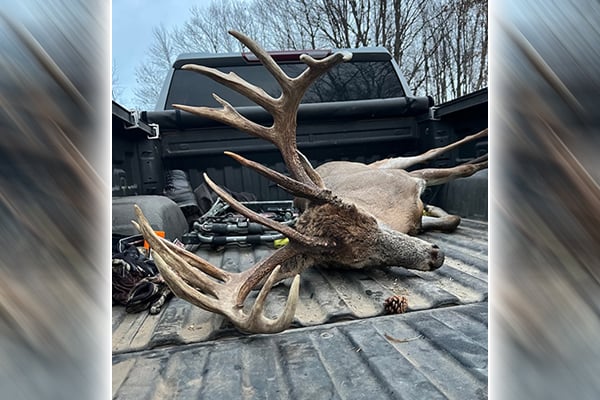
Marathon County archery buck could rank top five in Wisconsin records
Marshfield, Wis. — A Marathon County buck may make Wisconsin’s record books as one of the state’s top five archery
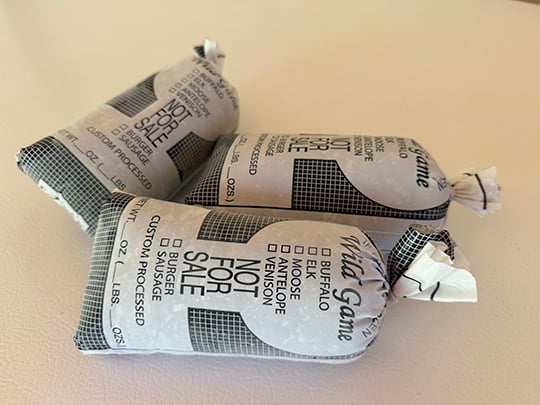
WI Daily Update: Donate a deer to families in need
Wisconsin hunters can turn an extra deer into meals for families in need. Here’s how the state’s deer donation program
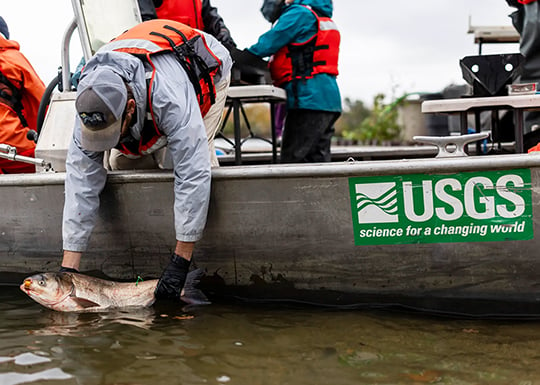
Tagging carp in Illinois River helps track threat to Lake Michigan
Ottawa, Ill. — Scientists have been tagging hundreds of silver carp in the Illinois River to learn how the invasive
