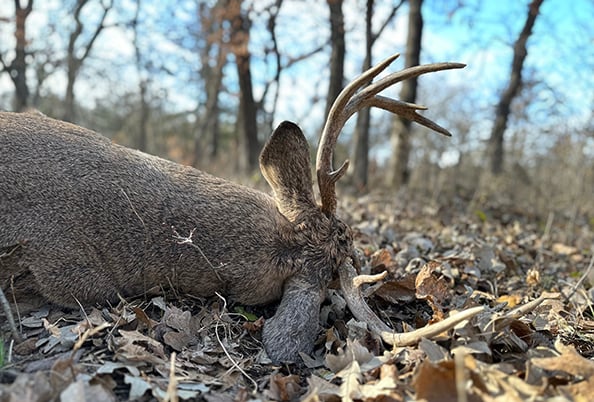
Madison, Wis. – The Wisconsin Department of Natural Resources confirms the first positive test result for chronic wasting disease (CWD) in a wild deer in Pepin County, which is located on the Wisconsin and Minnesota border. The deer was a hunter harvested adult buck.
This detection will cause the following:
- The current feeding and baiting ban in Pepin will be extended for three additional years. The expiration date will be extended further with any additional detections in the county or within 10 miles of Pepin County in the adjacent counties.
- The existing baiting and feeding bans in adjacent counties are not impacted by the detection in Pepin County.
CWD is a fatal, infectious nervous system disease of deer, moose, elk and reindeer/caribou. It belongs to the family of diseases known as transmissible spongiform encephalopathies or prion diseases. The DNR began monitoring the state’s wild white-tailed deer population for CWD in 1999. The first positives were found in 2002.
MORE WHITETAIL COVERAGE FROM OUTDOOR NEWS:
Grunts allow you to speak a buck’s language, but you need to know what to say
Video: Maximize your efficiency during the whitetail rut
Be aggressive when trying to tag a big-woods bruiser buck
State law requires that the DNR enact a three-year baiting and feeding ban in counties where CWD has been detected, as well as a two-year ban in adjoining counties within 10 miles of a CWD detection. If additional CWD cases are found during the lifetime of a baiting and feeding ban, the ban will renew for an additional two or three years with each new positive test result as they are confirmed.
Baiting or feeding deer encourages them to congregate unnaturally around a shared food source where infected deer can spread CWD through direct contact with healthy deer or indirectly by leaving behind infectious prions in their saliva, blood, feces and urine. More information regarding baiting and feeding regulations is available on the DNR’s Baiting and Feeding webpage.
More general information about CWD can be found on the DNR’s CWD webpage.
CWD sampling locations can be found on the DNR’s CWD Sampling webpage.