




Understanding phases of the muskie and cisco autumn nexus
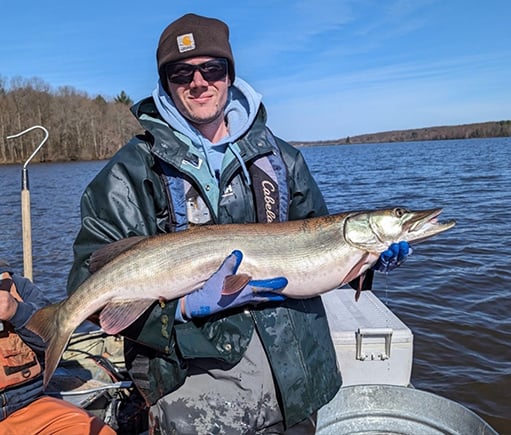
Some predator-prey relationships are so important, and so central to an angler’s understanding of the species that they become part of the predator species’ identity in anglers’ minds. Walleyes and yellow perch. Brown trout and mayflies. Largemouth bass and sunfish.
It’s true, in part at least, because those relationships create opportunities for anglers, especially at certain times of year when that relationship comes into focus.
Right about now, another classic relationship is about to take center stage across north country – muskies and ciscoes. Ciscoes (aka tullibees) are fall spawners, and their pre-spawn movements and eventual spawn coincide with muskies going through their own seasonal changes. The end result is a convergence of predator and prey in key locations, and an opportunity for anglers to take advantage.
But here’s the problem with these relationships – or at least our understanding of them. They’re so well-known they become cliché, and that includes misinformation and misunderstandings that get repeated until they become accepted as common knowledge.
Case in point: cisco spawning behavior. Read most any article about fall fishing and ciscoes, and you’ll almost certainly see a statement like “ciscoes move shallow and spawn on rock reefs and rocky points.”
Well, not quite, or at least that’s not the whole story. Cisco spawn, like most other fish, happens in stages. Understanding those stages can help you target muskies effectively throughout mid-fall and right up until ice up or season closure, whichever comes first.
FISHING FEATURES FROM OUTDOOR NEWS:
Into the abyss for late-fall walleyes
What’s the intrigue of flathead fishing? It’s ‘the fight, their power’
Fall is the perfect time to catch Lake Erie’s giant walleyes; here’s what to focus on
So start with mid-fall, with water temperatures dropping down into the low to mid-40s, and even high 40s. The classic “cisco spawn” muskie pattern written about so often focuses on this phase, and is actually pre-spawn. Ciscoes that have spent the summer in open water begin to congregate and move towards spawning locations, still mostly over open water, but cruising in large schools along the edges of main lake basins. As they cruise, they’ll bump into main lake structure – points, reefs, and inside turns.
Muskies will be there to meet them. As shallow weeds die back, muskies that had spent the summer prowling main lake flats and weedbeds move to the basin edge. At the same time, fish that spent the summer over open water follow the ciscoes in. Both predator and prey converge on the primary breakline at the edges of main lake basins that hold cisco populations.
That convergence, by the way, leads to another common misconception – that fall muskies are “putting on the feed bag” before winter. They really don’t. As cold-blooded animals, their metabolisms slow down with declining water temperatures. They’re just concentrated in ways they usually aren’t.
Target this convergence in a couple ways. If you prefer to cast, and conditions allow it, casting prominent main lake and basin-edge structure is effective. Cycle though spots, as both ciscoes and muskies are on the move and regularly move in and out of spots. If a location is consistently productive, there’s nothing wrong with camping on a spot (in the days before Spotlock, I would happily anchor on some spots) and waiting for feeding windows to open and new fish to move in.
Trolling is another highly-productive option, especially if conditions make casting miserable. Troll main lake breaklines, raking diving crankbaits along edges and across points. Depth can vary. On darker water, baits that run in the 7- to 10-foot range are ideal. On clear, deep, “trout water” type lakes deep-diving cranks that reach 20 feet may be necessary. In either case, occasionally banging bottom is a key trigger.
As water temperature continues to drop into the low 40s to high 30s, ciscoes will start to make forays into very shallow water, often after dark.
These movements are usually around area where they will eventually spawn – which brings us back to actual spawning locations. Although the common belief is ciscoes spawn on rock points and bars, in reality they’re more likely to spawn on shallow sand, fine gravel, and even over low-growing weeds like cara or sandgrass. Actual spawning usually happens at night, and often nearly at ice-up, when water temperatures are in the high 30s. There is also a strong correlation to a full moon, provided all other conditions are right.
What’s important for anglers is that ciscoes have a high site fidelity to spawning locations, using the same ones year after year – and muskies know it. Finding these areas is often a matter of keen observation. Slowly motor through likely-looking areas near where prespawn ciscoes concentrate. Look for cruising pods of ciscoes, and for chewed-up victims. Once you find them, these spots can produce year after year.
Targeting muskies prowling around spawning locations is usually a casting thing – it’s often too shallow to troll effectively. Make long casts to cover water with slow-moving glide baits, twitched minnow baits, slow-rolled spinnerbaits, soft swimbaits, and even subtle walk the dog topwaters on calm days. My last fish one season was on a topwater in 37-degree water, and the lake froze over just a few hours later.
Can you fish at night? Sure, some do. But it’s cold, and frankly, it can be dangerous. A minor mishap on a July night fishing expedition can be a major problem in mid-November.
Muskies and ciscoes and their relationship is a major focal point for the fall season in lakes where they are present together. Follow the progression from pre-spawn to spawn and it’s one of the best opportunities of the year for good fishing and a shot at a giant, right to the bitter end.
SUBSCRIBER CONTENT
Read this article now.
Create a free Outdoor News account.
Create a free account below to get instant access to this article, thousands of Outdoor News stories, and our digital editions. Your 1-month trial starts the moment you sign up.
No credit card required
No credit card required
No credit card required
Subscriber? Login Here.
Share on Social
Hand-Picked For You
Ohio Division of Wildlife manager Comer retires after 32 years
Public launch in Tiffin newest scenic river access in Ohio
Wisconsin EHD in southeast appears to be ending
Lake Superior lake trout numbers falling as Wisconsin NRB approves harvest reduction
Baitfish ban proposed in the Adirondacks
Southern Zone opener marks new earn-a-second-buck era in New York
Related Articles

Ep. 109 – Heart of Deer Season
Deer season is in full swing in nearly all Northeastern states, but the warm weather has sure thrown a wrench

Ohio Division of Wildlife manager Comer retires after 32 years
West Mansfield, Ohio — On Oct. 31, the banquet room at the West Mansfield Sportsman’s Club filled to capacity as
Fooling the wise: Try these tricks to bag wily waterfowl during late season
Even in north-country states like Minnesota that get first crack at fresh birds coming down from Canada, sharp-eyed ducks quickly
