Key points from this story:
- $13.4 million fish-passage project completed: A 778-foot Emerald Shiner Fish Passage at Buffalo’s Freedom Park was built with Great Lakes Restoration Initiative funding to help emerald shiners navigate the strong currents of the Niagara River.
- Slower water is helping shiners move upstream: Concrete-filled steel baffles attached to the seawall create channels with water velocities slow enough for the tiny baitfish to swim through.
- Important to the Great Lakes ecosystem: Emerald shiners are a key forage fish for larger predators and support the broader Great Lakes food web.
Buffalo, N.Y. — It was a big project for a small fish. The emerald shiner, arguably one of the most important fish in the Great Lakes, received a significant amount of funding through the Great Lakes Restoration Initiative – $13.4 million to be exact – to help the tiny baitfish overcome the strong currents of New York’s Niagara River.
Earlier this summer, the U.S. Army Corps of Engineers Buffalo District, U.S. Environmental Protection Agency and the City of Buffalo gathered at Freedom Park in Buffalo to celebrate the completion of a unique fish passage that would allow these baitfish an easier passage after its annual spawning ritual is complete in the upper Niagara River (above Niagara Falls).
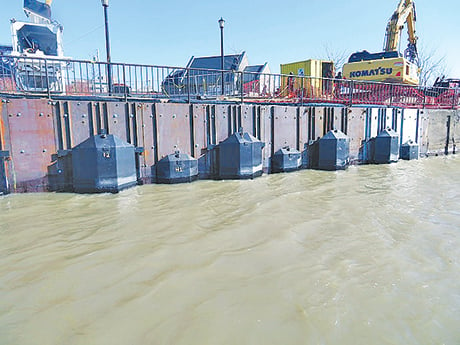
The Emerald Shiner Fish Passage (a 778-foot-long structure at Freedom Park) utilizes a series of specially designed, concrete-filled steel baffles mounted to the park’s seawall. These baffles create channels of slower water that shiners can swim against. Measurements following construction confirmed water velocities have dropped below the shiners’ swimming threshold.
Buffalo District team members have already observed shiners passing through the project into upstream portions of the river in groups of hundreds. The team also observed common terns hunting fish along the seawall, an activity never previously seen at the site.
MORE COVERAGE FROM NEW YORK OUTDOOR NEWS:
New York hunting seasons opening for big and small game; here’s what to know
Glenn Sapir: Paradise lost in the form of a favorite bass pond
Dan Ladd: Remembering cousin (little brother) Jimmy
The emerald shiner drew the attention of staff and students at the Great Lakes Center of SUNY Buffalo State from 2013 to 2018 to monitor and assess these tiny baitfish. Very little was known about the movements of these fish into the Upper Niagara River and back to Lake Erie.
Biologists determined that the river shoreline had suffered a multitude of changes that affected fish migration, especially with juveniles and larvae that would complete the annual cycle into Lake Erie. Previous studies such as this one helped to identify this stretch of the river as moving too fast for the fish to navigate.
According to the Lake Erie Annual Report for 2025, there has only been three years since 2010 where there was an uptick in all phases of the emerald shiner collected by DEC fisheries personnel in its fall studies. Many of the other forage fish were also being impacted, in part due to the large number of predator fish that fill the lake.
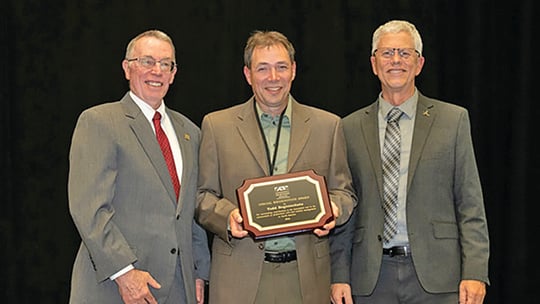
“For such a small fish, the emerald shiner plays a huge role in supporting a healthy ecosystem and a strong economy,” Lt. Col. Aaron Anderson, USACE Buffalo District commander, said. “We’re excited to have brought this project to completion on time and within budget so that shiner can thrive, and the Great Lakes region can enjoy the benefits.”
“I thank the U.S. Army Corps of Engineers for completing the Emerald Shiner Fish Passage project. This work will help an important native species while strengthening critical infrastructure at Freedom Park,” City of Buffalo Mayor Sean Ryan said. “As an avid birder, I know that protecting one species can help sustain entire ecosystems. Investments like this ensure Buffalo’s waterfront remains a healthy habitat for fish, birds, and other wildlife for generations to come.”
The final phase of the fish passage was constructed from March 2025 through May 2026. It spans 700 feet along the seawall at the south end of Freedom Park. Construction included repairs to the timber crib wall, the installation of steel plates at the waterline and the attachment of the concrete-filled metal baffles.
Now it’s up to the fish.