




Home » Nature Page & Night Sky » Wisconsin Mixed Bag: Antlerless bonus tags go on sale Aug. 17
Wisconsin Mixed Bag: Antlerless bonus tags go on sale Aug. 17

Madison — Deer hunters interested in buying leftover antlerless deer bonus tags may begin doing so on Monday, Aug. 17, at 10 a.m. Bonus tags (harvest authorizations in bureaucratic speak), may be purchased through the Department of Natural Resources’ (DNR) online GoWild system, or by visiting a license sales location.
Bonus tag sales are broken down by day and hunting zone. On Monday, Aug. 17, sales begin for the Northern Forest Zone and Central Forest Zone. Tag sales for the Central Farmland Zone begin at 10 a.m. on Tuesday, Aug. 18, while Southern Farmland Zone bonus tags go on sale at 10 a.m. on Wednesday, Aug. 19. Any remaining tags in all zones go on sale Thursday, Aug. 20. Tags may be purchased until sold out or the season ends.
Bonus harvest authorizations are $5 for any person under age 12, $12 for residents and $20 for nonresidents.
Bonus tags may be purchased at the rate of one per person, per day until the unit is sold out or the season ends. Tags are issued by unit and land-type (public or private). Hunters will be asked to identify the zone and unit – and whether hunting public or private land – when buying tags. Those hunting Managed Forest Law and Forest Crop Law lands open to public hunting – as well as Voluntary Public Access lands – must buy public land bonus tags.
Coon Creek Trout Survey Finds Good News
Coon Valley, Wis. – A DNR 2025 Coon Creek fisheries survey suggests that brown trout populations are about as strong as ever, with some surveys showing more than 1,000 fish per mile of stream, according to DNR Senior Fish Biologist Kirk Olson. He said the strong numbers are due, in part, to decades of habitat work and stocking support led by Coon Creek residents and the DNR, as well as watershed-wide efforts to reduce erosion. Native brook trout are less common, and are primarily found in Coon Creek’s colder headwaters.
Water warms and is less optimal for trout species toward the creek’s confluence with the Mississippi River, where habitat improves for panfish, suckers and walleyes in these deeper waters, according to a report in the Vernon Reporter.
DNR Makes 2026-27 Hunting Regulation Booklets Available
Madison — The DNR has released hard copies of the 2026-27 hunting regulations (fall 2026-spring 2027) while also publishing an online version of the hunting regulations, including a drop-down filter that can help people navigate more quickly to the information they need.
The online version is mirrored after the print regulations, so hunters familiar with the print regulations should find the online regulations to be an easy transition. The print version will be available at DNR locations that are designated as service centers, meaning the hard copies will not be available at most DNR offices in northern Wisconsin.
‘R3’ Grant Application Deadline is Sept. 15
Madison — The DNR is accepting applications for the Hunter Recruitment, Retention and Reactivation (R3) grant program through 11:59 p.m. on Sept. 15.
The R3 grant supports projects that promote awareness, understanding and participation in safe, ethical hunting and hunting-related outdoor skills. These skills offer individuals a unique connection with nature and wildlife and foster confidence and comfort in wild places.
Past grant recipient projects include private land access programs for hunters, archery range upgrades for urban after-school clubs, support for hunting-related expos focusing on recruiting new audiences, learn-to-hunt and learn-to-shoot programs, high school clay target teams, 4-H shooting sports programs and more.
A total of $75,000 in grant funding is available. Individual grant awards are normally limited to $25,000. Cost-sharing funds can be awarded to individuals or community groups, Wisconsin tribes, universities and schools. The grant is a sub-award of federal Pittman-Robertson Act funds and is administered as a reimbursement program. Applicants should plan to start projects one year from the application deadline.
Ontario’s Provost Named New Chair of Great Lakes Fishery Commission
Ann Arbor, Mich. — The Great Lakes Fishery Commission, during its meeting in Windsor, Ontario, selected Earl Provost as the new commission chair. Provost is Ontario’s first agent-general in Chicago – appointed in 2019 by Premier Doug Ford – representing Colorado, Illinois, Indiana, Iowa, Kansas, Kentucky, Michigan, Minnesota, Missouri, Montana, Nebraska, North Dakota, Ohio, Pennsylvania, South Dakota, Utah, Wisconsin, and Wyoming. As commission chair, Provost will convene and run meetings and work with his fellow commissioners to develop the program to implement the Canada-U.S. Convention on Great Lakes fisheries.
The Great Lakes Fishery Commission, a bi-national institution established by the 1954 Convention of Great Lakes Fisheries, a treaty between Canada and the United States, facilitates fishery management among the jurisdictions, conducts and coordinates a science program and implements a comprehensive effort to control invasive sea lampreys. Canadian commissioners are appointed by the Privy Council of Canada while U.S. commissioners are appointed by the president of the United States. Provost succeeds Ethan Baker, mayor of Troy, Mich., as chair. Baker has assumed the role of vice-chair.
Provost was appointed as a commissioner in November 2022, during which he served as commission vice-chair and as chair of the Canadian Section.
SUBSCRIBER CONTENT
Read this article now.
Create a free Outdoor News account.
Create a free account below to get instant access to this article, thousands of Outdoor News stories, and our digital editions. Your 1-month trial starts the moment you sign up.
No credit card required
No credit card required
Subscriber? Login Here.
Share on Social
Hand-Picked For You
Pennsylvania’s hunting license sales down so far this year
Origin of road-killed armadillo in southwest Ohio a mystery
South Dakota Fishing Report – September 16, 2026 – video
Bowhunt gets started in Ohio with additional opportunity in CWD surveillance area
Ohio’s statewide fishing and hunting report on Sept. 17, 2026
Niagara Falls (N.Y.) Fishing Report – September 15, 2026
Related Articles
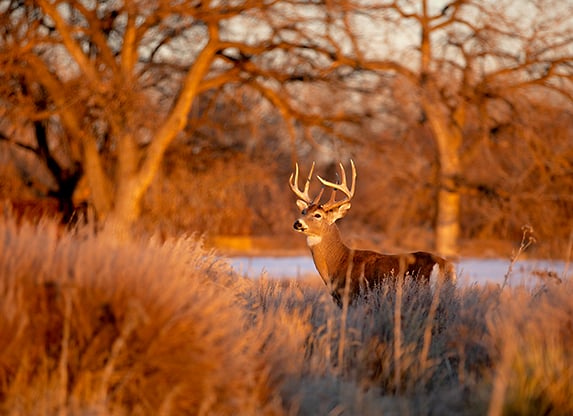
Pennsylvania’s hunting license sales down so far this year
Hunting license sales are down nearly 4.5% at the end of August, although Pennsylvania Game Commission officials believe there is
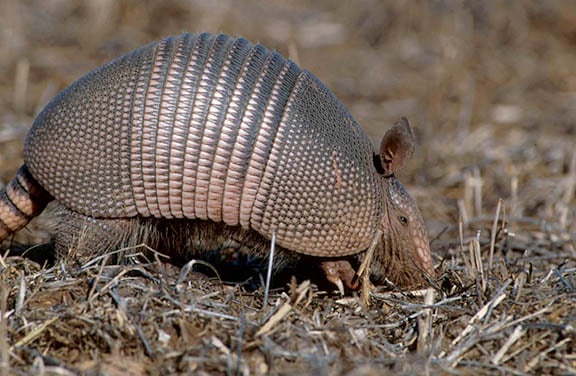
Origin of road-killed armadillo in southwest Ohio a mystery
An armadillo found as roadkill in southwest Ohio has researchers scratching their collective heads wondering from where the non-native mammal
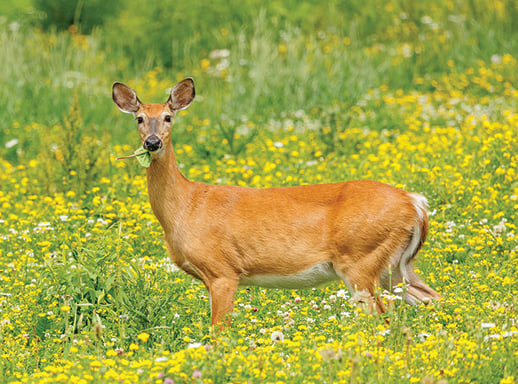
Bowhunt gets started in Ohio with additional opportunity in CWD surveillance area
Hunters in Ohio’s chronic wasting disease (CWD) surveillance area have additional dates this season to pursue white-tailed deer. The Ohio
