From Penn State Extension
State College, Pa. — Few people tolerate seeing a small creature crawling on their skin, or, even worse, stuck to it. We often regard encounters with ticks with disgust and anxiety.
Each May, Pennsylvania recognizes Lyme Disease Awareness Month to highlight the importance of prevention, detection, and treatment of this tick-borne disease.
Ticks are not insects. Ticks belong to the class Arachnida, along with spiders, mites, scorpions, and daddy long-legs.
Ticks have four stages in their life cycle: egg, larva, nymph, and adult. A tick will feed only once during each of its larval, nymphal, and adult stages.
It usually takes two years for a tick to complete its life cycle. Disease transmission is usually by female ticks. Female ticks require a blood meal to develop their eggs. Male ticks search for females and may feed briefly, if at all, and do not become engorged.
MORE COVERAGE FROM PENNSYLVANIA OUTDOOR NEWS:
New Pennsylvania Game Commission office will aid landowners looking to manage for wildlife
Pennsylvania expected to remove conservation order season for light geese in spring ’27
Trout stocked in April are harder to catch in May; here’s how to adjust
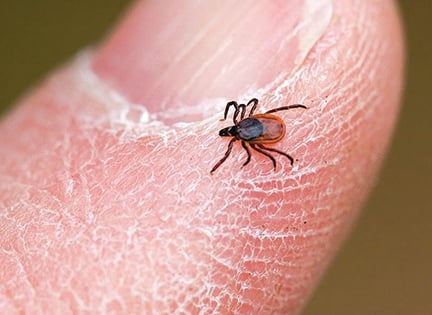
Lyme disease is caused by the bacterium Borrelia burgdorferi and is transmitted by the bite of an infected black-legged tick, also called a deer tick (Ixodes scapularis). Pennsylvania reports among the highest cases of Lyme disease in the United States.
In addition to the black-legged tick, there are over 20 tick species in Pennsylvania. Four species regularly bite people and our companion animals: black-legged ticks (Ixodes scapularis), American dog ticks (Dermacentor variabilis), lone star ticks (Amblyomma americanum), and brown dog ticks (Rhipicephalus sanguineus).
In addition to Lyme disease, ticks in Pennsylvania can spread several other illnesses, including anaplasmosis, babesiosis, ehrlichiosis, and Rocky Mountain spotted fever.
The lone star tick has been linked to a condition called alpha-gal syndrome, which causes a delayed allergic reaction to red meat (meat and products from mammals).
Ticks are especially active in warmer months, from late spring through early autumn. However, ticks are active any time the temperature is above freezing. Low winter temperatures in Pennsylvania rarely kill ticks as they shelter in leaf litter under snow.
Preventing tick bites is the most effective way to reduce the risk of tick-borne diseases. Chickens, guineafowl, and opossums are not effective at reducing tick populations.
Ticks do not fly, jump, or fall out of trees. They climb onto low plants and patiently wait for a suitable host to pass within their grasp.
Insect repellents mask our scent. Wearing light-colored clothing helps us see ticks more easily. A thorough tick check after spending time outdoors is essential.
Showering within two hours of possible tick exposure helps wash away many ticks. Remove any attached ticks promptly with fine-tipped tweezers.
Putting dry clothing into a hot dryer for 10 minutes will kill ticks.
Washing clothes does not kill ticks and may not rinse them away.
Use Lyme Disease Awareness Month to learn more about ticks and tick-borne diseases. Penn State Extension offers more than 65 articles and 25 videos on ticks and Lyme disease.
The Pennsylvania Tick Lab, part of East Stroudsburg University, offers tick identification and testing. It is essential to seek professional medical assistance with all tick bites.