




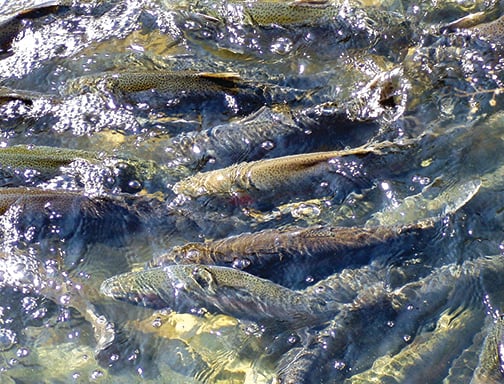
The best steelhead fishermen understand the life cycle and tendencies of the fish from smolt to adult. They understand why the fish return to the tributaries each year and they are aware that many holdovers remain in the streams until spring.
They also realize that spawning can take place from November until March, so fresh steelhead continue to access the tributaries throughout that time frame.
Additional opportunities to catch these prize fish occur when the tributaries shift from winter toward the first hints of spring. Snow melts and rains combine to provide a large window of opportunity for steelies to enter and exit the tributaries.
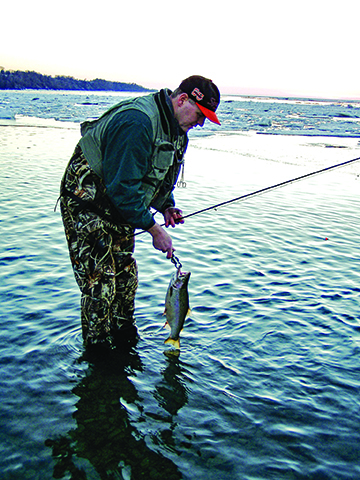
Steelhead behave differently during this spring season, and anglers who learn to consider the subtle differences in behavior are the ones who find the most success in late-February, March, and sometimes, even mid-April.
Spring steelies are often a blend of fresh chromers, entering on rising flows, and darker, holdover fish, which staged to spawn and haven’t yet felt the urge to swim to the big lake.
Mark Haffley, biologist for the Pennsylvania Fish & Boat Commission’s Lake Erie Research Unit, explained that the returns to the tributaries and spawning are all linked to genetics.
“Typically, steelhead – rainbow trout – are spring spawners,” he said.
“What makes a steelhead different from your average rainbow is that they are potamodromous, meaning they are born in flowing freshwater, migrate to a large body of freshwater to live for a period, then return to freshwater streams to spawn.”
The biologist explained that because of a need to produce so many fish, they take the earliest spawners to have the longest possible season to collect eggs.
“Of those first egg takes, many of the offspring will spawn in the same time frame as their parents, but some will spawn earlier and some later,” Haffley said.
“By continuously taking the earliest spawners each season, we effectively move the spawning time frame up. This works for us because it puts fish in the stream earlier and gives our tributary anglers access to them for a longer time frame.”
MORE TROUT COVERAGE FROM OUTDOOR NEWS:
So you want to own a quality fly rod? Here’s what to consider
Faster action is sought for lead-tainted Blue Hole Creek in Pennsylvania
Winter fly-fishing: You don’t have to wait until spring to catch Pennsylvania’s trout
Many steelheads ignore the normal urge of a rainbow trout to wait until spring to spawn, Haffley poited out, “Many steelhead have been manipulated to access the streams in the fall and spawn before Thanksgiving,” he said.
“Of course, the natural urge to spawn in the spring remains in many steelhead, so they continue to access the tributaries in February and March.”
However, in northwest Pennsylvania, around here, the conditions that steelhead find themselves in the fall and spring are completely different” according to Haffley.
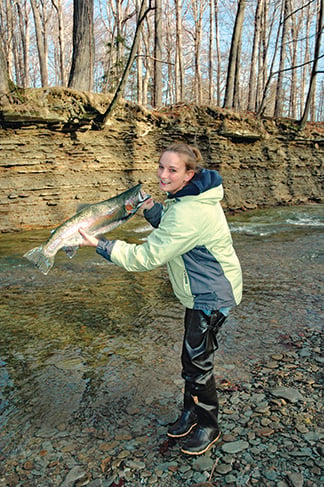
In the fall, he noted, the longer they stay in the streams the better the conditions get. Flow increases, temperatures drop and conditions get better for trout life.
The opposite is true in spring. The sun is higher in the sky, visibility is increasing, temperatures are warming and typically flows are starting to decrease. The fall fish seem to come in and stay in the tributaries for a much longer time than the spring runs.
Water temperatures hover in the mid 30s to low 40s, making presentation and drift speed critical. Slow, deep pools that hold lethargic winter fish can suddenly come alive after a warm rain, while classic runs begin to draw spring spawners.
The angler who watches the gauges, notes overnight lows, and adjusts tactics accordingly will always outfish the one who simply shows up and guesses.
Egg patterns, small nymphs, and pale streamers all have their moments in March, but none matter without patience and careful observation. Steelhead this time of year reward the fisherman who treats each tributary like a living system – one that changes by the hour.
Haffley offers some advice for spring anglers and fly-fishers.
“Typically, emerald shiners and egg sacks work well for bait anglers – it seems the fish prefer a slightly larger bait at this time because the water is so cold, the juice needs to be worth the squeeze,” he said.
“In other words, the fish aren’t going to use more energy to acquire food than they’ll gain.”
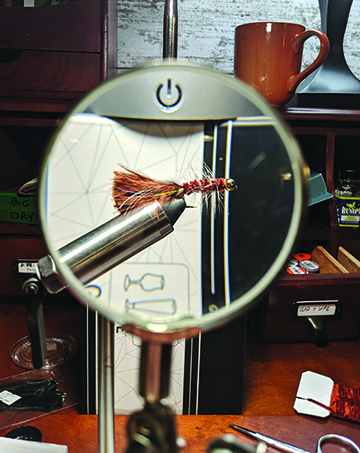
For the same reason, the biologist recommends fly-fishermen select large egg sack patterns or use Wooly Buggers, Egg-sucking Leeches, or large Stone Fly Nymphs.
“It just seems like the longer the season goes on, the hungrier the steelhead become,” Haffley said.
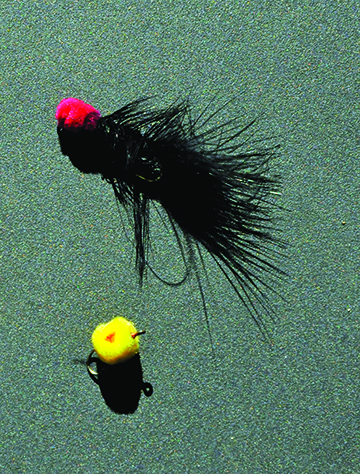
“If conditions do get low and clear, I would advise the fly-fisher to adapt and return to the flies that typically work best in the fall. They should consider casting single eggs, small minnow imitations and small nymphs.”
Here’s a personal, bonus tip.
One of my favorite tactics is to cautiously wade into Lake Erie on a calm day, directly where the tributaries empty into the lake.
There are drop-offs, so set each step firmly before taking another step, until nearly waist deep. Wearing an automatically inflating PFD and having dry clothes available is advised.
Allow flies or jigs to be carried by the stream’s current much farther into the lake than you could cast. A highly visible bobber is necessary so a strike can be detected from a great distance.
Nothing compares to battling a big steelhead with a fly-rod or a noodle rod when the fish is not confined by stream banks or other obstacles.
The opportunities to catch steelhead continue, and a few will even be caught by April anglers seeking stocked trout.
Minnesota’s deer harvest trending well ahead of 2025
Wildlife managers from the Minnesota DNR expected hunters would shoot more deer this year, and early harvest numbers this fall
Commentary: The hardest shot in all of hunting
Wing shooting with a bow – taking flying game birds with arrows – is among the oldest and also the
Minnesota DNR seeks feedback for potential changes to winter trout season
The Minnesota DNR is seeking feedback on potential changes to winter trout season dates.
Currently, the season has two
