




Outdoor News may earn revenue from links shown on this page by participating in affiliate programs. This comes at no extra cost to you. Click here to learn more.
The woodstove hums, the Labrador snores, and the wind shakes a few stubborn oak leaves from their branches.
It’s that quiet stretch of the year when deer rifles are cased, ice augers are tuned, and outdoor folks settle in for a slower rhythm. For some of us, the long nights of winter mean reading season – time to grab a dog-eared classic and revisit the writers who taught us to feel and respect the wild.
Outdoor News staffers chose six of America’s finest outdoor scribes – men whose words helped define our sporting culture – to provide some reading when the mercury drops and the nights are long. Give them a read during the dark nights ahead.
Ernest Hemingway – The Streamside Minimalist
Essential reading: The Nick Adams Stories, Green Hills of Africa, True at First Light
Before Hemingway became the literary legend known for Paris cafés and African safaris, he was just a suburban Chicago kid obsessed with Michigan trout streams and solitude.
Outdoor News reprinted his “Big Two-Hearted River,” last summer, but you can delve deeper into his alter ego by reading the complete, “The Nick Adams Stories,” collection published in 1972 more than a decade after his death.
 Unlike some of Hemingway’s long-form novels, his short stories are easily approachable for readers unfamiliar with his minimalist writing style. The tome contains short stories published in various collections during Hemingway’s lifetime, including eight of which were previously unpublished. It includes some of Hemingway’s earliest work, such as “Indian Camp,” as well as some of his best known stories like “Big Two-Hearted River.”
If you’re looking for more hunting content from “Papa,” try Green Hills of Africa, his 1935 work of nonfiction that recounts a month-long safari he and his second wife, Pauline Pfeiffer, took in East Africa during 1933. Interspersed with ruminations about literature and other, the book includes incredible photographs from the era. The trip helped inspire some of his other classic short stories, like Snows of Kilimanjaro.
Still want more? Try True at First Light which details his 1953-54 safari in Kenya with his fourth wife (Walker, Minn., native) Mary Welsh Hemingway. It was released posthumously in his centennial year in 1999. A blend of memoir and fiction, True at First Light explores the conflict between the European and native cultures in Africa, and he stews more on the nature of writing.
MORE COVERAGE FROM OUTDOOR NEWS:
Notes off a soiled cuff: Thoughts on possible merger of Pennsylvania fish and game agencies
Michigan’s Upper Peninsula bear take is above goal
CWD in northeast Pennsylvania adds challenges for some deer processors
Aldo Leopold – The Philosopher-Hunter
 Essential reading: A Sand County Almanac
Few writers captured the moral weight of the outdoors like former University of Wisconsin wildlife professor Aldo Leopold.
Originally from northeast Iowa, this legendary conservationist, hunter, and scholar understood that our time afield is a privilege and responsibility. A Sand County Almanac is his masterpiece – a quiet meditation on the land ethic, written in the cadence of the seasons. Reading Leopold in January feels like a campfire conversation with an old mentor who’s reminding you that every track in the snow is part of a greater story.
If you call yourself a conservationist and you haven’t read A Sand County Almanac, get to it. As a collection of essays, the tome allows the reader to tackle one piece, then return a week or more later to read another.
Edward Abbey – The Wilderness Contrarian
Essential reading: Desert Solitaire, The Fool’s Progress
 Originally from Pennsylvania, Edward Abbey did a stint in the U.S. Army as a military police office after World War II, then used the G.I. Bill to pay for schooling at the University of New Mexico. He fell in love with the Desert Southwest and eventually became a seasonal park ranger in the mid-1950s for the U.S. National Park Service at Arches National Monument.
Abbey wasn’t a sportsman in the traditional sense, but no writer defended wild places with more passion or wit. Desert Solitaire is his love letter to the red-rock country of the American Southwest – part memoir, part rant, part hymn.
His words crackle with defiance and reverence, sometimes in the same paragraph. Abbey reminds us that the wild is worth fighting for – not because it’s useful or profitable, but because it feeds something untamable in the human spirit. Desert Solitaire is considered an iconic work of nature writing and a cornerstone of environmental literature, and like most of his works, it’s just plain fun reading.
Other classic novels from authority-defying Abbey, who died in 1989, include The Fool’s Progress and the Monkey Wrench Gang. The American desert’s cranky prophet, Abbey’s irreverent, passionate defense of wilderness is as relevant as ever. His work gives readers a jolt of rebellion and humor alongside sharp ecological insight. And above all, they’re just fun, easy-to-read stories.
Robert Ruark – The Hunter’s Storyteller
Essential reading: The Old Man and the Boy, Horn of the Hunter
 North Carolina-reared scribe Bob Ruark came up in the newspaper business in the 1930s and 40s, then began writing novels and short stories. His “The Old Man and the Boy” might be the most beloved work in all of sporting literature.
Drawn from columns he wrote for Field & Stream, it’s a series of vignettes about a boy and his grandfather – about growing up, learning patience, and finding meaning in the outdoors. It’s part memoir, part instruction manual, and entirely heartwarming. Ruark captures that universal rhythm of mentorship in the field: the lessons passed down beside a duck blind or at the kitchen table cleaning quail.
Another World War II veteran, Ruark also developed a love for African safaris, which resulted in one of his most famous books, Horn of the Hunter.
When winter presses long and hard, Ruark’s stories are comfort food for the sporting soul – equal parts wisdom, laughter, and nostalgia. He passed in 1965 but he leaves a hard-living, American-loving legacy.
Gene Hill – The Gentle Humorist
Essential reading: Hill Country, A Listening Walk… and Other Stories
 New Jersey-born Gene Hill wrote like the friend you swap stories with at the gun club after a morning in the grouse woods.
Another WWII vet, Harvard-educated Hill worked as an advertising copywriter for in New York City, then moonlighted as an outdoors columnist for magazines including Guns & Ammo and Sports Afield. He later became a full-time columnist and associate editor at Field & Stream, where he wrote the monthly column, “Hill Country.”
His essays, many published in Field & Stream during the 1970s and ’80s, are short, warm, and packed with affection for bird dogs, duck blinds, and quiet mornings. He had a knack for finding meaning in the smallest details – a dog’s look, the way light hits a frosted field, or the creak of an old wooden decoy.
He reminded readers that the heart of hunting isn’t measured in limits, but in moments. Reading Hill feels like coming home – to laughter, to humility, and to the shared language of those who love the field.
Gordon MacQuarrie – The Bard of the Old Duck Hunters
Essential reading: Stories of the Old Duck Hunters, More Stories of the Old Duck Hunters
 MacQuarrie, a newspaperman from Superior, Wis., who eventually worked as outdoors editor for the Milwaukee Journal, was one of the first professional outdoor writers to elevate the genre into genuine literature. His Old Duck Hunters tales – humorous, wistful yarns about “the President” and their adventures in the marsh – strike that perfect blend of comedy, reverence, and real sporting detail.
His stories aren’t just about ducks; they’re about camaraderie, the quirks of human nature, and the sacred silliness of a life spent chasing birds through sleet and mud. For Midwestern readers, MacQuarrie’s voice feels like home – plainspoken, wry, and deeply affectionate. A friend of Leopold, MacQuarrie was a staunch supporter of the professor’s land ethic advocacy.
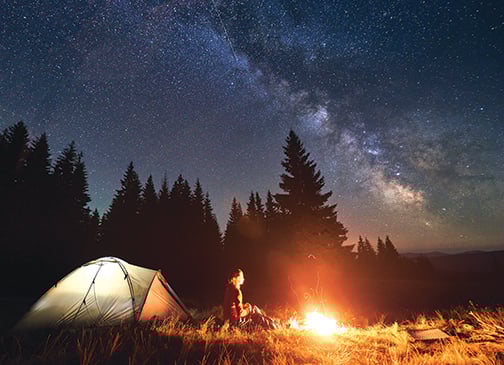
In a world of scrolling and sound bites, these writers remind us of a slower, better rhythm. They wrote about hunting and fishing not as hobbies, but as windows into character, humility, and belonging. Their words endure because they capture the part of outdoor life that never changes – the patience of a rising trout, the call of migrating geese, the crackle of a campfire after a day afield.
Ralph Loos: Michigan’s reliable hunting traditions got an update (upgrade?) this season
More than any other collection of like-minded individuals, hunters tend to get stuck in their ways — and I say

Findlay Reservoirs support walleyes and saugeyes in northwest Ohio
An angler could do much worse than the pair of reservoirs at Findlay in northwest Ohio.
The latest offering
Ohio’s Outdoor Calendar
A look at upcoming outdoor-related events from across Ohio published in the Sept. 22, 2026 edition of Outdoor News.
