





Lake whitefish are a species of salmonid found in the cold waters of northern Minnesota, and across the upper Great Lakes region. I grew up spearing this cold-water species through the ice in early winter. But I had never targeted this fish in open water.
That changed this last week as I boated into in the Boundary Waters Canoe Area Wilderness to participate in the fall whitefish sport-netting season.
Most Minnesota anglers aren’t familiar with using gill nets to capture fish. It’s generally thought of as a method dedicated to commercial fishers, or members of our state’s tribal communities.
While it’s officially called “sport gill netting” by the DNR, it is very different from sport fishing with a rod and terminal tackle.

My buddy Timo Rova, of Ely, had often told me how he and his Finnish ancestors had been netting whitefish in the region for many years. The stories had always fascinated me. I think the interest was driven by the old-world tradition and focus on being more of a “meat hunt” than the cat-and-mouse chase of fishing with a rod.
Another buddy, Greg Kvale, was just as interested in the tradition, so last week we headed north for a couple of days of netting, right before deer camp.
With a flat-back canoe, an old Grumman sportboat and a portage wheel for each, we made our way into the unspoilt waters of the BWCAW. Our destination was the steady currents on a flowage between two lakes.
On arrival we surveyed the area and hatched a plan, then opened the bins holding our nets. We had two – one was 100 feet and the other a 50-footer. The top rope had floats attached every few feet.
The bottom rope was made with lead core so it would hold deep in the water column. The netting itself was constructed from monofilament knotted into a pattern of squares each measuring about 2 inches each.
Our chosen spot was along the edge of the flowage where we could stay within legal requirements, which state that nets cannot be placed in water deeper than six feet. The clock was ticking as the sun would set before 5 p.m., and regulations also stipulate that nets cannot be placed or lifted between sunset and sunrise.
With nets set we made our way back to the campsite. A wall tent and wood stove awaited. I had brought a venison stew from last year’s doe and Timo had packed in a venison backstrap from a buck he had arrowed the week prior. There’s something special about being in the wilderness with good friends, a meal of wild game, and hopes of full nets the next morning.
A splash of whiskey from Timo’s flask made for a tasty nightcap after we feasted on the venison and shared stories of past adventures. We then drifted to sleep with hopes of nets brimming with whitefish.


The next morning we returned to the flowage. At first we couldn’t see the longer net, which caused some concern. We worried that it had pulled loose from the strong current and was tangled on rocks at the bottom of the lake. Fortunately, as we made our way to the net we discovered it had not moved, but was just below the water surface, heavy with whitefish.
We spent the next hour untangling fish from the net before returning to camp where we filleted them and harvested the roe and livers. (Whitefish have Y-bones, so pike filleting skills come in handy!)
Bald eagles and ravens had been flying above our heads nearly the entire trip, so the fish remains did not go to waste.
Lake whitefish are a special kind of fish species, and they cannot survive in many states. Like their cousins, the tullibee (or cisco), they only thrive in cold and clean waters, which means we need to take care of the resources on which they depend.
Harvesting them responsibly, whether by net, spear, or hook and line is one way we can keep them in the fore when it comes to conversations about conservation and resource management.
I want to try catching them with a rod next spring. I still haven’t done that, and I’m always up for a new adventure in northern Minnesota.
To learn more about whitefish and tullibee netting in Minnesota go to this page of DNR regulations.


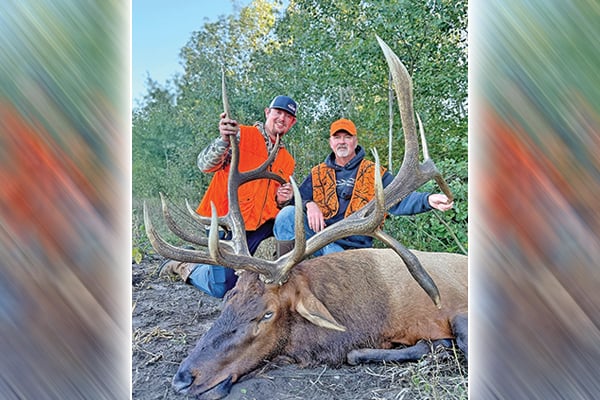
Minnesota’s 2026 elk harvest reaches nearly half of allocated tags during early season
As the first half of the elk season winds down in northwestern Minnesota, nearly half the tags have been filled

Upper Herring Lake offers western Michigan bass anglers a legitimate fall option
Bass can be widely distributed through the vegetation, but cooling water often triggers more active feeding.
Michigan’s Outdoor Calendar
A look at upcoming outdoor-related events from across Michigan published in the Sept. 25, 2026 edition of Outdoor News.
