




Home » Nature Page & Night Sky » New York Mixed Bag: Paul Smith’s College Student Seeks Adirondack Black Bear Reports For Study
New York Mixed Bag: Paul Smith’s College Student Seeks Adirondack Black Bear Reports For Study

Paul Smiths, N.Y. — A student at Paul Smith’s College, in Franklin County, is seeking sighting reports of black bears within the Adirondack Park from hunters and the general public. The data will be used for a study being conducted by Erika Schwoyer, a master’s student at the college.
Every submitted sighting is considered a “detection” which will contribute to Schwoyer’s research aiming to determine when black bears hibernate in the Adirondack Park. As climate variables become more unpredictable over time, it is possible that bears will begin to wake up from hibernation when there is not yet appropriate natural food available. This could force bears into human-dominated landscapes to search for food and increase the occurrence of conflict events.
Collecting bear detections through trail cameras and public sightings could serve as a way to track hibernation long-term based on when people start seeing bears in the spring and stop seeing bears during the the fall. Comparing the hibernation timeframe to environmental variables could allow managers to make predictions about when bears will wake up, how much food will be available, and what level of conflict they anticipate based on those two variables. If managers can proactively educate the public and enforce policies that keep humans and bears safe in the years that they expect higher conflict, a decrease in the number of conflict related calls and bears euthanized annually could be realized. To learn more, or to report a sighting, email: erikaschwoyer21@gmail.com.
Peconic River Sportsman’s Club’s ‘Taking a Shot At Cancer’ Program Raises $68K
Manorville, N.Y. — Long Island’s historic Peconic River Sportsman’s Club, located in Manorville, recently raised an additional $68,100 for breast cancer research, treatment, and support organizations. The Taking a Shot at Cancer fundraiser brings the club’s overall donations to over $400,000. The funds are distributed annually to a number of region breast cancer support groups that include the Babylon Breast Cancer Coalition; Lucia’s Angels; and the North Fork Breast Cancer Coalition.
“These organizations are doing outstanding work on Long Island, and we are pleased to be able to support them,” Club vice president Joe Hocker said.
The Peconic River Sportsman’s Club is one of the oldest sportsmen’s clubs in New York State. The club holds as a core value giving back to the Long island Community, specifically within the realm of critical fundraising events for noteworthy causes. The club is also known for it’s youth hunting programs, including the recent waterfowl program which helped get hunters ages 12 to 15 afield on Nov. 8.
DEC Continues Efforts To Restore Spruce Grouse In The Adirondacks
Ray Brook, N.Y. — DEC said their staff have been making progress on restoring the population of spruce grouse in New York by translocating birds from Canada and Maine and working with private landowners to manage habitat. In August 2025, DEC translocated 50 adult spruce grouse from Cochrane, Ontario into the Adirondack Park, concluding our multi-year translocation efforts. The grouse were captured using catch poles, then birds were fed and housed in screen tents until the were released in selected sites in New York the following week.
The goal of translocations is twofold: to improve genetic diversity of the remaining population and to boost numbers so that birds can find each other to breed. The agency said they were hopeful these translocated grouse will bring much needed genetic diversity into the New York population. They are also managing habitat necessary for their success, such as 30 to 45 year-old coniferous tree stands. These efforts will continue into the future to ensure that spruce grouse have enough habitat to maintain their population.
DEC cautions grouse hunters to properly identify their targets before they shoot this hunting season, as spruce grouse and ruffed grouse can be easily confused. Spruce grouse have brown tail bands on a dark tail, while ruffed grouse have black tail bands on a brown tail. Both species are often seen on roadsides in the fall eating gravel to aid in digestion.
SUBSCRIBER CONTENT
Read this article now.
Create a free Outdoor News account.
Create a free account below to get instant access to this article, thousands of Outdoor News stories, and our digital editions. Your 1-month trial starts the moment you sign up.
No credit card required
No credit card required
Subscriber? Login Here.
Share on Social
Hand-Picked For You
Who should manage Pennsylvania’s insects? Study aims to find out
Pennsylvania Mixed Bag: Docks removed early at Lake Wallenpaupack
Suburban deer management expands in southwest Pennsylvania
Pennsylvania’s hunting license sales down so far this year
Spring Garden Dam removal at Tyler State Park starts
Changes to Michigan’s furbearer regulations discussed
Related Articles

Mastering early season duck decoy spreads; a time when less is more
It was better than Christmas morning – opening day of duck hunting. I had just turned 14, and with a
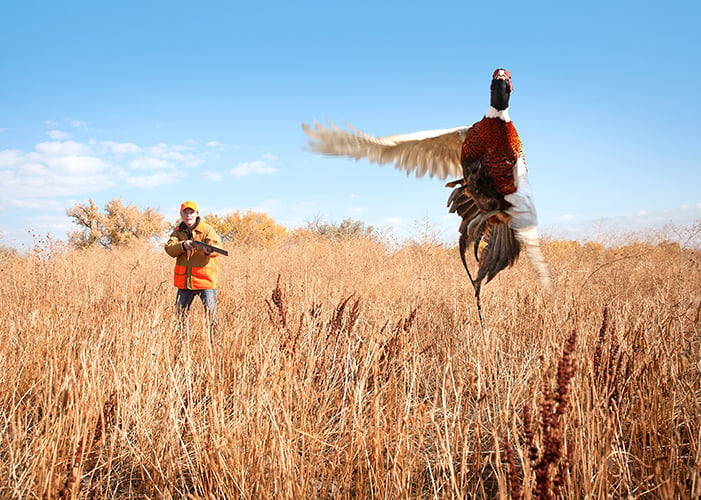
WI Daily Update: DNR budget constraints lead to fewer stocked pheasants this fall
Wisconsin pheasant hunters will see fewer stocked birds and a shorter release schedule this fall. Here’s why, along with what’s
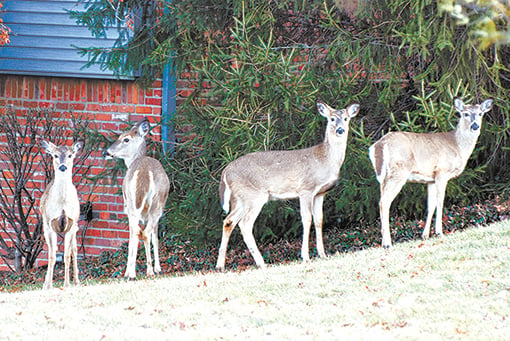
Suburban deer management expands in southwest Pennsylvania
Oakmont is the latest in a growing number of suburbs around Pittsburgh to adopt a controlled archery program to manage
