Four turkeys cautiously left the safety of the timber’s cover to wander into a small alfalfa field to hunt for insects at the aptly named Turkey River Wildlife Area.
The 410-acre public area in southeast Howard County sits on a landscape transition from the glaciated north-central Iowa to the Driftless northeast Iowa. With rock outcroppings and steep valleys, this oddly shaped public area is 1-1/2 mile south of Cresco and open for year-round recreation.
Visitors can go hiking, paddling, fishing, pick berries, hunt mushrooms in the spring and fall, hunt turkeys in the spring and fall, go snowshoeing and cross-country skiing on ungroomed trails and hunt deer, squirrels, and, in the prairie by the ag fields, pheasants.
MORE COVERAGE FROM OUTDOOR NEWS:
Glassing during the rut? Here’s why binos are the best tool at your disposal in November
Report shows hunting, target shooting worth $133 billion nationally
Handloading for deer hunting: Great for accuracy, and can save you some money
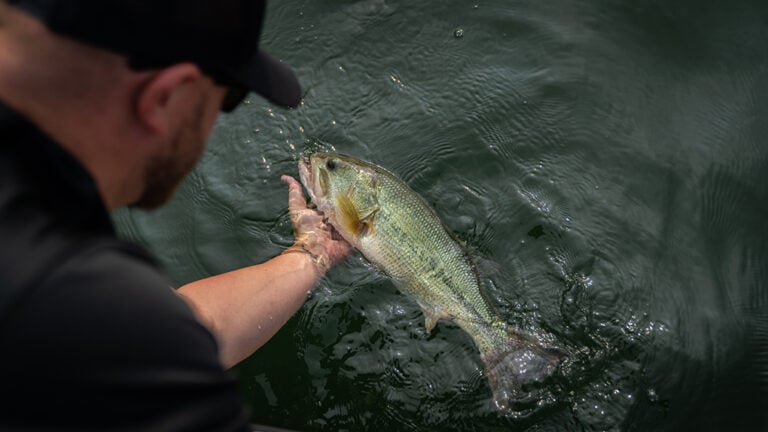
Two streams flow through the wildlife area: Turkey River, with a history of walleye and smallmouth bass fishing, and Chihak Creek, a small coldwater trout stream tucked in to the northeast corner with about 200 yards on public land.
Chihak Creek has a self-sustaining brown trout population with fish up to 13 inches available. Anglers will need to park along the gravel road and hike a quarter mile to the stream.
Pulling in to the parking lot on the northwest side, a worn footpath leads to Steamboat Rock, a well-known local landmark overlooking a bend in the Turkey River, named for its resemblance to the historic steamboats. The return of drought conditions has dropped the river level and flow. Small fish can be seen against the mud bottom in the pools.
Hiking around to the top of Steamboat Rock reveals a small remnant hill prairie where leadplant, smooth blue aster, slender bush clover, silky aster side oats gramma, little bluestem and stiff goldenrod can be seen.
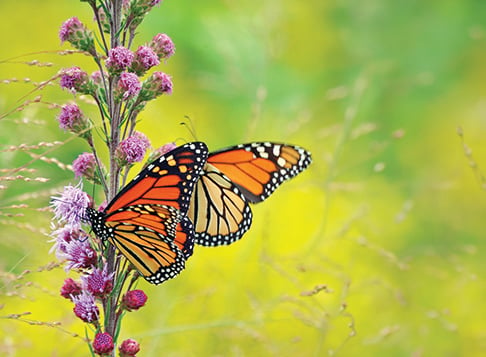
Roughly 75 acres of reconstructed prairie has returned to several small fields, where monarchs, dragonflies and bees were still active on this early October morning. Staff with the Iowa DNR’s Upper Iowa Wildlife Unit manage prairie with prescribed fire and this past spring, 20-25 acres were burned and responded really well.
While the Turkey River Wildlife Area has reconstructed prairie, food plots and two streams, it is predominantly timber. The Iowa DNR has been working to improve the resource by emphasizing oaks and hickories, managing for aspens and improving the stand along the river bottom.
Diverse wildlife community
The Iowa DNR’s Multiple Species Inventory Monitoring (MSIM) program surveyed Turkey River several times since 2011 and confirmed a number of state and federally endangered species there, including the Indiana, northern long-eared and tri-colored bats, northern harrier, peregrine falcon, Henslow’s sparrow, Acadian flycatcher, Canada darter, red shouldered hawk and more. The MSIM team confirmed American brook lamprey and black redhorse, both are state threatened fish species, in the Turkey River. Bobcats continue their expansion north and have been reported here.
Little Lake of the Woods
Turkey River Wildlife Area was the site of a proposed 490-acre lake in the 1970s, called the Little Lake of the Woods, a reference to the legendary 950,000 plus acre lake on the Minnesota – Canada border. The original engineering design showed the lake winding west from the dam on the Howard-Winneshiek County line near what would be the west side of Cardinal Marsh.
There were road blocks that ultimately derailed the project, not the least of which was it required thousands of additional acres of land prior to construction. Supporters essentially had 10 percent of the land with the remainder yet to acquire.
Drainage dams
Workers during the Great Depression placed stone and concrete dams in select drainages to help prevent erosion, many of which remain today.