




Commentary: An open letter to Michigan deer hunters; change in approach to antlerless harvest is needed
Editor’s note: This letter has been edited for space. Chad Stewart is the deer, elk and moose management specialist for the Michigan Department of Natural Resources.
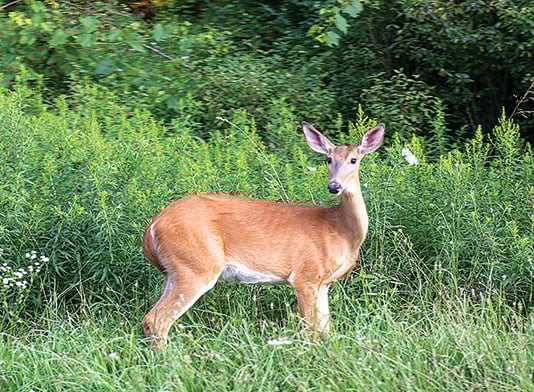
Our deer seasons aren’t impacting our deer herd like many may think. If you are in the Lower Peninsula, we simply aren’t taking enough does during the season to control the growth of our deer herd in many areas.
Comparative harvest
Since 2000, we have only harvested more antlerless deer than antlered bucks once. In 2009, we had an estimated antlerless harvest of 220,913 and an estimated antlered harvest of 215,104.
Every other year in this century, we’ve taken more antlered deer than antlerless deer. If you make a quick comparison with the states around us, such as Illinois, Ohio, Indiana and Wisconsin, they all typically harvest between 8% to 25% more antlerless deer than they do antlered deer in a given year. Using those measures, we should be harvesting between 43,000 and 68,000 more antlerless deer in the Lower Peninsula alone.
RELATED CONTENT:
Michigan deer expert makes case to thin antlerless population
Michigan DNR predicts good deer hunting in 2023 season
Rule the rut: Six tips to make this your best November ever
Furthermore, the gap between antlered and antlerless take seems to be widening. Our antlerless harvest has decreased by about 28% from the early 2000s to today. Our antlered harvest has only declined about 11% over this time, likely because of the decreased hunter numbers, not a declining deer herd.
Taking on average about 1 to 1.5 additional antlerless deer per square mile in the L.P. can improve our overall management, help balance our adult sex ratios and even improve the quality of the bucks that we see. Our current trend is simply not sustainable for longterm deer management.
Benefits to deer management
Let’s first talk about what additional antlerless harvest means in terms of management. First and foremost, if hunters are filling their freezers with antlerless deer, especially early in the season, it can provide a tremendous benefit to your deer herd.
Intense doe harvest early in the season can help balance out the buck-to-doe ratio prior to the rut, which can intensify the rutting activity you see. If you think about having a lot of does on the landscape with fewer bucks, the competition for breeding can be greatly reduced, since many of these does are coming into estrous around the same time.
On the other hand, picture a deer herd where the buck and doe herd are more in balance. When a doe in estrous comes by your stand, it’s followed by two or three bucks. The level of excitement you can experience during the rut can be greatly improved.
However, the typical Michigan hunting philosophy to date is to hold off on taking antlerless deer until later in the season. With online reporting, we now have the advantage of seeing how deer harvests change over time and within seasons.
Last year, excluding the early antlerless weekend, Michigan hunters didn’t take more antlerless deer than antlered deer in a given day until after Thanksgiving. This means that nearly two-thirds of the deer season, and probably close to 80 to 90% of hunters’ efforts, was over before hunters began really focusing on antlerless deer. Data supports this, as over 37% of all antlerless deer reported taken in 2022 came after Thanksgiving, compared to only 9% of all antlered deer.
It’s possible that taking those does early in the year might affect your success at taking a buck. But I am asking hunters to consider the long-term benefits of being selective in their choice of taking a buck, even if that means not taking a buck in the upcoming year. If we could get hunters to rethink their philosophy of “get your buck and then wait for a bigger buck to show up later in the season,” we would see marked improvement in our buck age structure and more balanced sex ratios.
To be fair, the mentality for many Michigan deer hunters has improved in recent years. The number of hunters taking the first buck they see probably represents a smaller percentage of Michigan hunters than most think.
Nearly two-thirds of bucks reported harvested in Michigan last year had antlers with at least one side with four points on it. But for those looking to shoot any buck early in the year, consider how much time you have left in your season and what your local deer population looks like before making that decision. The choice to shoot a doe instead of that young buck could help improve your hunting both in the current year as well as in the coming years.
Changes promoting antlerless take
There are a host of regulations that the DNR has attempted in recent years to improve antlerless harvest, and some that have been considered but not yet attempted.
In the Lower Peninsula, hunters have been able to use either tag on their combo license to take an antlerless deer during the firearm or muzzleloader seasons. This regulation change was made in 2020 after realizing that nearly 65% of Michigan hunters did not purchase an antlerless license. This change gives everyone in the Lower Peninsula an opportunity to shoot an antlerless deer and allows hunters to be selective in their harvest decisions without having to purchase an extra antlerless license.
The option to use one of your combo license tags on an antlerless deer instead of a younger buck is meant to help balance our deer herd and give hunters greater flexibility.
Hunters can even use their unused deer or deer combo licenses to take an antlerless deer during the late antlerless season.
Another recent change is that you no longer have to enter a drawing to get your antlerless license. There is no cap on the number of antlerless licenses available to hunters and an antlerless license is good for private and public land across the L.P.
There are other topics that regularly come up as well. Antler point restrictions, a “one buck” rule, “earn a buck” (the idea that a hunter has to harvest an antlerless deer before being eligible to take a buck) and changing the opening date of firearm season.
In the interest of brevity, each one of these topics could have both benefits and baggage. After looking at data on each topic, a simple shift to any of these topics is unlikely to result in the impact needed to effectively manage our L.P. deer herd.
U.P. exception
It’s worth mentioning that in the Upper Peninsula, we have a very different scenario unfolding. While antlerless harvest needs to be increased in some areas of the U.P., in other areas, our deer herd exists at low densities. Despite areas with low deer densities, the allowance of antlerless deer harvest is possible. Research has shown that at low densities, hunters have minimal effect on deer populations, which prevents populations from crashing due to hunting.
Because of the differences in deer density across the U.P., we have implemented a tiered system for antlerless licenses.
In the southern part of the U.P., antlerless licenses can be used similarly to how they are used in the Lower. In these units, winter is often milder and deer numbers are abundant. Even in areas with low deer numbers, the impact of these licenses often translates to less than one antlerless deer harvested per square mile.
Across much of the central U.P., hunters can put in for a permit to use their universal antlerless license for either Deer Management Unit 351 in the east or Unit 352 in the west. Only 1,000 of these permits are available this year in each unit, and if history is any indication, harvest attributed to antlerless licenses in these units totals less than 400 across these 6,600 square miles.
Finally, in the far west of the U.P. and along the Lake Superior shore, antlerless harvest is again prohibited.
Changing philosophy
I understand that many hunters may be reading this and have reservations about changing their philosophy for fear of dropping a deer population too low.
If you find yourself in this camp, let me share some data that we use to make our deer harvest decisions. The first is the forecast of hunters we have in Michigan, which is expected to fall to around 450,000 by 2030, down from the nearly 800,000 in 2000.
It’s also worth noting that our data shows that 75% of hunters don’t take an antlerless deer, while only 17% of hunters take one antlerless deer in a season. Less than 1% of hunters take four or more deer in a season. So, the fear of hurting your deer population by removing another antlerless deer because your neighbor takes too many is probably, in most cases, unfounded.
We are shooting far fewer antlerless deer than we have historically. That means we have much room for improvement in terms of overall antlerless deer harvest.
The other side
This past year was probably a record year in terms of the number of damage complaints our department received from farmers, and associated crop damage. Some of this may be exacerbated by the spring drought we saw across much of the state, but the fact remains that deer are taking a toll on our farmers.
The DNR provides out-of-season permits so those landowners experiencing damage. Since very few hunters like the idea of deer being shot out of season, we hunters need to do better at controlling deer numbers in the hunting seasons to limit the impacts of deer on agriculture.
The other impact often associated with high deer numbers is the number of deer-vehicle collisions. According to traffic crash data, in 2022 there were nearly 59,000 reported deer-vehicle collisions, the highest number since 2009.
The bottom line
We simply need to do better with antlerless deer harvest. Our harvest decisions we make between October and December can improve our deer herd, influence safety on our roads, support our farmers and benefit our forests.
We need to quickly, and substantially, increase our antlerless deer harvest across much of our Lower Peninsula.
Our reputation as conservationists may be defined by it.
SUBSCRIBER CONTENT
Read this article now.
Create a free Outdoor News account.
Create a free account below to get instant access to this article, thousands of Outdoor News stories, and our digital editions. Your 1-month trial starts the moment you sign up.
No credit card required
No credit card required
Subscriber? Login Here.
Share on Social
Hand-Picked For You
New York Fishing Report – September 18, 2026
Lake of the Woods Fishing Report – September 22, 2026
Minnesota’s 2026 elk harvest reaches nearly half of allocated tags during early season
Northern Wisconsin Fishing Report – September 17, 2026 – video
Have a game plan – video
Metro Area Fishing Report – September 20, 2026
Related Articles
Minnesota’s 2026 elk harvest reaches nearly half of allocated tags during early season
As the first half of the elk season winds down in northwestern Minnesota, nearly half the tags have been filled

Upper Herring Lake offers western Michigan bass anglers a legitimate fall option
Bass can be widely distributed through the vegetation, but cooling water often triggers more active feeding.
Michigan’s Outdoor Calendar
A look at upcoming outdoor-related events from across Michigan published in the Sept. 25, 2026 edition of Outdoor News.
