




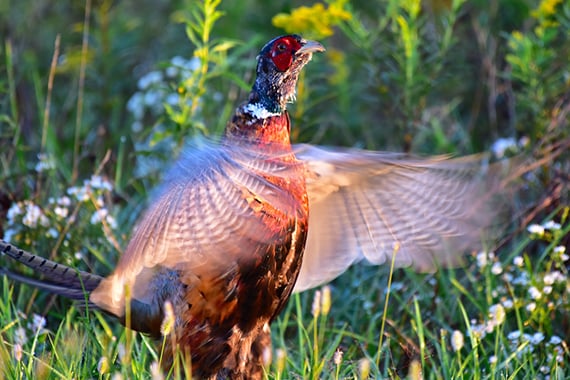
Two rooster ring-necked pheasants were going at it pretty good. After a short tussle they gave up on their mating-induced ritual and parted ways. I had been photographing pheasants at this site for several years, with good luck finding a few almost daily. Little did I know that a change was coming.
It is no secret that loss of habitat and changing farm practices have put a major hurt on upland bird numbers in Illinois. Many areas of the state that once harbored populations of pheasants are nearly devoid of this popular upland game bird, with few, if any, remaining.
Decline in numbers
Looking at information from DNR’s status reports on pheasants, you will quickly see how pheasant numbers have dwindled in the state.
On several occasions in the 1960s and 1970s, 250,000 hunters harvested more than a million birds per year. Then came shifts in farming practices and land use.
By 2000 the number of Illinois pheasant hunters had declined to just 59,000, and those hunters harvested only 158,000 birds. Estimated totals from the 2024-25 status report suggest that just 9,013 hunters harvested 22,844 pheasants.
Similarly, several survey routes conducted during 2025, where birds are counted when seen or heard in the state, showed a decrease in pheasant numbers from the previous year.
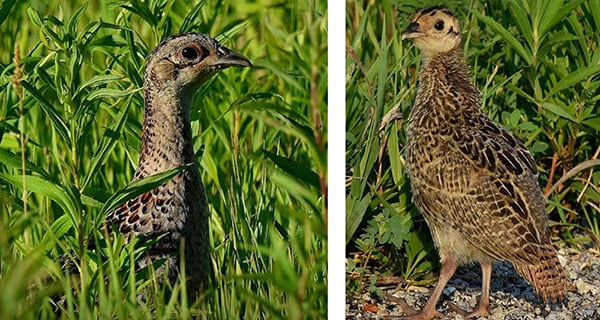
Why the decline?
I went into the fall after witnessing that springtime rooster fight still photographing a pheasant or two. A mild winter seemed to give the pheasants some relief, but by the next spring the pheasants were gone. I’ve not had one sighting in more than two years. What could have happened?
Habitat on the site had been slowly changing. Small things that I didn’t notice were taking place that apparently were enough to upset the balance of a pheasant population that was already tenuously small.
Good pheasant habitats should offer ideal conditions for nesting. Pheasants require grasslands with medium to tall height grasses and legumes for nesting.
UPLAND BIRD COVERAGE FROM OUTDOOR NEWS:
North Dakota releases annual prairie grouse survey results
Wisconsin’s 2026 pheasant counts above 5-year average, stocking numbers cut
Outlook optimistic for Minnesota’s 2026 pheasant hatch
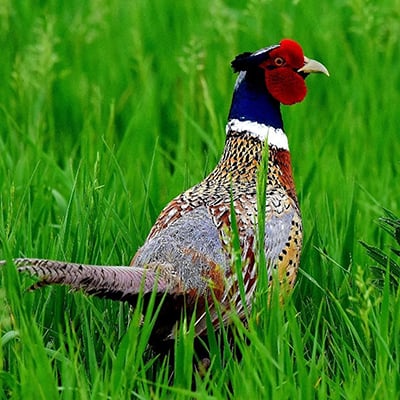
Mowing before or during the nesting season negatively affects nesting cover and nest sites. Locations should also offer weedy areas with cover that provide an overhead canopy with lots of bare ground below to allow young birds to freely move about and forage for insects.
Such cover conceals the birds from predators and provides shade to protect the chicks from overheating in the sun. While the pheasants had disappeared from the area I frequented, I also noticed another change begin around the same time. Quail numbers had begun to slowly increase. What started as just a few birds turned into several, thanks to a couple of years of good bobwhite hatches in Illinois.
Seeking an explanation for my observation, I reached out to Don Kahl, DNR Ag and Grassland Wildlife Program manager.
“The pheasant and quail dynamic at this site is complex, but it is likely your observations in the shifting numbers of birds is due to woody species encroachment increasing over time, reducing the suitability of the habitat for an already limited number of pheasants and increasing the area’s suitability for bobwhite quail,” Kahl explained.
“Pheasants like open grasslands and tend to avoid trees and heavy brush, whereas quail thrive in areas with small crop fields mixed with timber, brush and grasslands.”
That really sums it up. I had paid little attention to the trees getting a little bigger and the brush getting thicker and taller. What I had thought would be a good thing was hurting the pheasant population but helping the quail.
While the pheasant population had slipped away at the site I often visited, looking at the entire picture it is a win for the quail population. And that is a great thing.
Kevin Wright is an award-winning outdoor writer and wildlife photographer who lives and works out of central Illinois. This article originally appeared in the Outdoors Illinois Journal.
Advisory group to youths rebrands as Outdoor Mentors
A mentoring group has unveiled a shorter name as part of a shift in identity that includes a new logo
Dissecting why duck hunters are disappearing from Minnesota marshes
The decline in waterfowl and waterfowl hunters is apparent to most hunters. In contrast, I don’t see any obvious drop-off

Mike Schoonveld: Fishing via vintage reels
saw a post on social media recently made by a person who had found a box of old fishing reels
