




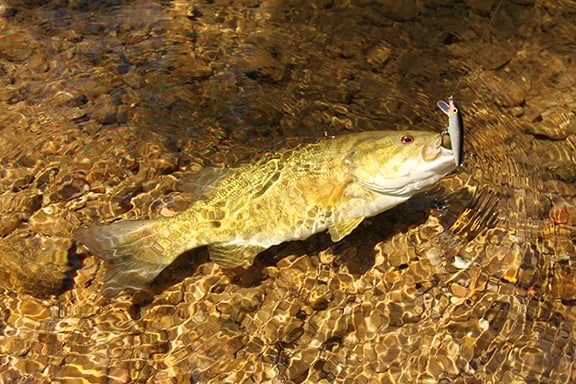
Technological advances have left no aspect of fishing untouched. Whether that’s a good thing or a bad thing is a conversation for another day, but jerkbaits are a classic example of this evolution.
There was a time when the choices were relatively few. And when it comes to anglers of a certain age, who among us didn’t have at least one blue original floating Rapala? It could be cast or trolled, dove to 5 feet or so, its natural action seemingly perfectly mimicking an injured or dying minnow. A bite could come anytime from any fish, ranging from bass to panfish, northern pike to walleyes.
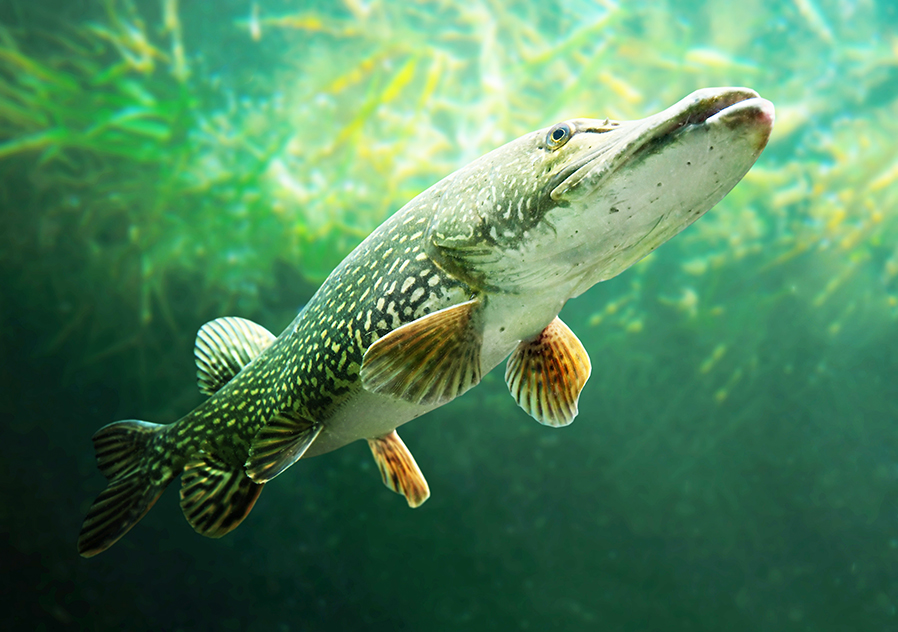
To be sure, floating Rapalas are just as effective today. It’s just that modern tackle boxes may be filled with all manner of jerkbaits of different styles and from different manufacturers, hyper-realistic minnowbaits that – as with seemingly all artificial lures these days – are designed to accomplish specific tasks in specific scenarios.
Some float, some suspend, and some sink. Some are best fished aggressively, others shine in cold-water situations and require no more than a twitch or two every half-minute, their finish so life-like they can suspend in the water, unmoving, and still fool a wary bass, pike, or walleye.
Many anglers tie on jerkbaits in certain circumstances. Fishing them when the water is cold is extremely common, and likely the scenario when most anglers think to tie one on. Long-lining them for walleyes after dark in shallow water is another common scenario. But given their tremendous versatility, limiting them to specific situations and certain species is a mistake that can cost fish.
The reality is, jerkbaits can produce fish throughout the year if retrieves are adapted and styles are adapted. And often as not, an angler fishing a large cabbage bed, for example, will wind up with a nice mixed bag of fish.
FISHING FEATURES FROM OUTDOOR NEWS:
North-central Minnesota’s Clearwater River a ‘hidden gem’ for rainbows and browns
Let bluegills point the way to crappies this spring
Mike Schoonveld: How many hooks are needed on a lure, and why?
Excellent imitators
Depending on the water body, fish have a wide array of options when it comes to food. But baitfish – and injured baitfish, in particular – are a common food source in nearly every lake, pond, river, and stream.
There’s not another artificial lure that so closely mimics an injured baitfish as a jerkbait, from its slender profile to its erratic, darting motion that convinces fish that food is either there for the taking, or about to get away.
When the water is cold in spring and fall, fish generally are less aggressive, but still opportunistic when it comes to eating. Even in the clearest water – and jerkbaits are most effective in clear-water situations – bass, pike, and walleyes can be trigged with slow twitches. You may see your line move, or, even more likely, the next time you twitch the bait you’ll feel a bunch of extra weight. Sometimes, though, jerkbaits produce explosive strikes that can knock a poorly gripped rod right from your hands.
Location, location, location
Jerkbaits tend to be most effective in relatively shallow water around vegetation and structure. And yet with the various styles available today, and the electronics that show fish well away from the boat, there’s no place that’s truly off-limits for fishing them.
But in many water bodies, common locations include over and on the edges of submerged weed beds, and around drop-offs, points, and the edges of structure. Find a small area where all these things are present and you never know what fish species will bite next.
The retrieve
There’s no “right” way to fish a jerkbait. Just as there’s no “wrong” way.
Subtle variations in the retrieve may generate a strike today, but not tomorrow. Similarly, fish may prefer a slow presentation today and fully reject it the next day.
The key is to change up the cadence, or the rhythm of twitches and pauses, until the fish reveal what they prefer. The rule of thumb is to use longer pauses and more subtle twitches in cold water, while fish more quickly and more aggressively as the water warms.
And since jerkbaits mimic baitfish so well, it’s a good idea to fish smaller baits in the spring and use progressively larger baits as the season progresses.
Rods, reels, and line
There are numerous rods designed specifically for fishing jerkbaits, and even subcategories of rods that work particularly well in specific circumstances.
In general, though, a medium or medium-light rod with a fast tip is ideal because it offers more precise control of the jerkbait – a flimsy rod may not impart enough action while a stiff rod can pull the jerkbait through the water too quickly and kill the action that is so vital to generating strikes.
Line is a personal choice, but, like rods, line that’s too stout will impede action and reduce the depth at which you can work the bait. For many bass-fishing scenarios, 10- or 12-pound fluorocarbon line is a solid option that blends strength and optimal jerkbait performance.
Jerkbaits are common lures in many anglers’ tackle boxes.
For those willing to experiment, tying on a jerkbait may open a whole new world of opportunities.
Minnesota duck hunters await fresh birds as warm weather lingers
If you spoke with enough waterfowlers and waterfowl managers across Minnesota in the last handful of days, the message you

Minnesota DNR reminds firearms deer hunters to prepare for CWD sampling
Sampling is mandatory for southwest Minnesota the opening weekend of firearms deer season Nov. 7-8

Short on walleyes, but long on muskies: Beers Lake in Minnesota’s Otter Tail County
Otter Tail County’s Beers Lake is an excellent walleye fishery – nope. Beers is loaded with good-sized panfish and northern
