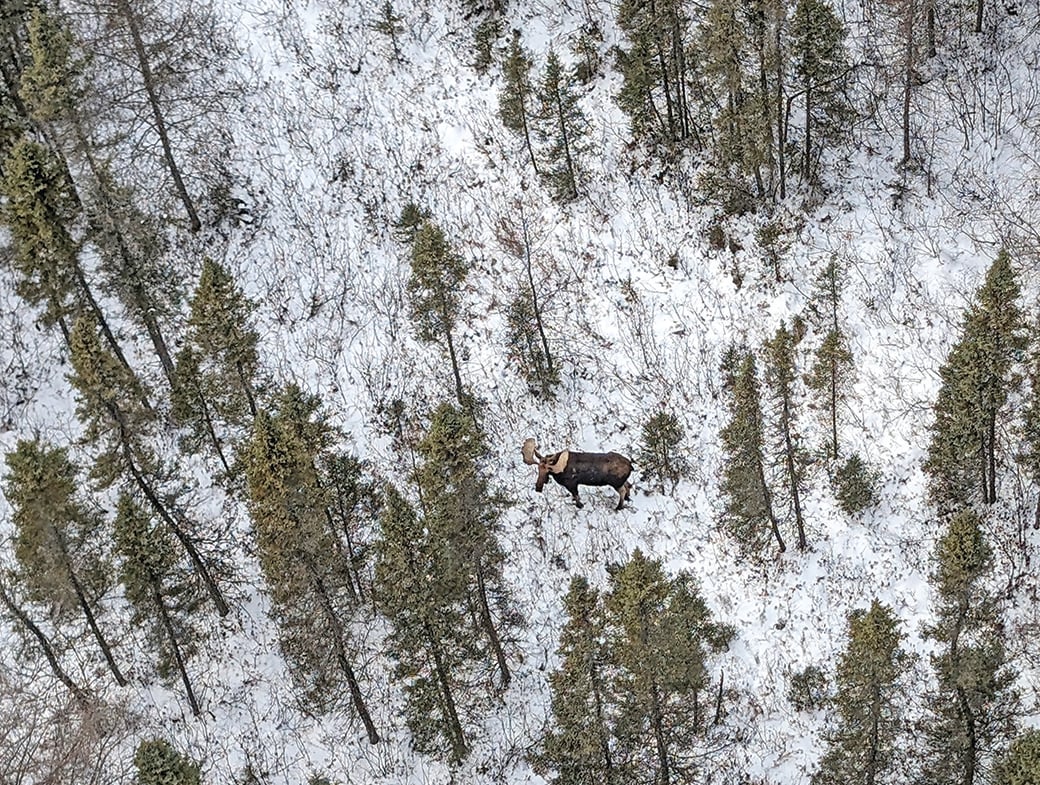
The most recent Minnesota moose population estimate is approximately 4,040 animals, according to the results of the Minnesota Department of Natural Resources’ 2025 population survey.
Results continue to suggest that after a steep decline from a population estimate of approximately 8,000 in 2009, Minnesota’s moose population appears to have stabilized and has fluctuated around 3,700 animals in recent years.
While recent estimates suggest continued stability in the population and reproductive success, Minnesota DNR researchers point out that Minnesota moose remain at risk.
MORE COVERAGE FROM MINNESOTA OUTDOOR NEWS:
Yellow bass fishery developing a legion of angling fans in southern Minnesota
Commentary: The Nature Conservancy and its partners reach 1 million acres protected in Minnesota, Dakotas
What is lake ice made out of? There’s more to it than you may realize
Presently, the long-term survey trends indicate the moose population has declined approximately 60% since the mid-2000s. Climate change, parasites, and predator impacts on calf survival all play a part in the long-term survival of the moose population.
Both the Fond du Lac Band of Lake Superior Chippewa and the 1854 Treaty Authority are full partners on the moose survey and contributed funding and personnel for the 2025 annual survey.
The survey is available here or by visiting the Minnesota DNR’s moose management webpage.
Some survey notes:
- The survey included 52 sample plots … and required nine survey days between Jan. 14 and Jan. 30 to complete, which is the average number of days typically required to complete the survey. “We also started six days later than usual due to marginal snow conditions,” according to survey author Amanda M. McGraw, of the DNR’s Forest Wildlife Research Group. “Generally, 8 inches of snow cover is our minimum threshold depth for conducting the survey.”
- The survey area is approximately 5,945 square miles and includes the Boundary Waters Canoe Area Wilderness. “We estimate moose numbers and age and sex ratios by flying transects within a stratified sample of plots randomly drawn from a sampling frame that covers most of the moose range in northeastern Minnesota,” McGraw wrote in the survey report.
- “Although we know from field studies that fertility (pregnancy rates) of the population’s adult females has been robust, overall, survey results suggest that calf survival remains relatively low,” she wrote. “Calf survival during the January to April interval can decline markedly, and annual spring recruitment of calves (survival to 1 year old) can have a significant influence on the population’s performance and dynamics.”
Per the report, findings of a recent field study documented similar low calf survival (0.44−0.49) to early winter in 2015−16 and 2016−17. Calf survival by spring 2017 (recruitment) had declined to just 0.33.
“However, it is also important to note that adult moose survival has the greatest long-term impact on annual changes in the moose population,” according to the report.
- According to the report, this year’s population estimate is up 16% from last year’s point estimate. However, sampling uncertainty is moderately high in this survey (90% confidence interval) and, thus, it is often difficult to make statistically confident statements about the magnitude of annual population changes unless those changes are relatively large.
“This level of uncertainty is common in wildlife surveys, even when surveying large, dark, relatively conspicuous animals (such as moose) against a white background during winter,” McGraw wrote.
Why is this? The list includes the occurrence of dense vegetation; habitat use by moose; behavioral responses to aircraft; the effects of annual environmental conditions (snow depth, ambient temperature) on their movements; and interaction of these and other factors.
“Thus,” McGraw wrote, “the best use of survey results is for monitoring population trends over several years rather than focusing on the magnitude of differences in annual estimates, including composition ratios.”
Editor Tim Spielman contributed to this report.