


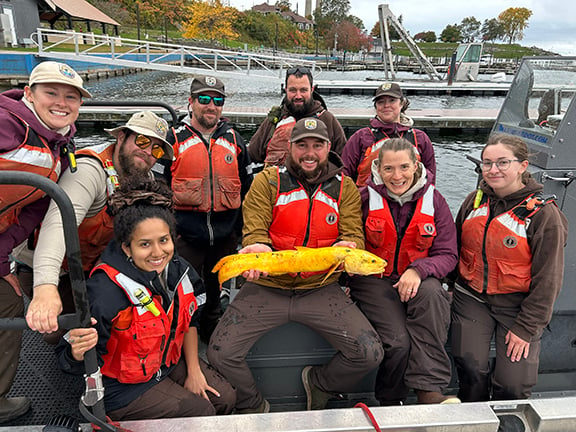
Oswego, N.Y. — Biologists with the U.S. Fish and Wildlife Service caught a rare native fish in Oswego, New York, last month that would make even the brightest fall foliage look pale in comparison.
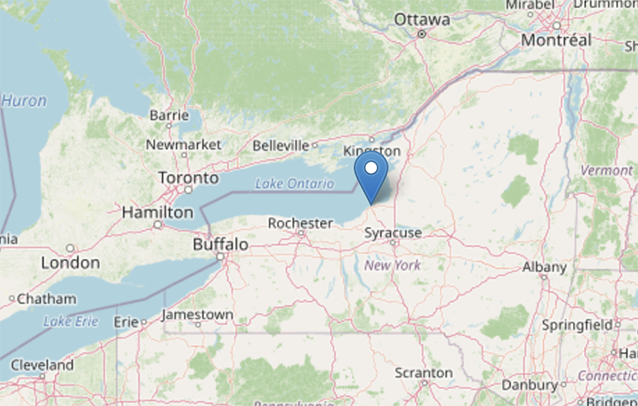
During a routine aquatic invasive species survey in Oswego Harbor on the southeastern shore of Lake Ontario, the crew caught a burbot (Lota lota) exhibiting xanthochromism, a rare biological condition that gives the fish a saturated yellow-orange appearance.
Although burbot (also know as eelpout or ling) is a native species, its discovery highlights the effectiveness of the USFWS’s Aquatic Invasive Species Early Detection and Monitoring Program, which uses a multi-gear fish-surveillance strategy to detect watchlist species in the harbors, rivers, and embayments of the Great Lakes.
Early detection gives fisheries managers the best opportunity to implement prevention and removal measures. Because invasive species are often rare when they first enter new waters, the program uses methods such as electrofishing, fyke-netting, gill-netting, and environmental DNA (eDNA) analysis to increase the likelihood of detection.
MORE COVERAGE FROM OUTDOOR NEWS:
Michigan survey of bats finds signs of recovery
Colleen Foehrenbacher: Success in the elk mountains, more than a filled tag
Michigan’s gun season opens with new options for deer hunters
Most fish captured during aquatic invasive species surveys are native species that the agency expects to occur in the lakes.
Detecting rare native species indicates that the program can identify fish citizens are less likely to find – and may detect newly invading species even when their numbers are extremely low.
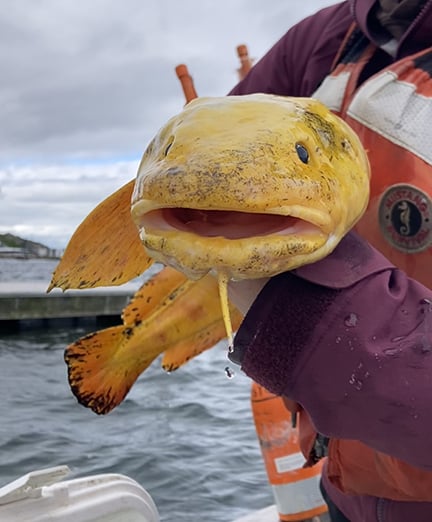
The USFWS says the finding is notable because burbot populations in the lake are extremely low, and the species typically inhabit deeper, cooler waters than those found within the harbor. It represents the first documented detection of a burbot during a fisheries survey in Oswego Harbor, although a few angler catches have been reported.
The fish’s unusual coloration further distinguishes the discovery. Xanthochromism is a rare biological condition caused by a genetic mutation that suppresses normal pigmentation and produces a yellow-orange appearance. Xanthochromism is considerably less common in wild fish than albinism or melanism, making this an especially unusual capture.
While processing the fish, U.S. Geological Survey fisheries biologists familiar with the species observed that it was emaciated and appeared to be in poor health. Because of the fish’s condition and the unexplained factors contributing to the continued suppression of its population, it was sent to the Cornell University College of Veterinary Medicine for a health analysis.
The discovery could turn out to be lucky for the species; the exceptionally rare fish may provide valuable insight into the health of the species’ populations throughout the basin that can inform management actions.
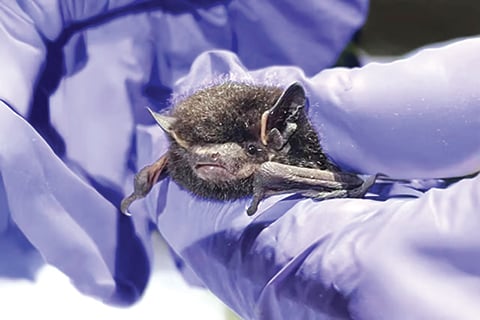
Michigan survey of bats finds signs of recovery
Lansing — Michigan’s bat populations are showing some encouraging signs of recovery, but a deadly fungal disease continues to threaten

Colleen Foehrenbacher: Success in the elk mountains, more than a filled tag
When you spend months preparing for an elk hunt, you naturally picture how it might end: a bull elk on

Commentary: Permitting reform should move America forward, not leave its conservation legacy behind
Good conservation and good public policy have something important in common: Both require us to think beyond the immediate moment.
