





Outdoor News may earn revenue from products shown on this page by participating in affiliate programs. This comes at no extra cost to you. Click here to learn more.
Casting from the sunlight into the shadow that stretched along the river bank, the small splash of the lure’s landing interrupted the calm, glassy surface only inches from the shore.
One second. Two seconds.
And then a slight twitch of the wrist made the lure lurch foreword enough to create a ripple. Instantly, the calm surface erupted with a violent splash followed by a strong tension in the line, punctuated by several powerful splashes.
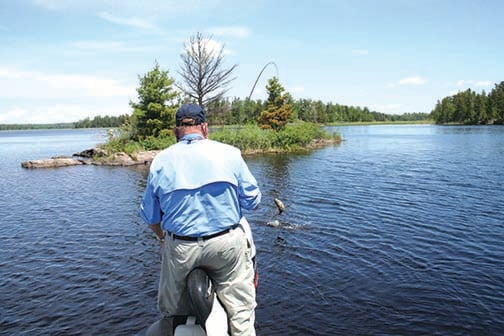
And just like that, another epic battle was underway between man and fish. The 15-inch smallmouth bass would change directions multiple times and perform several spectacular aerial flips before finally being netted.
This is Pennsylvania fishing at its finest, top-water style.
There’s no better way to fish a river in the summer than with topwater lures. These lures are capable of producing steady and exciting action all summer long, but there is a degree of technique that can make fishing them more enjoyable and successful.
Let’s start with choice of lure. There are hundreds of topwater lures to choose from, but, in my experience, there have been three that have proven to be consistently productive over the course of many years in a variety of conditions.
They are what I call the Titans of Topwater: the Torpedo, the Whopper Plopper and the Jitter Bug.
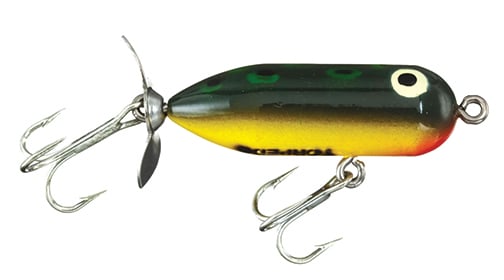
THE TORPEDO
Named for its shape, it’s basically a stubby cigar profile with a small propeller at the end, which spins even when gently pulled across the surface of the water.
This spinning action of the propeller imitates a fluttering bug and is what bass seem to love. When worked in a slow pull – stop – pull – stop method, it can be deadly.
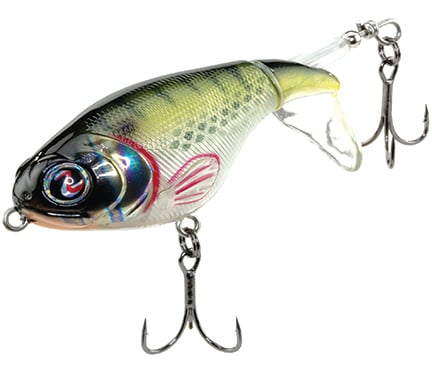
THE WHOPPER PLOPPER
The plopper is shaped like a small fish with a curled tail that spins when the lure is retrieved, creating a wake of rhythmic, vibrating turns.
Bass find them hard to resist.
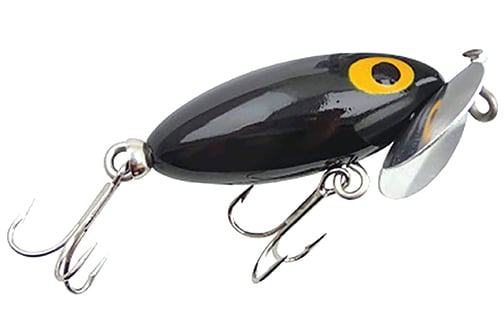
THE JITTER BUG
This lure has a fat oval body shape and a large front-cupped lip that causes it to dance back and forth across the surface when retrieved in a slow, even pace.
These are excellent for dusk and night-time fishing.
Keys to success
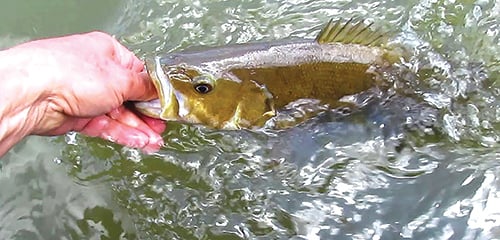
There are a couple of keys to unlocking success with these lures. One, try to make more casts toward the shore line and the shallow water.
Bass in midsummer like to hug the shoreline, and sometimes big fish can be caught in water that doesn’t seem deep enough to hold them.
Two, practice just giving the lures a gentle twitch or two once it lands, instead of beginning to retrieve it right away.
This can often provoke a strike within the first few seconds.
Three, work slowly but with varying speed, such as retrieve – stop – retrieve – stop – retrieve. If you think you’re moving too slowly, then it’s probably just right.
Many times, bass hit when the lure is stopped or motionless. Or they attack during a slow retrieve, so experiment and be patient. With some practice and perseverance, you can turn your topwater fishing into a triumph of the titans.
Another Maryland Master Angler recognized for 10 species of fish
Jason Koontz, of Frederick, has earned a Master Angler Milestone Award under the Maryland Department of Natural Resources’ FishMaryland program.

Pennsylvania man is guilty of homicide in UTV, lake incident
A Westmoreland County man has been convicted of homicide by vehicle in the February 2025 death of a friend who

Dan Small Outdoors Radio: Show 2142
Ruffed grouse hunters report an average season so far, and woodcock hunters are finding lots of flight birds in northern
