




Home » National News » Wisconsin Conservation Congress questions for this year’s spring hearings
Wisconsin Conservation Congress questions for this year’s spring hearings
Madison — Formed in 1934, the Wisconsin Conservation Congress has been advising state natural resources agencies on fish and wildlife matters for more than 90 years.
Each year on the second Monday of April, the Conservation Congress, with five delegates in each of the state’s 72 counties, offers a list of advisory questions during the annual fish and wildlife hearings. If supported by the public, those proposals can come around the next year or two as DNR proposed rule changes.
This year the congress has more than 20 advisory questions for sportsmen to consider. The explanations and background information for each question runs too long to post the entire agenda in this space, but what follows is a summary of the questions that sportsmen will find on the 2026 spring hearing agenda.
MORE COVERAGE FROM WISCONSIN OUTDOOR NEWS:
Sandhill crane season comes up short in Wisconsin
Ask a fisheries biologist: What research is saying about the impact of forward-facing sonar
Elk tag, longer bow season highlight Wisconsin DNR wildlife questions
23. As with the NRB questions, the congress is also looking at alternate funding sources for the DNR. Would you support the legislature imposing a sales tax of 0.125% dedicated to the DNR to provide a permanent and reliable source of funding for fish and wildlife conservation programs?
24. Would you support … designating the rare Hine’s emerald dragonfly as the state insect and redesignating the honeybee (current state insect) as the state agricultural insect?
25. Would you favor opening the muskrat mink season at 9 a.m. on opening day in each of the muskrat/mink zones without any other time restrictions for checking traps for the remainder of the season (it has been suggested that if the season opened at 9 a.m., youth trappers would be on a more even footing with other trappers.)
26. Would you support a youth-only muskrat and mink trapping season opening the Saturday before the opening of muskrat and mink season in each of the four muskrat/mink trapping zones and running to the regular season opener in each zone?
27. Turkey stamp fees have not increased in over 20 years. With a turkey stamp increase to $10, this would increase funding by about $462,659 based on current stamp purchases. Would you support a turkey stamp fee increase to $10?
28. Would you support a legislation change allowing for the cleaning of salmon and trout and the disposal of fish waste from a boat a half mile or more from shore on Lake Michigan and Lake Superior? (It is recognized that the outer skin of any such fish fillet would be retained for identification purposes.)
29. Would you support reducing the panfish aggregate bag limit from 25 to 10 for Fox Lake?
30. Would you support extending the fish refuge on the Peshtigo River between March 1 and May 31 to the first train bridge below the dam?
31. Would you support collaboration with Michigan authorities to create a fish refuge from the Hattie Street dam to the railroad bridge downstream from March 1 through the Friday preceding the first Saturday in May?
32. Would you support removing the 26-inch size limit on northern pike in Lake Emily to reduce the overabundance of small fish (Portage County)?
33. Would you support establishing an underwater spearing season without the aid of SCUBA for catfish running May 4 to Oct. 15 in all waters open to underwater spearfishing?
34. Would you support reducing the present 25-fish daily bag limit to 10 panfish on Long Lake in the town of Oasis in Waushara County?
35. Should the DNR work with the Public Service Commission, the regional U.S. Fish and Wildlife Service, the Federal Aviation Administration, and other agencies to consider whether painting a wind turbine blade, and subsequent monitoring, could be a viable “best management practice” for reducing wind turbine bird collisions in Wisconsin?
36. Do you support administrative and legislative actions to prohibit industrial food waste digestate from farm co-digesters from being spread on farmland or used for crop irrigation in order to protect farmland, water, fish, wildlife, and rural residents from industrial pollution?
37. Would you support legislation for the reauthorization of the Knowles-Nelson Stewardship Program for at least 10 years with a funding commitment of up to $1 billion?
38. Dogs have been used for centuries to protect livestock and human health and safety. Outside of Wisconsin, conflicts between humans and large predators (primarily mountain lions and bears) have been resolved by targeting and harrying animals with hounds. These programs pair handlers who own trained dogs with local DNR or USFWS personnel to track the animal that is causing the depredations. Do you favor the DNR establishing rules to allow handlers with trained hounds to be engaged by permitted agencies to track or harry offending wolves in Wisconsin?
39. Do you favor eliminating the division between northern and southern area shooting hours, thereby having one statewide set of shooting hours north and south, while keeping the east-west adjustments that are based on sunrise-sunset?
40. Do you support including an option when registering a deer to include the township that the harvest took place?
41. Do you support allowing the placement of stands and ground blinds overnight on all state-owned property, including those properties south of Hwy. 64 from September through January?
42. Do you support a change in the DNR regulations to extend the deer registration deadline from 5 p.m. to 11:59 p.m. the day after recovery?
43. Do you support revising Chapter NR 10 for metallic hunting cartridges to allow only centerfire rifle and handgun ammo of .22 caliber or larger to be used for hunting deer?
44. Mineral supplements may result in healthier deer and help them resist CWD. This proposal would place mineral supplements on the landscape with testing to follow that would indicate if it was successful. Sauk County has a 33% infection rate of those deer tested and the program would be implemented on a 5-year test basis in Sauk County. Landowners or voluntary contributors would buy the mineral supplements. Do you support allowing a five-year private research program to place minerals on the landscape in Sauk County with follow up testing to determine if it was successful in slowing the spread of CWD?
SUBSCRIBER CONTENT
Read this article now.
Create a free Outdoor News account.
Create a free account below to get instant access to this article, thousands of Outdoor News stories, and our digital editions. Your 1-month trial starts the moment you sign up.
No credit card required
No credit card required
Subscriber? Login Here.
Share on Social
Hand-Picked For You
Short on walleyes, but long on muskies: Beers Lake in Minnesota’s Otter Tail County
Minnesota’s Outdoor Calendar
Minnesota Cuffs & Collars: K9 Molly helps hunter find lost gun
Steve Carney: Minnesota fall turkey tag filled, and a great walleye bite on big minnows
EHD drives North Dakota deer season changes
Minnesota duck hunters await fresh birds as warm weather lingers
Related Articles
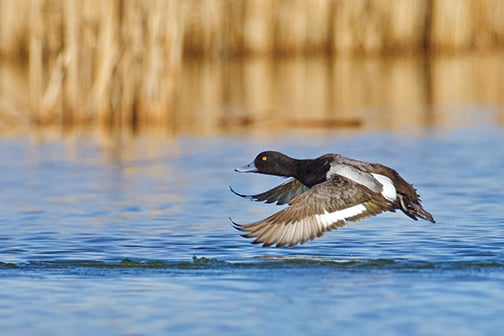
Minnesota duck hunters await fresh birds as warm weather lingers
If you spoke with enough waterfowlers and waterfowl managers across Minnesota in the last handful of days, the message you
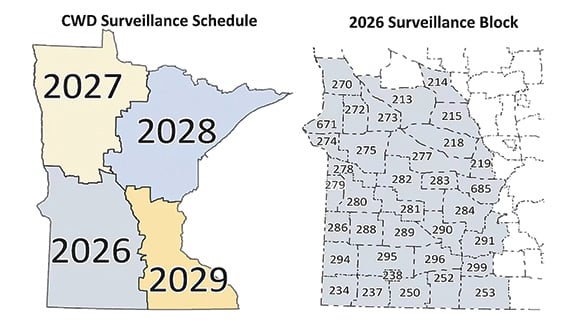
Minnesota DNR reminds firearms deer hunters to prepare for CWD sampling
Sampling is mandatory for southwest Minnesota the opening weekend of firearms deer season Nov. 7-8

Short on walleyes, but long on muskies: Beers Lake in Minnesota’s Otter Tail County
Otter Tail County’s Beers Lake is an excellent walleye fishery – nope. Beers is loaded with good-sized panfish and northern
