




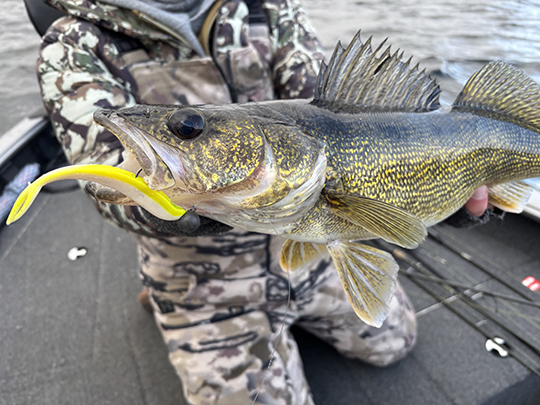
Spring is coming fast, and along with it comes a sense of rejuvenation.
After another winter, anglers are chomping at the bit to fish open water again. With the cold we’ve had this season, ice is still covering some lakes across the Midwest, and may hold on for a while in North Country. Not to mention, walleye fishing is closed in many inland waters until May. Thankfully though, many of the river systems in the region are open – in terms of ice coverage and game fish seasons.
 Rivers offer anglers a unique, and early, opportunity to get back in the boat and chase walleyes again. Spring is a special time on the river. Walleyes are making mass migrations to rather predictable locations to feed and ultimately, spawn.
The month of March has a distinct significance to those who chase walleyes. Anglers flock from far and wide to many of the premier river destinations, in search of that first walleye bite. Take the Mississippi River, Rainy River, Fox River, Detroit River, and Missouri River, for example. These locations are known as perennial producers for both quantity and quality.
While these major systems certainly receive the most coverage, smaller rivers also offer similar opportunities – just on a smaller scale.
In terms of presentations for river walleyes, there’s a number of options that work well. That being said, there are a few that tend to outshine the rest. For the sake of simplicity, we’ll categorize these into jigging, casting, and pulling.
Jigging tends to produce best when fish are concentrated in deeper areas or on specific structure. One of the keys to jigging success is keeping presentations vertical. In most river systems, this is best accomplished by relying on heavier jigs. Generally speaking, shorter rods, like those in the 6.5-foot range, are ideal for these vertical scenarios as they offer better control.
MORE FISHING FEATURES FROM OUTDOOR NEWS:
Month of March means trophy walleyes after ice out on Michigan rivers
Burbot through the ice are late winter’s overlooked opportunity
Cold water, big fish: Michigan trip after ice out results in that elusive 10-pound walleye
Casting methods really shine when fish make the move to shallower water, as it’s not logical to pull over or on top of them. Top presentations include jig-and-plastic combinations, hair jigs, blade baits, shad raps and lipless crankbaits. You can fish most of these options extremely well with a 7-foot medium-light to medium-power, fast-action rod.
Pulling presentations are preferred in instances where fish are more spread out. The most common presentations that fall into this category include three-way rigs, Dubuque rigs, and lead lining with crankbaits, like the Rapala Original Floater or Shad Rap (affiliate links). When pulling three ways, it’s important to keep a sharp angle, usually about 45 degrees or less, to avoid having too much line out. A little piece of advice, a lot of times pulling faster can be better than pulling slower.

For most river techniques, I rely on 10-pound Sufix 832 (affiliate link) in high viz colors. It’s a great option in terms of sensitivity and the ability to detect bites visually. In some instances, a fluorocarbon leader is necessary, but often times I tie directly to the lure when I can get away with it.
In terms of jigs, the VMC Moon Eye (affiliate link), in varying sizes, is an excellent option. It’s a great choice for both live bait and plastics. My favorite part, though, is the hook. While it’s stout enough to offer great hook penetration, it’s light enough to bend out when you get snagged – something that happens all too regularly on the river. It’s much faster to bend a hook back then it is to re-tie again and again.
Regardless of technique, boat control is of extreme importance for river fishing success.
Anglers need to develop an understanding of how current affects both their boat and their presentation. An important reminder – current speed at the surface can be different than current speed at the bottom. Anglers need to pay attention to this to ensure they’re most effectively using their presentations.
Spring is an incredible time to hit the rivers. There’s something quite special about getting back in the boat again and taking advantage of some excellent walleye fishing before the lakes even fully open up!
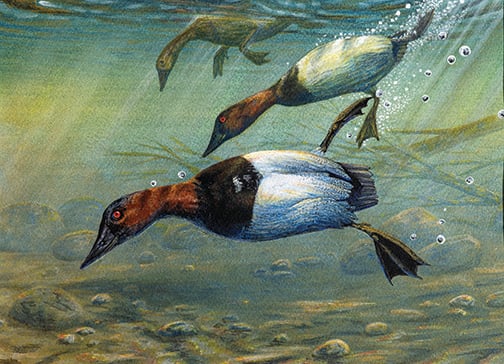
Winner of Minnesota’s 2027 state waterfowl stamp contest announced
Minneapolis artist Melissa Mickelson won the Minnesota 2027 waterfowl stamp contest with an acrylic painting of canvasback ducks.
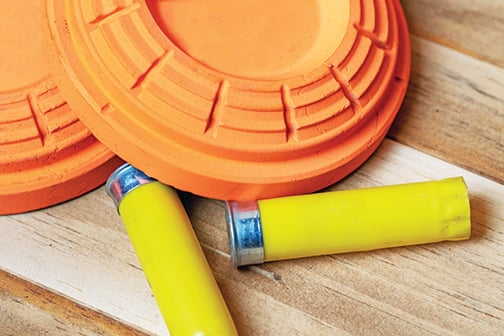
Disqualification reconfigures Minnesota youth trap league’s spring ’26 leaderboard
The Minnesota State High School Clay Target League is starting its fall season, but a disqualification recently reshuffled the list

Minnesota Mixed Bag: Teach a kids to hunt small game during Take a Kid Hunting Weekend
Getting kids outdoors in pursuit of squirrels, rabbits and other small game is the focus of Take a Kid Hunting
