





Springfield — DNR sent as reminder to firearm deer hunters that mandatory check stations will be open this year in counties where chronic wasting disease has been detected. The second segment of the 2025 Illinois firearm deer season is Dec. 4-7.
The detection of CWD in Bureau, Ford, and Lee counties has prompted IDNR to open new check stations in 2025. Mandatory CWD surveillance counties now include Boone, Bureau, Carroll, DeKalb, Ford, Grundy, Jo Daviess, Kane, Kankakee, Kendall, LaSalle, Lee, Livingston, McHenry, Ogle, Stephenson, Will, and Winnebago.
A list of CWD testing locations can be found online. Mandatory check stations are operated 8 a.m. to 8 p.m. daily. Successful firearm hunters in CWD counties should not attempt to report their deer online or by phone.
Voluntary check stations will be open for successful hunters in Adams County at Twin Oaks Club, 2702 Bonansinga Drive in Quincy, and at the Jubilee College State Park office on West Fussner Road in Brimfield. Voluntary check stations are operated 8 a.m. to 8 p.m. daily. Successful firearm deer hunters in Adams and Peoria counties are required to check their deer online at ExploreMoreIL.com or over the phone at 866-452-2325 (866-IL-CHECK).
Successful deer hunters can visit taxidermists, meat processors and head drop-off locations throughout the state to have their deer tested for CWD. View the interactive map of sampling locations and learn more about CWD sampling online.
Oswego Caller Takes Two Junior Championships
Oswego, Ill. — JT Johnson, of Oswego, took a couple of first-place honors during the World Waterfowl Calling Championships, held Nov. 15 in Easton, Maryland.

The first two championships in the junior divisions featured a sweep by the 16-year-old Johnson. He captured the Junior Live Duck Calling and Junior Goose Calling championships.
Johnson thanked his family for taking him across the country to compete in calling contests.
“It’s been a dream for a while,” Johnson said. “It’s been everything that I’ve worked for the years that I’ve been blowing, and it’s an amazing night for me.”
Callers competed in eight separate divisions during the championship event: Junior Live Duck Calling, Junior Goose Calling, Team Live Goose Calling, Team Live Duck Calling, Live Goose Calling, Live Duck Calling, World Championship Goose Calling and World Goose Calling Champion of Champions. The Champion of Champions is only held once every five years. Only former World Goose Calling winners can compete. Winners of the Champion of Champions must retire from the contest. In each event, callers aimed to emulate either ducks or geese. They had 60 or 90 seconds to do so, depending on the division.
Hunters Feeding Illinois Launches in Sangamon
Springfield — The Sangamon County Farm Bureau is partnering with the University of Illinois and a local church to launch a deer donation program in Sangamon County.
In conjunction with the University of Illinois Extension and Buffalo Hart Presbyterian Church, this Hunters Feeding Illinois program is mainly available in the Southern half of the state through the Illinois Extension Program. The Farm Bureau said the program is a cost-effective way to provide health protein, specifically for those in need.
Those interested in donating can drop off freshly harvested deer to partnering meat processors, such as Turasky Meats of Springfield. Donors are instructed to tell the processor that their donation is for the “Hunters Feeding Illinois program.” There are no processing costs to the donors of the deer.
From there, the processor and U of I Extension work together to ensure a local food pantry picks up the ground deer meat to serve those in need.
For more details on the events and opportunities offered by the Sangamon County Farm Bureau, visit their website. Anyone with further questions is asked to call the Farm Bureau at 217-753-5200.
Wisconsin: Deer Population Now at 1.825 Million
Madison, Wis. — The Wisconsin DNR is reporting a record-high deer population, adding that there aren’t enough hunters to control the population.
Wisconsin DNR estimates there are 1.825 million deer in that state, partially driven by huge populations in Wisconsin’s farmland areas.
The state to Illinois’ north says it is seeing the highest age group of hunters age out, leaving a gap that younger generations aren’t filling. In the last 10 years, Wisconsin has lost about 50,000 registered hunters. Most from that group are baby boomers who have quit hunting in their 60s.
Fewer youth are getting into hunting, some other hunters may lose access to hunting land, and some have just lost the tradition of hunting.
Wisconsin officials are expecting to see a rise in vehicle collisions, crop loss from deer feeding, and the spread of CWD.
The Badger State is concerned about the decline in hunter participation.
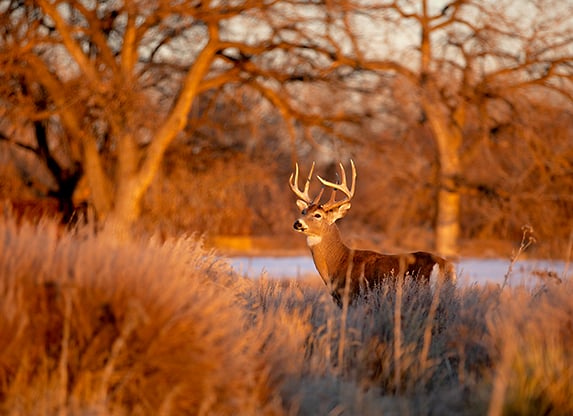
Pennsylvania’s hunting license sales down so far this year
Hunting license sales are down nearly 4.5% at the end of August, although Pennsylvania Game Commission officials believe there is
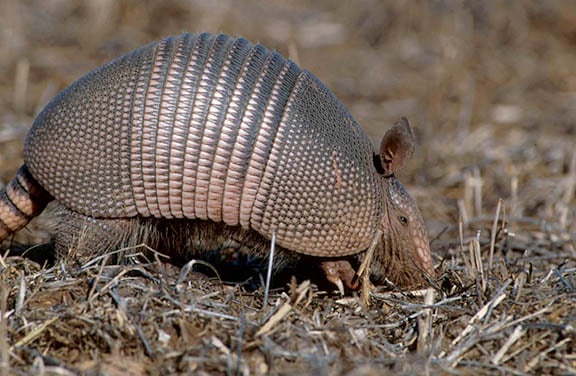
Origin of road-killed armadillo in southwest Ohio a mystery
An armadillo found as roadkill in southwest Ohio has researchers scratching their collective heads wondering from where the non-native mammal
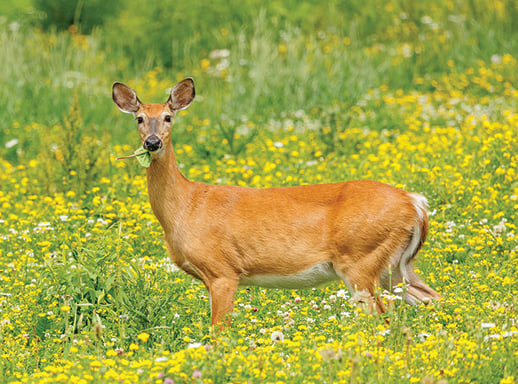
Bowhunt gets started in Ohio with additional opportunity in CWD surveillance area
Hunters in Ohio’s chronic wasting disease (CWD) surveillance area have additional dates this season to pursue white-tailed deer. The Ohio
