




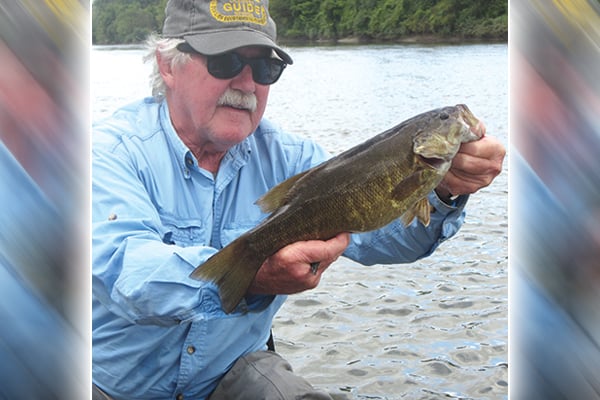
When I picked up the flailing smallmouth and looked down its throat to remove my fly, the bass appeared to have swallowed a can of black pepper.
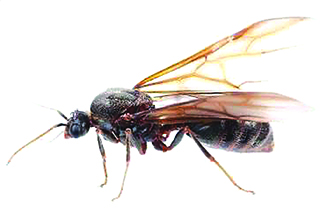
Its boney lips, mouth and gullet were encrusted with tiny black flecks – only it wasn’t pepper, it was ants: dozens and dozens of winged and wingless ants, size 16 by fly-fishing measurements, and the insects were packed together like a pearl pudding.
Actually, I wasn’t really surprised. As I waded there was a thick blanket of drowned ants floating along the Delaware River. I had seen this scenario plenty of times in the past on various Pennsylvania streams and rivers and, of course, I had used a size 16 ant to catch this chunky smallmouth.
Still, every time I’ve encountered what I call an “ant drop” I get really excited because the catching has always been exceptional during this natural event.
In retrospect, mayfly and caddis hatches can be great and when bass move into the shallows to take minnows and crayfish, this leads to some exciting fishing. But the ant drops of summer and fall are absolutely spectacular with smallmouth wantonly gulping mouthfuls of ants, sometimes non-stop for hours.
And when you float a fly in their path during this frenzied blitz, you can catch scads of bass, everything from the lowly 6-incher to the high-fiving 3- to 4-pounder.
MORE BASS COVERAGE FROM OUTDOOR NEWS:
Want to travel far and fish well? Tips for packing light in canoe country
Take a new approach to catch big warm-water smallies
I’ve encountered literally dozens of ant-drop and smallmouth-scoring events but I never know if, when and where they’ll happen. Unlike many mayfly and caddis hatches that are writ on calendars, ant drops occur at unscheduled times and unknown places.
The conditions that instigate an ant drop can’t be mapped or timed, which makes encountering a drop all the more fun and memorable.
For closer examination, I should point out that these events are not ant hatches. The ants you’ll encounter aren’t rising in a larval stage to float and fly off as adults or duns.
An ant drop occurs when a vast number of fully formed adult ants cavort and mate on the ground and then the ants either travel or are blown off their mating area and end up on the water where they drown.
Within every ant drop there are a number of both winged and wingless ants of the same species and both will appear on the water at the same time.
It’s not like the male green drakes arriving at one time followed by the female drakes an hour later, or vice versa.
Winged ants can be either male or female with most winged females being young queens. But wings can fall off an ant so quickly and easily that you are hard pressed to tell the sex of an ant. I use a mesh glove to trap insects on the water and I’ve scooped up a handful of winged ants only to have them discard their wings and turn into wingless ants by the time I hoist them to eye level.
Over my fishing years I have not seen smallmouths key in on either sex as they do with some mayflies, but since female ants tend to be a bit larger, and large wings make a winged ant stand out amid the crowd, bass may take a higher percentage of females than males during a drop.
As for colors, black, brown, black/brown, cinnamon and red ants can be present. However, I’ve never encountered a red ant drop. In the course of normal fishing, especially for trout, I might use a red ant pattern as I would an attractor or search pattern.
However, when it comes to memorable ant drops, either black, brown, black/brown and cinnamon ants are the ones I’ve seen. I’ve fished many Dixieland smallmouth waters but have never observed fish, either bass or panfish, gulping the red fire ants.
I’ve made particular mention about black/brown ants for a reason. I certainly cannot discern various ant species (of which there must be dozens in Pennsylvania), but an unnamed species with a black head and reddish brown abdomen is one I’ve encountered a bunch. And when I have, it’s amazing how bass (and trout) can be selective to the dual-color insect.
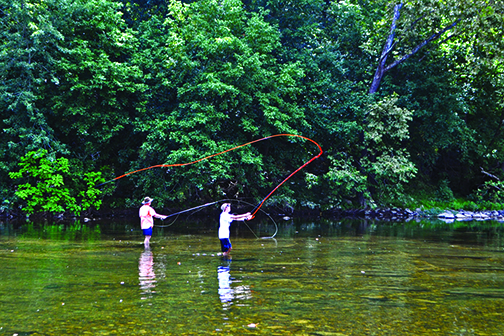
Healing Waters Flickr)
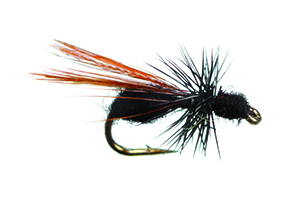
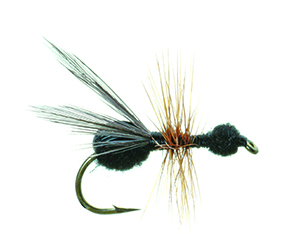
As for size, so many ants are size 18, but for bass I prefer to use a size 16 at the smallest and size 16 with grizzly hackle wingtips for the winged variety. (Size 18 is great for trout on the Lehigh, upper Delaware and Brodhead creek).
Another reason I favor a size 16 ant for smallmouths is its compatibility with a 3X tippet. Leaping smallmouths can snap a 5X in a flash, so I like the extra strength of a 3X.
Considering technique, this is not fly-fishing rocket science. I like to get just downstream of the rising bass and make a direct or slightly angled upstream cast. Also, I’ll get across and make a perpendicular cast. And when necessary, I float the fly directly into a downstream mouth with no fear of bass leader shyness.
So, though you may not know the when or the why, when it comes to summer smallmouth fishing, be prepared for an ant drop with good ant flies.
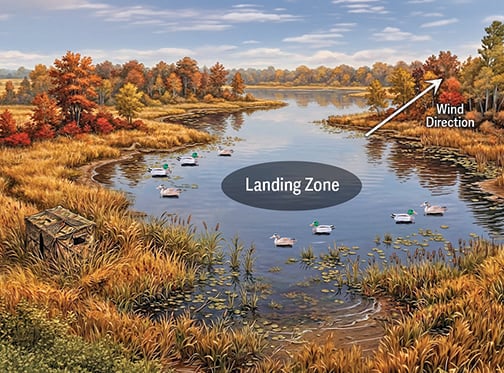
Mastering early season duck decoy spreads; a time when less is more
It was better than Christmas morning – opening day of duck hunting. I had just turned 14, and with a
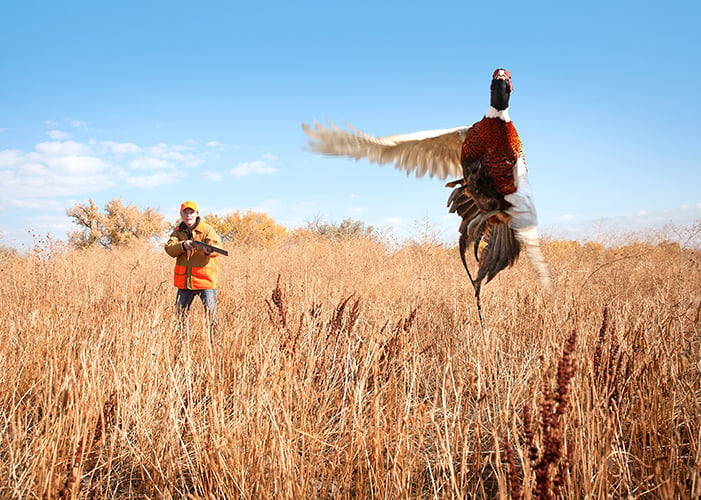
WI Daily Update: DNR budget constraints lead to fewer stocked pheasants this fall
Wisconsin pheasant hunters will see fewer stocked birds and a shorter release schedule this fall. Here’s why, along with what’s
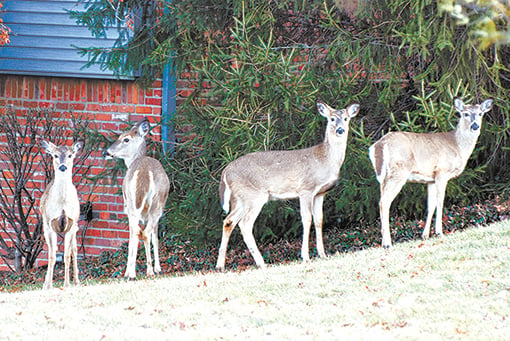
Suburban deer management expands in southwest Pennsylvania
Oakmont is the latest in a growing number of suburbs around Pittsburgh to adopt a controlled archery program to manage
