




What hunters need to know heading into Iowa’s gun deer seasons

For an expected 100,000-plus deer hunters, the long wait is almost over, Iowa’s gun deer seasons are right around the corner.
But before heading to the timber, it’s important that hunters go through their gear, sight in their gun and take time to review their hunting safety plan, said Craig Cutts, chief of the Iowa Department of Natural Resources Law Enforcement Bureau.
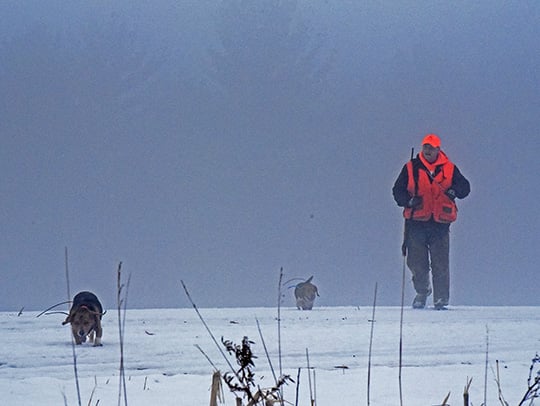
“Hunters should check their blaze orange gear to make sure it still fits and that that orange hasn’t faded to the point of being ineffective,” Cutts said. “We’re not hiding from deer during the firearm seasons; we want to be seen by the other hunters. The more external blaze orange that’s worn, the better the chance that hunters will be seen in the timber.”
The minimum amount of blaze orange required by Iowa law to hunt in the firearm deer season is a 100% solid blaze orange vest, but hunters should wear as much blaze orange as possible, he said.
“We have a lot more hunters choosing rifles and rifles can travel much greater distances so blaze orange is really important,” he said. “But they also need to be cognizant of that distance, so they need to take good shots – avoid shooting at running deer, and know what’s in front of and behind the deer, in case the shot misses.”
MORE IOWA COVERAGE FROM OUTDOOR NEWS:
Iowa’s busiest deer seasons are almost here
Zebra mussels found in Iowa’s Saylorville Lake
Doolittle Prairie is one of the most diverse places in Iowa despite its small size
Not shooting at running deer is key to avoiding property damage or injuring another hunter. With the added distance rifles are capable of, hunters need to be aware of what is behind the deer if the shot misses.
Cutts said there has been an average of nine hunting related incidents over the past three deer gun seasons involving rifles with around six involving personal injuries. Following the hunting plan is another way to avoid problems.
The hunting plan identifies the location, outlines each person’s role, describes how it will unfold and when the hunters are expected to return home. Hunters are encouraged to leave a copy of the plan with someone in the event of an emergency.
“You cannot deviate from the plan,” Cutts said. “The problems start when you see the deer coming out of a different area than you expected, then leave your location to get closer to the deer and suddenly the hunter is in the line of fire.”
Iowa’s first gun season is Dec. 7-11; second gun season is Dec. 14-22.
For more information on hunting safety, contact your local conservation officer.
Deer gun seasons important for chronic wasting disease sample collection
The Iowa Department of Natural Resources will again be partnering with Iowa deer hunters to collect tissue samples to monitor for chronic wasting disease during the upcoming gun seasons.
The goal is to collect samples from each county, with higher quotas based on the presence of or proximity to confirmed positive locations. The goal is to collect about 5,000 samples statewide.
Hunters interested in submitting samples to the DNR’s surveillance program can do so by contacting their local wildlife staff. Hunters can monitor progress towards surveillance quotas by county on the DNR CWD Dashboard.
Hunters in areas where the disease has been found, or in counties where the quota has filled, can get their deer tested by going to www.iowadnr.gov/cwd and clicking on the hunter submission pathway. The video below demonstrates how hunters can remove the lymph nodes and package them for mailing.
The hunter submission pathway allows hunters to pull and submit their own tissue sample simply by filling out the online form and paying a $25 processing fee, the same fee the DNR pays for its samples.
Shipping doesn’t require special packaging and hunter submitted samples are prioritized so testing and results can be turned around quickly. Samples are tested at Iowa State University’s Veterinary Diagnostic Lab, in Ames. Hunter submitted sample results are included with the data from samples the DNR is collecting.
“Local wildlife staff can help hunters with pulling samples. There are also resources online that shows how to pull and ship samples,” said Tyler Harms, wildlife biologist with the Iowa DNR. “It’s a really good partnership that provides an additional testing option for our hunters.”
The Centers for Disease Control and Prevention advise to avoid consuming meat from deer that test positive. Most deer that have tested positive in Iowa to date have not shown signs of infection, and appear to the eye to be healthy and normal. Since 2013, the disease has shown up in 25 counties, most recently in Davis County, in southeastern Iowa, and Shelby County, in western Iowa. It has been found in all neighboring states as well.
Chronic wasting disease is spread through direct contact between deer and through contact with contaminated surfaces in the environment. Artificially concentrating deer by putting out grain or mineral can increase transmission of the disease because it increases the opportunity for deer to interact and come in contact with infectious material. Deer will concentrate on their own through scrapes and during the breeding season.
“We want to minimize artificially concentrating deer by not putting out mineral or grains,” he said.
The disease can also be spread by transporting infected carcasses.
“We stress to hunters not to transport the deer carcass outside of the county where it was harvested if at all possible, to avoid introducing the disease to a new area,” Harms said.
If, for some reason, hunters need to take the carcass with them, he said hunters should landfill the carcass through regular waste disposal. In the few instances where landfilling isn’t an option, hunters should return the carcass to the site of harvest after processing.
“Hunting plays a huge role in slowing the spread of the disease. We encourage hunters to continue hunting in Iowa and managing the herd for future generations,” Harms said.
Iowa is in its 23rd year of monitoring for chronic wasting disease and Iowa’s deer hunters have played a significant role in this effort by providing more than 100,000 tissue samples for testing, and by increasing harvest surrounding positive test results, when asked. Iowa has been tracking the presence of chronic wasting disease since the first positive deer was found in Allamakee County in 2013.
Deer management zones
Deer management zones exist in some areas where chronic wasting disease has been detected, and in areas where the local population is above goal. A listing of deer management zones is available online.
Tags available in deer management zones are specific to the zone and not tied to the county antlerless quota. These are often available after the county quotas are gone.
“The primary reason for a zone is to manage the deer herd towards the lower end of our population goal in a specific area where the disease has been confirmed. We also want to increase our surveillance so we highly recommend hunters provide a sample to help monitor the disease in these areas,” Harms said.
In addition to the deer management zones, incentive zones in Allamakee, Dubuque, and Wayne counties, focus harvest on a small area where detections on more concentrated. The incentive is, if hunters harvest three female deer and submit their samples for testing – then they receive an additional any deer license for next year for the season of their choice.
These incentive zone hunts are in late January and hunters must register ahead. Information is on the website, including staff who can get hunters registered.
Doe harvest registry
Hunters interested in working with farmers to harvest additional does are encouraged to sign up with the Iowa Doe Harvest Registry. The Registry has been a resource that the Iowa DNR has offered to farmers since the mid-2000s, but is now easier to access.
To participate, go to https://www.iowadnr.gov/Hunting/Deer-Hunting and complete the online form. Hunters and farmers can select their preferred hunting seasons and their region of the state.
Harvesting antlerless deer is the most important tool for managing deer populations at the state, county and local level.
Deer donation program
The Iowa DNR, the Food Bank of Iowa and 31 meat lockers are participating in the Help Us Stop Hunger program for 2024. Hunters are encouraged to contact a participating locker before they harvest a deer to see if the locker has any additional drop off instructions.
Hunters may also sign up as a deer donor or recipient with the Iowa Deer Exchange at www.iowadnr.gov/deer then scroll down to Iowa’s Deer Exchange Program link. There, donors can provide their information on what they are willing to donate. The database creates a map and table with information deer donors and deer recipients can use to get connected.
Hunters and recipients who had previously registered for the Deer Exchange Program should review their information to make sure it is still accurate and active. There is no cost to participate. It is illegal to sell wild fish and game in Iowa.
Donated deer hides benefit disabled veterans
Hunters donated more than 4,700 deer hides to Elks Lodges across Iowa last year, which was an increase of nearly 200 hides from the 2023-24 season. The deer hides are used by the Elks Veterans Leather Program to make professionally-crafted leather gloves for veterans in wheelchairs and also turned into leather used for therapy programs for recovering veterans.
The Elks Veterans Leather Program relies on the charity of hunters to donate their deer hides. Hunters willing to donate their hides are encouraged to contact the local Elks Lodge for drop off locations or visit www.elks.org/lodges to find the nearest lodge.
The therapeutic kits and gloves are distributed at no cost to the veterans. Contact Lisa Widick at 208-360-6294 or ozzywidick@gmail.com for more information.
SUBSCRIBER CONTENT
Read this article now.
Create a free Outdoor News account.
Create a free account below to get instant access to this article, thousands of Outdoor News stories, and our digital editions. Your 1-month trial starts the moment you sign up.
No credit card required
No credit card required
Subscriber? Login Here.
Share on Social
Hand-Picked For You
Minnesota Mixed Bag: MN-Fish expands board to 20
Minnesota Letters to the Editor: Instead of ethanol, grow more wetlands-savvy cattle
Outdoor Insights: Time to raise Minnesota fishing license fees for nonresidents? And more election season thoughts
Pro Fishing Tip of the Week: Catching fall giants on Mississippi River waters in Minnesota
Minnesota’s statewide fishing and hunting report on Oct. 21, 2026
Rare melanistic gray fox photos from Michigan reveal a wildlife marvel
Related Articles
Patrick Durkin: Wisconsin’s Tom Tiffany can’t tell trivial from crucial on conservation issues
Unlike some politicians who pander to hunters when seeking their votes, Wisconsin gubernatorial candidate Tom Tiffany doesn’t pretend to be

Minnesota Mixed Bag: MN-Fish expands board to 20
At its October 8 board meeting, MN-FISH directors voted to add three new members, a move that aims to expand

Minnesota Letters to the Editor: Instead of ethanol, grow more wetlands-savvy cattle
Reader-submitted letters to the editor published in the Oct. 23, 2026 edition of Minnesota Outdoor News.
