Star Watch: Our moon’s unique landscape
Looking at the Moon through binoculars or a telescope reveals a topography that hints of a violent history.
Star Watch: Our moon’s unique landscape Read More »
Looking at the Moon through binoculars or a telescope reveals a topography that hints of a violent history.
Star Watch: Our moon’s unique landscape Read More »
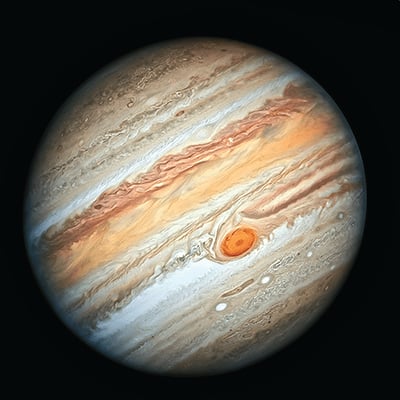
You may recall last October NASA launched a rocket carrying the spacecraft “Europa Clipper” named after Europa, one of Jupiter’s four largest moons. This mission began a six-year journey in space to Jupiter referred to by NASA as the “king of planets.”
Star Watch: Jupiter, the gas giant! Read More »
Did you ever wonder where the Moon came from? Is it where it is by chance; is there a story to be told; or can science give us the answer?
NASA tells us that our Moon likely formed after a Mars-sized body collided with Earth several billion years ago.
Star Watch: How did our moon get there? Read More »
But don’t look for Mars on the night of Jan. 13 when it will be “occulted” or covered up by the full moon. These lunar occultations occur when the moon passes in front of a star or planet during its orbital motion around the Earth, obstructing that object from our view.
Star Watch: Top times to see Mars in 2025 Read More »
Star-gazing can be a tough hobby. You may find that some family members and friends will abandon you once they realize that prime time for this hobby happens late, in the dark, and often in the cold.
Let’s face it, we humans are not at our best in the dark.
Star Watch: Here’s how to deal with the dark while you’re star-gazing Read More »
Scientists tell us that a “winter solstice” will occur this year on Dec. 21. We’ve heard the term before and it’s supposed to be the first day of winter, but cold temperatures have been with us for quite a while now. What’s going on here?
Star Watch: The Winter Solstice – 2024 Read More »
On Oct. 14, 2024, NASA launched the ”Europa Clipper” aboard the SpaceX Falcon Heavy rocket from Kennedy Space Center in Florida. This spacecraft is headed for Europa, one of Jupiter’s four largest moons first discovered by Galileo Galilei back in 1610.
Star Watch: Another Ocean in Space? Read More »
Ever wonder how a “leap year” is determined or why we even have it at all? The answer lies somewhere in the realm of astronomy, mathematics, and Roman history.
We (should) all know that our calendar year is based on how long it takes the Earth to complete one orbit around the sun. But did you know that it actually takes the Earth 365 and one-quarter days to make the trip? So what to do with those extra six hours?
Star Watch: Leap Year… and a Comet Recap Read More »
Walking back from a deer hunting stand during the frosty nights in November can be a great time to observe the night sky… unless you are dragging a deer, that is. Even then, taking a break to look at the sky is a good excuse to pause and catch your breath.
Star Watch: Look to the sky on your way out from the deer stand this November Read More »