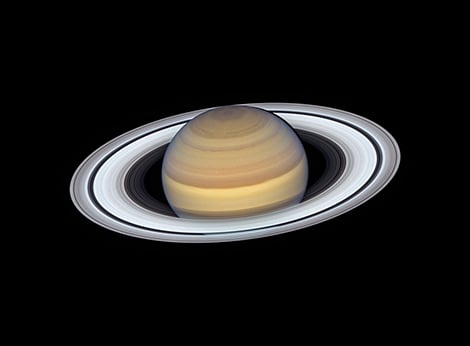
Star Watch: How many moons are enough?
As of March 25, 2025, NASA reported that there are 421 officially recognized moons orbiting planets in our Solar System, including the dwarf planet Pluto.
Star Watch: How many moons are enough? Read More »





As of March 25, 2025, NASA reported that there are 421 officially recognized moons orbiting planets in our Solar System, including the dwarf planet Pluto.
Star Watch: How many moons are enough? Read More »

Not one of the more well-known of the 48 constellations listed by Ptolemy in the 2nd Century, none of its stars are brighter than fourth magnitude making it a challenge to see except in a really clear, dark sky. A good pair of binoculars might come in handy here.
Star Watch: Crater, the cup Read More »
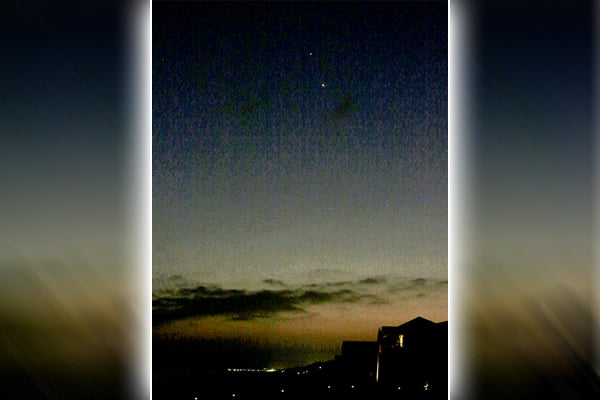
In my last column, we talked about our Moon closely approaching stars and planets in the night sky.
Next month our two brightest planets, Venus and Jupiter, will be very close together in the night sky from June 8 to 10 for about an hour or so after sunset.
Star Watch: Our two brightest planets get together Read More »

May, 2026 is a busy month for Earth’s only natural satellite. Following a full moon on May 1, another one squeezes in at the end of the month. Because it is the second in the same month, the full moon on May 31 is called a “blue moon.”
Star Watch: Our moon gets around! Read More »
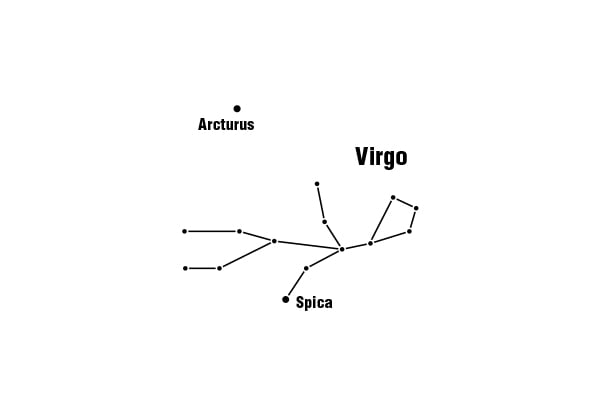
Spica is the brightest star in Virgo and one of the 20 brightest stars in our night sky. It’s also one of the easiest to find. If you recall from previous articles, we can follow the arc of the handle of the Big Dipper to the star Arcturus and then “on to Spica.
Star Watch: Virgo and Spica Read More »

One thing that has definitely changed is our ability to see what’s out there through advancements in space travel, telescopes and, of course, the Internet.
Star Watch: What’s new in the night sky? Read More »
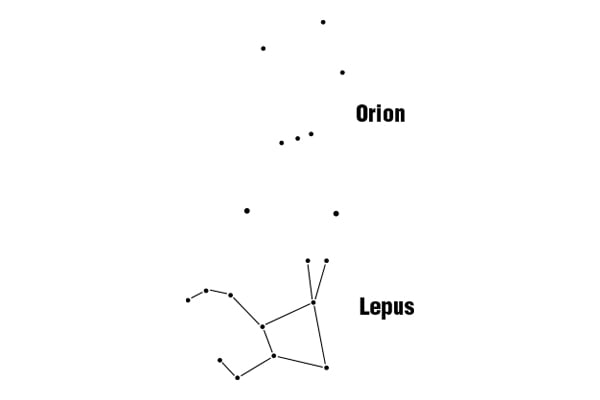
Just below Orion is a group of 11 stars that make up the constellation Lepus, Latin for hare.
Wikipedia.org says Lepus was one of the 48 constellations listed by the 2nd Century astronomer Ptolemy. Today, it remains one of the 88 modern constellations recognized by the International Astronomical Union.
Star Watch: Constellation Lepus is easy to find and plays an important role Read More »
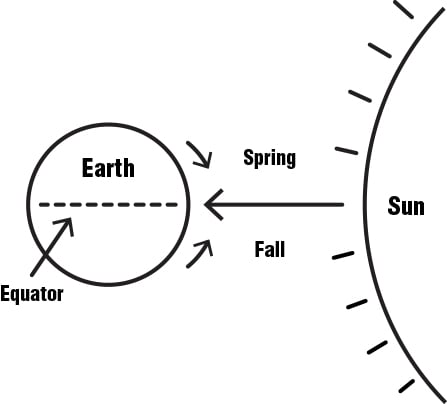
Meteorologists tell us that March 20 marks the first day of spring in the Northern Hemisphere.
For most of us, that’s good news because it’s been a long winter for those who live in the northern U.S. and we’ve been anxiously awaiting warmer temperatures.
Star Watch: Here comes spring Read More »

Next to the Big Dipper in Ursa major, Orion is probably the best-known constellation in our night sky.
Named after a hunter in Greek mythology, Orion has the distinction of having more bright stars than any other constellation.
Star Watch: The stars of Orion Read More »
