


Minnesota Mixed Bag: Invasive aquatic plant management grant applications open until Dec. 9

St. Paul — The Minnesota DNR has up to $1,060,000 available to local entities such as lake associations, watershed districts, cities, counties, and tribal governments for the management of curly-leaf pondweed, Eurasian watermilfoil, flowering rush and starry stonewort.
Funding comes from Minnesota’s invasive species account, which is largely funded by the invasive species surcharge on watercraft registrations and nonresident fishing licenses. The grant application deadline is 4:30 p.m. Wednesday, Dec. 9. Preliminary award notices will be issued in February 2027, and award funds to reimburse eligible work will be available as soon as March 2027.
Application materials and details about the program are on the DNR website. Direct questions to DNR Aquatic Invasive Species Research and Grants Coordinator Angelique Dahlberg, angelique.dahlberg@state.mn.us or DNR regional invasive species specialists.
MORE COVERAGE FROM MINNESOTA OUTDOOR NEWS:
What do Minnesota duck hunters want? New survey aims to get detailed answers
Updated: Minnesota deer harvest rises 17% statewide after strong opening weekend
Upper Red walleye limit regulation changes for winter season
DNR PLANTS NEARLY 60,000 SEEDLINGS TO HELP FORESTS ADAPT TO EMERALD ASH BORER
St. Paul — The DNR recently completed a project to plant 58,800 tree seedlings in the understory of ash-dominated state forest land in north-central Minnesota. This planting seeks to establish a more diverse mix of tree species ahead of the anticipated loss of ash trees to emerald ash borer, which threatens the ecological function of forests where ash are currently the primary species.
Crews hand-planted white cedar, hackberry, silver maple and swamp white oak seedlings grown at the State Forest Nursery on three sites near the edge of known EAB advancement. Seedling planting often happens in spring, but fall is preferred on these swamp sites because it’s drier and easier for crews to work.
“Our hope is that this project will give us one more tool to keep these ash swamps forested into the future,” said Chris Gronewold, DNR Silviculture Program coordinator.
DNR SEEKS PUBLIC INPUT ON PLAN FOR STATE PARKS, RECREATION AREAS
St. Paul — The DNR is seeking public comments on draft management plan amendments for 12 state parks and recreation areas. The comment period is open now through Dec. 11.
The draft amendments recognize the use of tree removal as a resource management tool in these state parks and recreation areas. Initial management activities would be conducted to selectively remove ash trees that have succumbed to emerald ash borer along roadways and in public use areas.
The DNR is amending management plans for the following parks:
Big Stone Lake, Blue Mounds, Flandrau, Kilen Woods, Lac qui Parle, Lake Shetek, Minneopa, Monson Lake, Nerstrand Big Woods, Sakatah Lake, Split Rock Creek, and Greenleaf Lake State Recreation Area.
The DNR will host informal open houses at each location where a plan amendment is proposed as an opportunity for people to ask questions. The draft plan amendments are available for review on the state parks and trails planning webpage via mndnr.gov
SNF’S RECREATION RESIDENCE ADDED TO NATIONAL REGISTER OF HISTORIC PLACES
Duluth, Minn. — Tucked along the shores of Hungry Jack Lake at the end of the Gunflint Trail, a collection of rustic cabins has welcomed generations of families seeking solitude, recreation and connection to the North Woods. Now that history has received national recognition. The Superior National Forest is pleased to announce that the Hungry Jack Lake Summer Home Group was formally listed to the National Register of Historic Places by the National Park Service on October 6. The listing recognizes the group’s important role in history, as well as craftmanship and character of historic buildings.
The Hungry Jack Lake Summer Home Group consists of approximately 20 rustic cabins and 40 outbuildings, many of which have been maintained to a very high standard over the past 100 years. Among the buildings recognized are four cabins constructed between 1930-1960 by master log builder Robert Zimmerman, known for designing and building fully scribed, Scandinavian-style log buildings.
WDNR CONFIRMS OAK WILT IN MANITOWOC CO.
Madison, Wis. — The Wisconsin DNR last week announced that oak wilt, a deadly disease that affects oak trees, has been found in east-central Wisconsin’s Manitowoc County for the first time. DNA analysis confirmed the presence of the fungus causing oak wilt in an oak tree in the town of Mishicot. The tree was planted in the mid-1980s and is believed to be a hybrid of bur oak and swamp white oak. The property owner contacted the DNR after noticing symptoms.
SUBSCRIBER CONTENT
Read this article now.
Create a free Outdoor News account.
Create a free account below to get instant access to this article, thousands of Outdoor News stories, and our digital editions. Your 1-month trial starts the moment you sign up.
No credit card required
No credit card required
No credit card required
Subscriber? Login Here.
Share on Social
Hand-Picked For You
Supreme Court clears the way for border wall in Big Bend National Park
Minnesota Letters to the Editor: More thoughts on ethanol and state of Minnesota grasslands
Pennsylvania letters to the editor: PennDOT deer food plots
Genetic study scrutinizes state of Minnesota burbot
What do Minnesota duck hunters want? New survey aims to get detailed answers
Taste of the Wild: Nashville hot chukar sandwich
Related Articles
EHD cases in Illinois deer are up from last year, but the DNR says the herd is holding steady
Suspected EHD deaths in Illinois deer have more than doubled from last year, with reports from 35 counties so far.
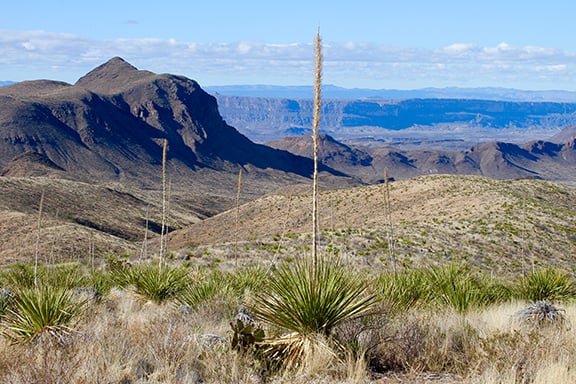
Supreme Court clears the way for border wall in Big Bend National Park
Washington (AP) — The Supreme Court cleared the way Monday for the Trump administration to resume border wall construction in

Minnesota Letters to the Editor: More thoughts on ethanol and state of Minnesota grasslands
Reader-submitted letters to the editor published in the Nov. 13, 2026 edition of Minnesota Outdoor News.
