Sportsmen’s Heritage Act has fans and critics in Washington
Washington — When a bill – federal or otherwise – contains a hodge-podge of various ideas and changes, it’s bound to get mixed reviews.

That’s been the case with U.S. House bill 4089, known popularly as the Sportsmen’s Heritage Act. The bill has been called “the most significant pro-sportsmen’s legislation of the past 15 years” by the U.S. Sportsmen’s Alliance. And it’s been labeled a “solution in search of a problem” by House members who voted against it.
The bill, according to the Theodore Roosevelt Conservation Partnership, another supporter of the measure, “will sustain hunting and angling opportunities and help secure sportsmen’s access to valuable public lands.”
The House passed the bill 274-146 last week, with bipartisan support in Minnesota.
The Sportsmen’s Heritage Act contains a number of provisions. First, it requires federal land managers to facilitate public use and access for hunting, fishing, and recreational shooting, and create an “open until closed” management regime for those activities on Forest Service and Bureau of Land Management lands, according to a Congressional report.
The bill “further forecloses opportunities for continued nuisance lawsuits by classifying hunting, fishing, and recreational shooting as ‘necessary’ to meet the minimum requirements for the administration of wilderness,” the report says.
The second part of the bill addresses policy on BLM’s national monument lands, that they be open and accessible for recreational shooting, and that BLM justify any closures.
Title III contains the test of another bill earlier sponsored by Alaska’s Don Young. It would allow the import of some 41 legally hunted polar bears “tangled in federal red tape,” according to the USSA, to be imported into the United States.
Finally, the bill addresses the issue of lead shot used on public lands – the subject of lawsuits in recent years. It “reiterates and clarifies existing law to clearly limit (the Environmental Protection Agency’s) authority under the Toxic Substances Control Act.”
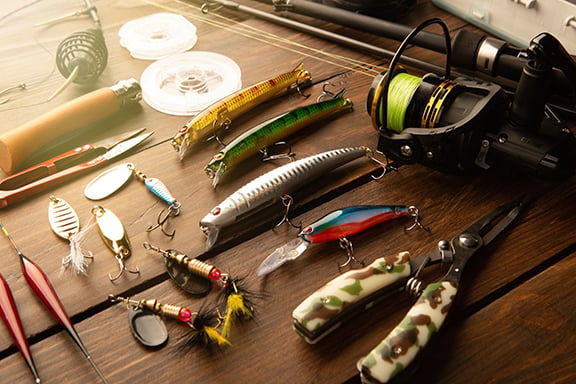
Not too long ago, the Center for Biological Diversity filed an intent to sue the EPA to force a ban on the use of lead fishing tackle and ammunition, according to the USSA, which says the 1976 TSCA was enacted “to allow the EPA to regulate new commercial chemicals entering the market and the distribution of existing chemicals found to pose unreasonable risks to public health or the environment.
“It was never intended to allow the regulation of ammunition and fishing tackle,” the USSA says.
The USSA’s Bill Horn, appearing on C-Span earlier this week, called the bill a preventative measure, prompted by frivolous anti-hunting lawsuits.
The bill, introduced in February by Florida Republican Jeff Miller, also has its detractors, including some outdoors supporters who fear the bill, which promises access to federal lands, could promote motorized use in some wilderness areas.
A dissenting opinion offered by House members said the access provision could “effectively rewrite the Wilderness Act, National Environmental Policy Act, and the National Wildlife Refuge System Administration Act.” The dissenting minority also lodged disagreement with exempting lead ammo and fishing tackle from EPA authority.
Groups like the USSA now have their attention on the Senate, where only a bill matching the access guarantee portion of the House bill (Title I) exists.
Email
Print