Sand flats
River fishing for walleyes and sauger is often associated with fishing the current breaks. The logic is clear: A current break's reduced flow allows game fish to expend less energy while holding tight in a spot where forage will pass.
To find current breaks, conventional fishing says look for rock, wing dams, pilings, and wood, all obvious flow deflectors and great structures to fish. But one good and often overlooked current break for walleyes during all flow levels are sand flats.
Now, there is more to it than just finding a flat sandy river bottom, and the word flat is just the term used by local guides and anglers to describe the structure, and it seems wrongly named.
These "flats" are plateaus but with gradual tapering sides, and many have a distinct point. These flats are points of various shapes and angles, but can be correctly read as a point.
Some are subtle breaks and other sharp, some are narrow and some wide, and they all lay downstream of an inside turn. One thing is clear, walleyes love sand flats.
The overall size of flats range from 15 acres such as the St. Croix's trout brook area to 150 square feet flat on a trout stream. Flat size depends on river size, and the tightness of the bend. Often anglers are fishing them without even recognizing it; they can be hard to recognize due to subtle depth changes.
Pre-spring melt walleyes located on these flats want some water overhead, and may associate only with the base of the flat, but still use the flat. However during any 24-hour period, walleyes can be found in a wide range of depths from 2-28 feet of water. Generally the three main factors in choosing a starting depth to fish anytime of year are time of day, clarity, and flow.
Flow, however, seems to be the largest component when determining where to fish a flat. Conventional walleye fishing theory on fishing sand flats is correct lower flow, fish more towards the main channel; high flow fish tighter to shore.
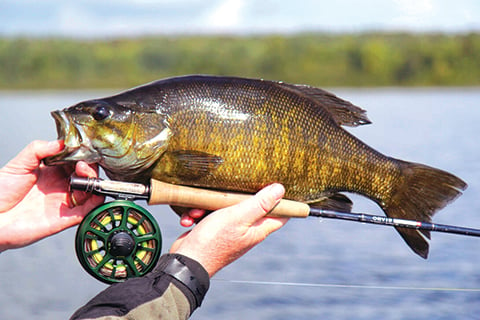
Sand flat fishing is mainly a walleye thing; finding sauger on a flat in the day is a rarity. Walleyes usually hold in groups on these flats and can be grouped loose or tight. Search lures are preferable, but certain bites demand a slow presentation.
All rivers large and small create sand flats. These flat don't scream current break, but they are formed by deposition, deposited in an area of reduced flow. River fishing is an ever-changing challenge that is very rewarding. Consider all the variables and check out a sand flat next time you're floating a boat down any of our country's fine river resources. Keep Catchin'!
Email
Print